
Article
Patients with rheumatoid arthritis (RA) who used GLP-1 receptor agonists had less disease activity and improved cardiovascular biomarkers, a small retrospective study indicated.

Search for Terms or Answers
Patients with rheumatoid arthritis (RA) who used GLP-1 receptor agonists had less disease activity and improved cardiovascular biomarkers, a small retrospective study indicated.

What do you need to know about scleroderma-related lung fibrosis as a practicing rheumatologist? Here are takeaways from these guidelines and my practice.

Rheumatologists typically manage systemic autoimmune rheumatic diseases (SARD) and associated interstitial lung disease (ILD) with immunosuppressants. However, evidence increasingly supports also the use of antifibrotic agents in this setting.
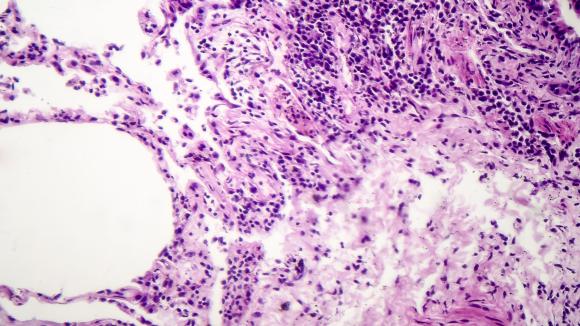
The European Respiratory Society (ERS) and European Alliance of Associations for Rheumatology (EULAR) have published clinical practice guidelines for the evaluation and management of connective tissue diseases (CTD) associated interstitial lung disease (ILD) in two simultaneous publications in the European Respiratory Journal and Annals of Rheumatic Diseases.

Rheumatoid arthritis interstitial lung disease (RA-ILD) represents a major therapeutic evidence void in our current treatment paradigm. RA-ILD is common, with clinically significant disease seen in 8% of patients. In the past RA-ILD was frequently under-diagnosed, leading to identification of a disproportionate volume of severe cases and subsequently inflating the mortality statistics. However, RA-ILD, particularly in the progressive pulmonary fibrosis phenotype, retains a poor prognosis. I would propose a new framework for RA-ILD treatment.






By downloading this material, I acknowledge that it may be used only for personal use and personal education and that I will accredit RheumNow.com as the source and owner of this material. Commercial use or mass reproduction of this material without permission from RheumNow (info@rheumnow.com) is prohibited.
