All News
First Line IL-1 Inhibition in Systemic JIA
First-line treatment of systemic juvenile idiopathic arthritis (JIA) with anakinra (Kineret) was highly effective as monotherapy, minimizing the need for glucocorticoids, a single-center prospective study found.
Read ArticleImpressive Survival of Interleukin-1 Inhibitors in Systemic Juvenile Idiopathic Arthritis
The drug retention rate of interleukin-1 inhibitors (IL-1) used to treat systemic juvenile idiopathic arthritis (JIA) appears to be quite high according to a new study.
Read ArticleRheumNow Podcast – TNFs and the Inflammasome (1.25.19)
Dr Jack Cush reviews the news from the past week at RheumNow.com.
Read ArticleGenetic Diagnosis for Previously Undiagnosed Disorders
The NEJM has reported the NIH's Undiagnosed Diseases Network (UDN) study results of genetically identifying new diseases from prospectively followed persons with undiagnosed disorders.
The UDN was formed in 2014 as a network of seven clinical sites, two sequencing cores, a coordinating center, central biorepository, a metabolomics core, and a model organisms screening center. It was established to apply a multidisciplinary model in the evaluation of the most challenging cases and to identify the biologic characteristics of newly discovered diseases.
IL-6 for Adult Still's: A New Option?
Some clinical benefits were seen among patients with adult-onset Still's disease treated with tocilizumab (Actemra) in a small clinical trial, but the study's primary endpoint was not met, Japanese researchers reported.
Read ArticleLong-Term Efficacy of Canakinumab in Systemic Juvenile Idiopathic Arthritis
Only inhibitors of IL-1 (canakinumab) and IL-6 (tocilizumab) are FDA approved for use in children with systemic onset juvenile idiopathic arthritis (sJIA). Now, long-term data from the extension studies from two phase III studies shows that canakinumab yields long-term improvements with reduced glucocorticoid dosing with no new safety findings with long-term use.
Read ArticleTreatment Preferences in Still’s Disease
In July 2018, RheumNow launched a “Live Vote” survey of US and non-US rheumatologists that asked how they diagnose and treat systemic juvenile idiopathic arthritis (sJIA), also known as “Still’s disease”. It appears that many prefer to start therapy with an IL-1 inhibitor, after a course of steroids and MTX/DMARD. Yet, these findings suggest there are significant unmet needs in the diagnosis and management of sJIA patients.
Read ArticleJAK Inhibition in Autoinflammatory Syndromes Interferonopathies
While many autoinflammatory syndromes are driven and managed with select inhibition of IL-1, IL-18 or IL-6, a subset are driven by type I interferon and are referred to as interferonopathies. These monogenic IFN–mediated disorders present in infancy with fevers, systemic inflammation, an IFN response gene signature, inflammatory organ damage, and high mortality.
Read ArticleAutoinflammatory Syndromes Show Dramatic Response to Canakinumab
The New England Journal of Medicine reports that the anti-interleukin (IL)-1β monoclonal antibody canakinumab (Ilaris) was effective in the treatment of three distinct autoinflammatory recurrent fever syndromes (FMF, TRAPS, HIDS) with responses that were far superior to what was see
Read ArticleGenetic Breakthrough in Systemic JIA
The identification of a genetic susceptibility locus for systemic juvenile idiopathic arthritis (sJIA) has important implications for treatment of this severe, poorly understood illness, researchers reported.
Read ArticleKineret Approved for Still's Disease in EU
SOBI has announced that Kineret (anakinra) has been approved by the European Commission (EC) for the treatment of Still’s disease (Systemic Juvenile Idiopathic Arthritis [SJIA] and Adult-Onset Still’s Disease [AOSD]), in all 28 European Union (EU) member states.
Read ArticleIL-6 Inhibition Most Effective in Polycyclic Systemic JIA
The German Autoinflammatory Disease (AID) registry has studied the effects of the IL-6 inhibitor tocilizumab (TCZ) in systemic juvenile idiopathic arthritis (sJIA) patients and shown a clinical response rate of 35% during the first 12 weeks, and inactive disease and/or remission (with medication)
Read ArticleIL-18 Binding Protein Effective in Adult-Onset Still's Disease
Gabay and colleagues have reported the results of a novel new recombinant human IL-18 binding protein, tadekinig alfa, demonstrating its effectiveness in an open-label dose escalating study in patients with adult-onset Still's disease (AOSD).
Read Article
Study of 182 hospitalized adult-onset Still's disease patients shows predictive factors for developing macrophage activation syndrome to include: 1. Splenomegaly (OR 5.745), 2. pericarditis (OR 6.5), and 3. ferritin >2000 (OR 4.7). https://t.co/oNsaCL6O92
Links:
Dr. John Cush RheumNow ( View Tweet)
A study examined whether EGCG suppresses the activation of the NLRP3 inflammasome, thereby effectively preventing gouty #inflammation. It was found that EGCG reduces inflammation in mouse foot tissue making it a promising treatment option for #gout https://t.co/X9O2mbJx6A https://t.co/wgUYz0BmeY
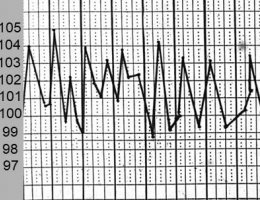
Key features in distinguishing Adult onset Stills disease from Fever of unknown origin: Arthralgia, rash, sore throat, neutrophilia, ferritin >5xULN, LDH based on comparison study of 69 AOSD & 87 FUO pts. 3 or more fever peaks daily makes AOSD less likely. https://t.co/49X4GGludn
Links:
Dr. John Cush RheumNow ( View Tweet)
QD Clinic - Febrile syndromes; How many days of fever? | from RheumNow - https://t.co/E9TJL3eZaD
Links:
Dr. John Cush RheumNow ( View Tweet)
Using FMF-KI knockout mice (high TNF levels) researchers find TNF signaling drives pyrin & inflammasome activation; TNF is a critical modulator of pyrin of pyrin-inflammasomopathies like FMF. This is why TNF inhib sometimes work in inflammasomopathies. https://t.co/0EvuTI57tn
Links:
Dr. John Cush RheumNow ( View Tweet)
Pulmonary arterial hypertension is a very uncommon complication of Adult onset Stills disease - 4.8% of 41 AOSD pts developed PAH - often severe, with a mortality risk. https://t.co/XjyVArMNBl
Links:
Dr. John Cush RheumNow ( View Tweet)
Vasculitis may complicate autoinflammatory Dz - in FMF (IgA vasculitis, PAN), vasculitis may occur w/ CAPS, TRAPS, HIDS, DIRA, PAPA & Behcets syndromes. Vasculitis is part of DAD2 deficiency (STING-assoc vasculopathy w/ onset in infancy-SAVI (PAN-like) https://t.co/7MKo05pOa3
Links:
Dr. John Cush RheumNow ( View Tweet)