Psoriasis and psoriatic arthritis are more prevalent, often more severe, and sometimes refractory to conventional treatments in HIV-positive patients, but clinicians are understandably concerned about moving on to immunosuppressive anti-tumor necrosis factor (TNF) agents when other treatments fai

All News
Pregnancy complications of anti-phospholipid syndrome (APS) have included recurrent abortions, spontaneous fetal loss, preeclampsia, and premature birth. The etiopathogenesis of these events has been presumed to be placental thrombosis or infarction.
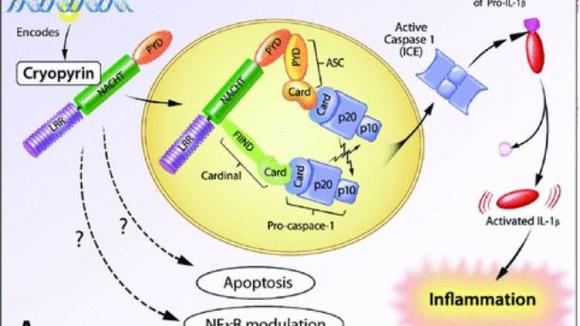
The gene mutations underlying inflammasome activity have been well described, but there appears to be variable penetrance among patients with the same gene mutation, suggesting additional mechanisms may influence disease expression.
In Genome Medicine, Mayo Clinic researchers investigated a cohort of rheumatoid arthritis (RA) patients, their relatives and a healthy control group analyzing the gut microbiome vial16S ribosomal DNA analysis of fecal samples.
PNAS has published a study wherein an inducible “inflammatory reflex” delivered by vagus nerve stimulation was shown to inhibit the production of tumor necrosis factor (TNF), an inflammatory molecule that is a major therapeutic target in an animal model of rheumatoid arthritis (RA).
Systemic lupus is a clinically heterogeneous disorder, unified by requisite clinical features and exuberant humoral response to unknown triggers. While the diagnosis is easy, the disease course and management can be complicated and challenging.
The PROMISSE (Predictors of Pregnancy Outcome: Biomarkers in Antiphospholipid Antibody Syndrome and Systemic Lupus Erythematosus) study has revealed several important lessons in lupus care.
Sclerostin, an inhibitor of the Wnt/β-catenin pathway, negatively regulates osteoblast differentiation and has anti-anabolic effects on bone formation. Thus, inhibition of sclerostin is currently being studied as therapy for postmenopausal osteoporosis.
Prevalent patients with ankylosing spondylitis (AS) face a 30–50% increased risk of acute coronary, cerebrovascular, and thromboembolic events compared with the general population.
In a variety of models, testosterone has been shown to be immunosuppressive and deficiency of testosterone has been linked with autoimmune disease and increases in C-reactive protein (CRP), tumor necrosis factor, and interleukin-6 (IL-6).
Blocking the type 1 interferon receptor with the monoclonal antibody anifrolumab shows promise as a treatment for moderate-to-severe systemic lupus erythematosus (SLE), according to a phase IIb study presented here.
The results of the PRAIRI study were presented today at EULAR 2016 in London. These early findings suggest that individuals "at-risk" to develop rheumatoid arthritis (RA) may benefit from a short course of intravenously rituximab therapy.
In the last two years there have been increasing reports of mosquito-borne infectious arthritides. Dengue fever was best known until the introduction of viral infections due to chikungunya and Zika.
While the phenotypes of RA and SLE are quite different, genome-wide association studies (GWAS) performed in the past have shown a genetic overlap between both.
Mechanisms underlying the pulmonary fibrosis of systemic sclerosis are poorly understood, yet are the focus of both research and new drug development.
Watch Dr. Jack Cush cover ten highlights from this week on RheumNow.com.
Numerous guidelines (ACR, ACIP/CDC, ATS, NICE) all call for timely vaccinations in patients with rheumatoid arthritis (RA) and those receiving immunosuppressives or biologics.
Alpha defensins are released following apoptosis, necrosis, or netosis of human neutrophils. They are taken up by other cells and microbes, wherein they permeablize membranes and kill microbes and host cells. Thus, they augment the antimicrobial capacity of macrophages and at the same time inhibit the biosynthesis of proinflammatory cytokines.
Choi and colleagues analyzed US hospitalizations (2009–2013) to assess the frequency and racial distribution of patients hospitalized with Stevens-Johnson Syndrome (SJS) and Toxic Epidermal Necrolysis (TEN) related to the use of urate-lowering (ULT) therapy (predominantly allopurinol).
Systemic lupus is a clinically heterogeneous disorder, unified by requisite clinical features and exuberant humoral response to unknown triggers. While the diagnosis is easy, the disease course and management can be complicated and challenging.