The problem with having therapies that work is that you then have to figure out what to do with them. You cannot hide behind a shrug of the shoulders, or the ambiguity of therapeutic inadequacy. The question that follows the presence of a therapy is the question as to how to best use it.
GCA and PMR are at the stage in the growth of their therapeutic development where this problem is moving to the front of mind, and it made for a fitting topic in the ACR Great Debate. Drs. Rob Spiera and Phil Seo - two luminaries in the vasculitis and PMR worlds - were pitted head to head to discuss.

All News
Here's what I learned at ACR23 that will change the way I practice in rheumatoid arthritis.
The possibility of withdrawing DMARDs after patients achieve remission has been in our minds for a while. Yet when our patients ask whether it is a good idea to taper or stop their DMARD when they are doing well, most of us don’t have a black or white answer for them.
We have become accustomed to the 60/40/20% rule for the outcome of ACR 20/50/70 respectively for biologics and targeted synthetic DMARDs.
In this week's podcast, Dr. Jack Cush reviews the ACR Convergence 2023 meeting and proposes how to best learn at your next large medical meeting.
TNF inhibitors revolutionised the treatment of rheumatoid arthritis. While highly effective for the joint manifestations of the disease, a note of caution was sounded regarding the potential for worsening of ILD with these agents. Within this framework, a study by England et al presented at ACR23 was highly relevant.
You can see that the JAKi/TYK2i have both approved or potential seropositive and seronegative indications. There are also improvements in PsO for the class and studies in CTDs. So, it is difficult to know which to choose.
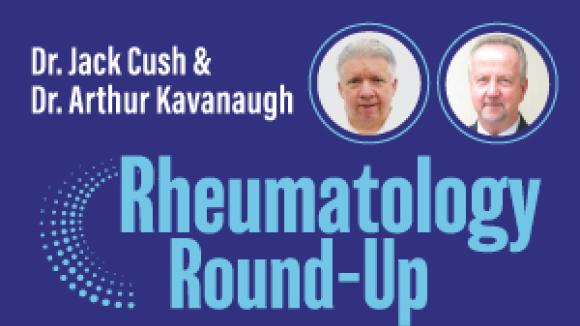
Drs. Jack Cush and Arthur Kavanaugh discuss highlights and key takeaways from ACR 23.