

More than half of patients with auto-immune conditions experience mental health conditions such as depression or anxiety, yet the majority are rarely or never asked in clinic about mental health symptoms, according to new research from the University of Cambridge and King’s College London.

A EULAR/American College of Rheumatology task force has established evidence based, up-to-date guidance and expert opinion on the evaluation, management and monitoring of patients with Haemophagocytic lymphohistiocytosis (HLH) and macrophage activation syndrome (MAS), with the primary intent to halt disease progression and prevent life-threatening complications from HLH/MAS.

Large scale analysis of adverse events (AEs) in World Health Organization (WHO) VigiAccess database showed no new safety signals associated with long-standing use of five TNFα inhibitors.

More than eight million people in the U.S. experience psoriasis, a condition in which skin cells build up and form itchy dry patches. A person’s vitamin D levels could play an important role in psoriasis severity, according to one of the largest studies to date.
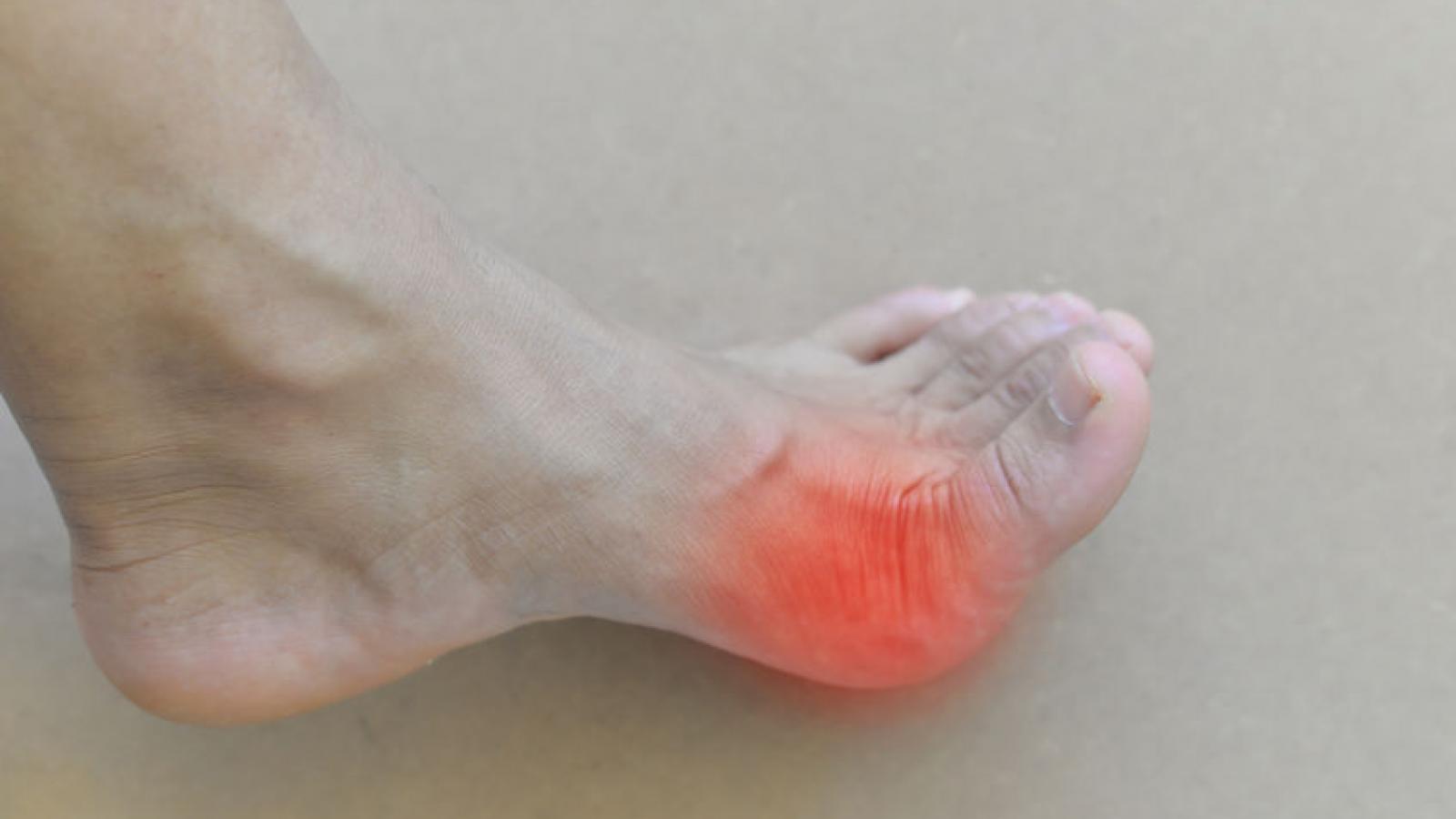
A cohort analysis shows that gout patients initiating sodium–glucose cotransporter-2 inhibitors (SGLT2is) had lower serum urate levels and fewer gouty flares requiring emergency department (ED) visits or hospitalizations.

Dr Joseph Flood, a past president of the American College of Rheumatology, passed away on July 13, 2023 at age 70 due to complications of liver disease, diabetes and liver cancer.
He was born in Cleveland, schooled at St Ignatius High School in Cleveland and graduated college Baldwin-Wallace University, in Berea, OH.

The CDC estimates that nearly 220,000 children and adolescents had arthritis during 2017–2021. Prevalence (305 per 100,000) increased with age and is higher in 12–17 year olds; non-Hispanic Black or African Americans; those with anxiety or depression; physically inactive; overweight or a heart condition; or lived in a food-insecure or smoking household.

Dr. Jack Cush reviews the news and journal reports and this week, takes on 5 cases/questions from "Ask Cush Anything"
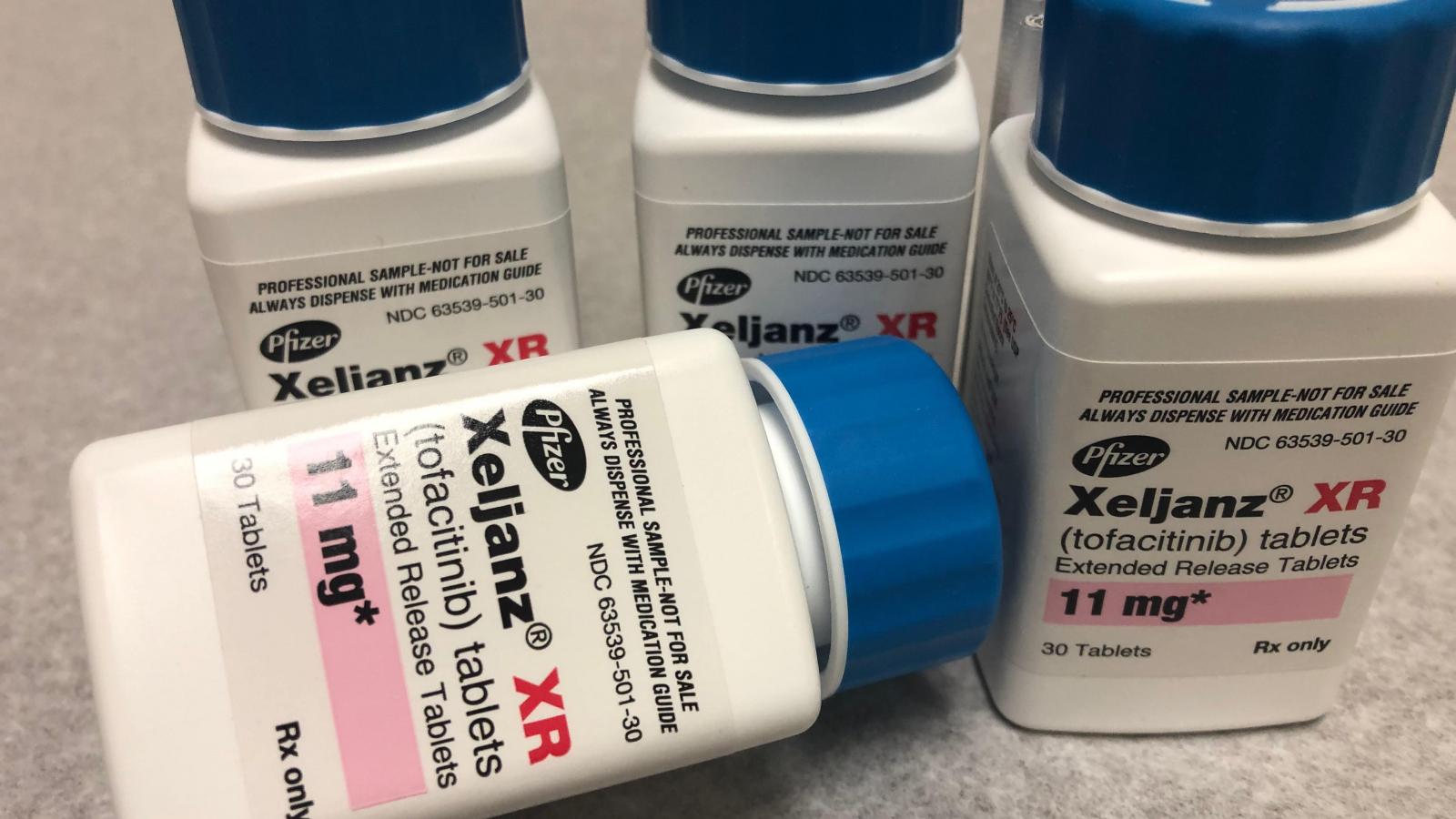
Tofacitinib is FDA approved for psoriatic arthritis and rheumatoid arthritis, but long term safety outcomes beyond a year are limited. A real-world, post-marketing surveillance of tofacitinib in PsA and RA shows a consistent pattern of safety with no new safety concerns identified.

The AURORA 2 study evaluated the long-term safety and efficacy of voclosporin lupus nephritis patients and, after three years, demonstrated long term safety and efficacy following the one-year AURORA 1 study.

A UK registry study of moderate to severe systemic lupus erythematosus (SLE) patients showed that treatment with rituximab or belimumab was not associated with a greater risk of serious infection, when compared to standard of care therapy.
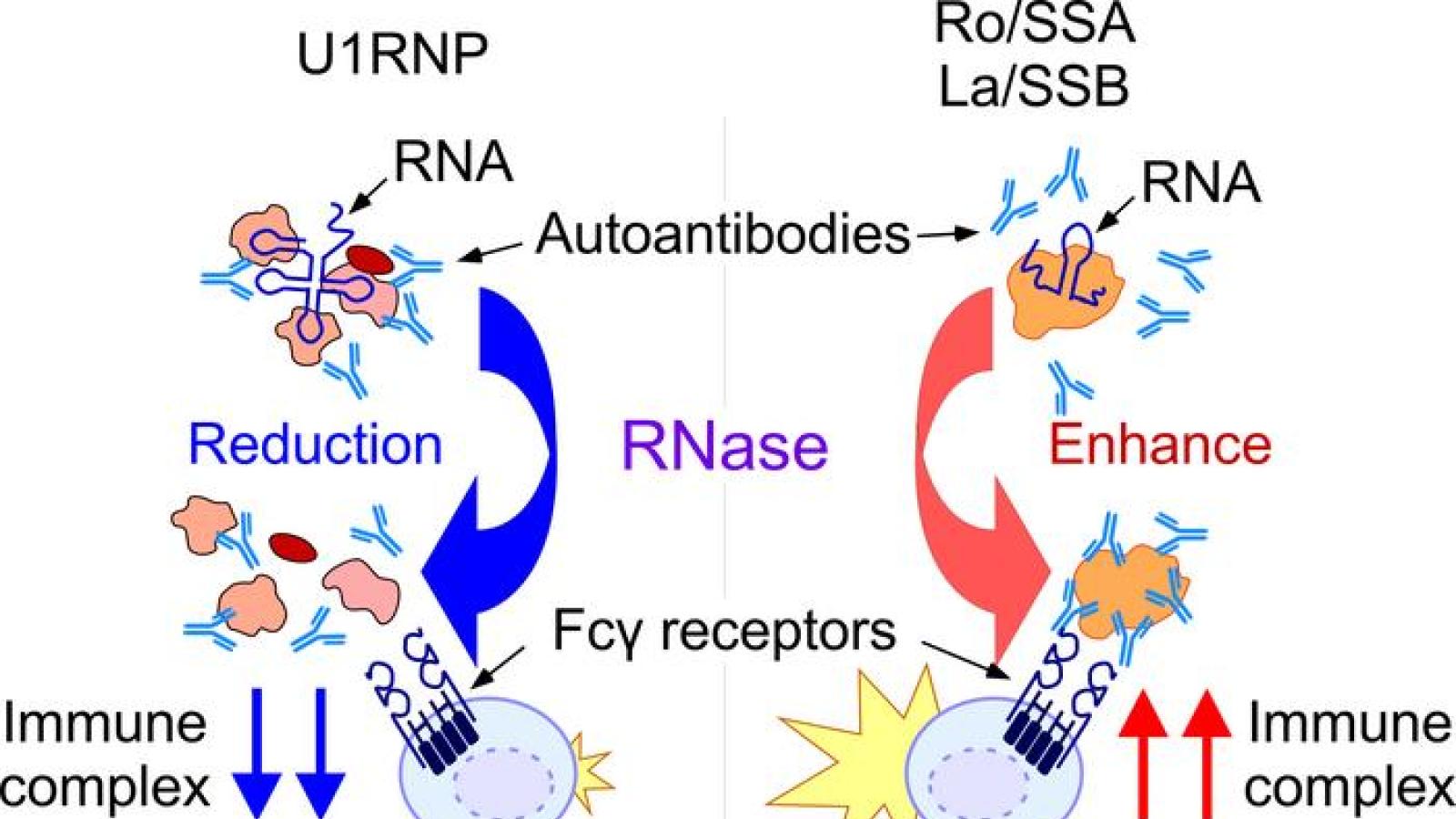
U1RNP complex, Ro/SSA and La/SSB are major RNA-containing autoantigens associated with autoimmune disorders. Immune complexes (ICs) composed of RNA-containing autoantigens and autoantibodies are suspected to be involved in the pathogenesis of some systemic autoimmune diseases.

A large cohort study shows that severe non-adherence to hydroxychloroquine (HCQ) results in serious risks for SLE flares, damage, and mortality.

In 2018, Park et al showed optimal responses to influenza vaccination in RA patients was best achieved by holding methotrexate for 2 weeks following immunization, with improved humoral responses. Now, a followup trial suggests that equivalent results are had by holding MTX for only 1 week with the "flu" vaccine.

Obstetric complications and poor pregnancy outcomes are not uncommon in women with SLE, especially with active disease. A large Spanish cohort trials shows that term pregnancy is more likely before the diagnosis of SLE and that poorer pregnancy outcomes were associated with antibody positivity to anticardiolipin IgG and anti-beta-2- glycoprotein IgG/IgM, but not lupus anticoagulant.

