

Drugs inducing lupus may account for nearly 30% of all subacute cutaneous lupus erythematosus (CLE) and up to 15% of systemic lupus erythematosus (SLE) cases. Moreover there are over 100 drugs capable of inducing drug-induced lupus erythematosus. A population based report in JAMA Dermatology shows several new and old drugs are capable of inducing DLE and SCLE, moreso than SLE.

An analysis of a large population-based cohort of axial spondyloarthritis (axSpA) patients shows that comorbidities are common and are associated with higher disease activity and higher levels of functional impairment.

Dr. Jack Cush reviews the 2020 ACR Reproductive Health Guidelines presented all week here on RheumNow.

In this third excerpt from the ACR guidelines on managing reproductive health issues in rheumatic disease patients, we present recommendations regarding the use of glucocorticoids and guidance on lactation and medication use post-partum.
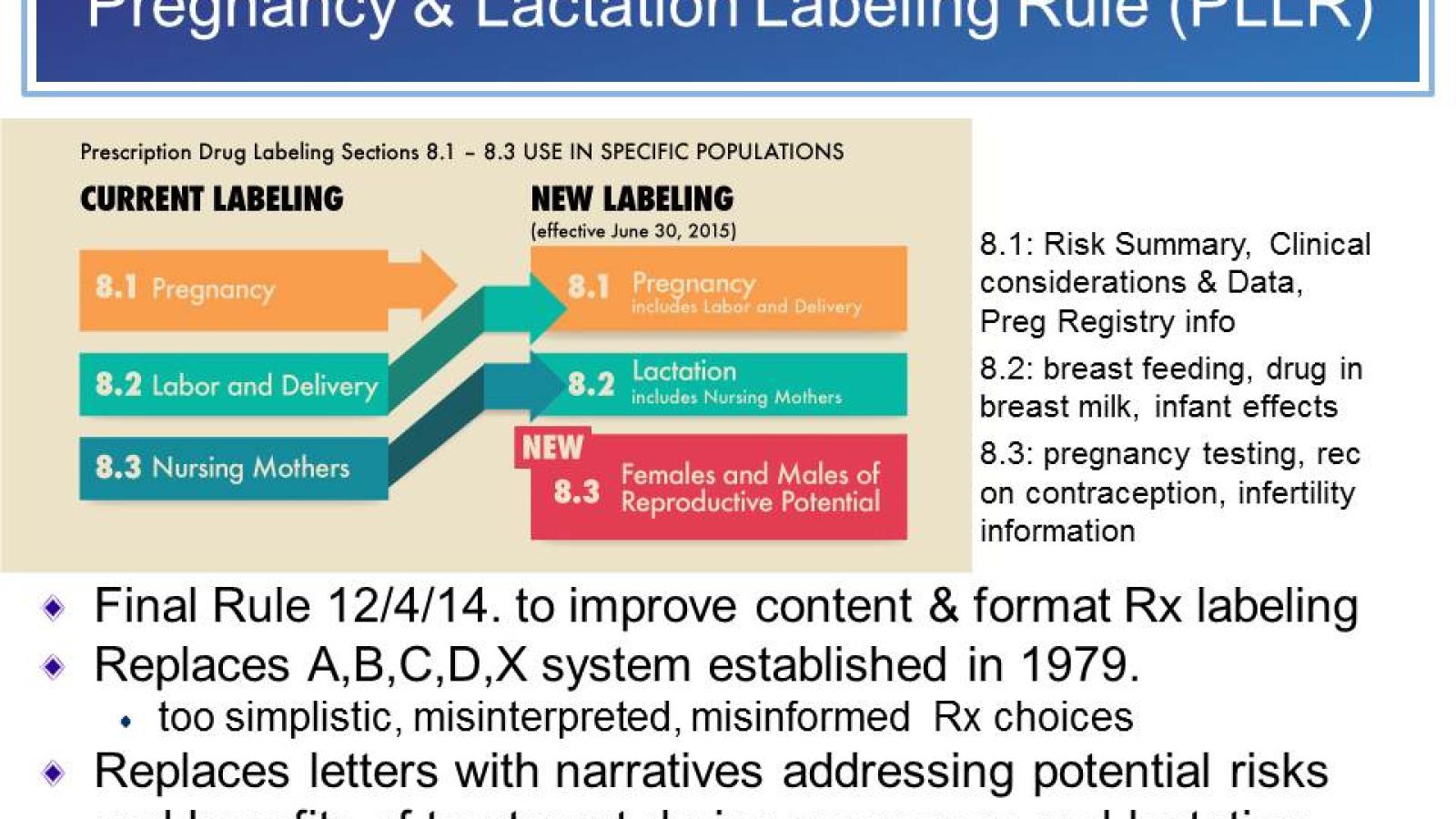
A recent article from Healio.com reviewed the FDA’s Pregnancy and Lactation Labeling Rule (PLLR) that became effective June 30th. This rule applies only to currently marketed prescription drug products available in the United States and does not affect the labeling of drug products available over-the-counter.

The American College of Rheumatology (ACR) has published guidelines to manage reproductive health issues in rheumatic disease (RMD) patients before, during and after pregnancy.

Rheumatoid arthritis affects women in their child-bearing years and many will face the issue of pregnancy and RA management at some point. Here are11 considerations for those managing RA patients who wish to become pregnant.

The American College of Rheumatology established a guidelines committee that consisted of both patients, rheumatologists and maternal-fetal health experts. After a a systematic review of the medical literature regarding contraception, assisted reproductive technology, fertility preservation, hormone replacement therapy pregnancy, lactation, and medication use in rheumatic disease patients, they published 12 good practice statements and 131

Hydroxychloroquine (HCQ) helped reduce recurrent maternal autoantibody-mediated congenital heart block (CHB) in fetuses, an open-label study suggested.
Anti-SSA/Ro-positive mothers who had had a previous pregnancy complicated by CHB who took HCQ 400 mg daily, starting before completion of gestational week 10, had a 7.4% rate of clinically-relevant fetal CHB (second- or third-degree) at any time during the pregnancy.
Dr Jack Cush reviews the news, journal articles and takes a few Back Talk questions this week:

Pisetsky and Lipsky have reviewed the evolving literature on the utility of antinuclear antibodies (ANA). ANAs generated as part of an autoimmune disorder may form immune complexes that mediate pathogenesis by tissue deposition or cytokine induction.

Extraintestinal manifestations (EIMs) frequently accompany inflammatory bowel disease, often augmenting morbidity and mortality are associated with disease activity and may increase the need for surgery or treatment escalation. A recent review in GUT details the treatment options for patients with EIM.

Since patients with SLE have longer life expectancies in the modern era, they may be at elevated risk for HCQ adverse events, including maculopathy and cardiomyopathy. Therefore, Peter M. Izmirly, MD, of New York University School of Medicine in New York City, and colleagues assessed whether older SLE patients could safely discontinue HCQ.
ARD has published a report showing that patients with early rheumatoid arthritis have cardiovascular disease that is modifiable with conventional and aggressive therapy and that it did not matter if first line DMARD therapy was with a tumour necrosis factor-inhibitor or methotrexate.

Annals of Internal Medicine has published a population based study showing that the use of (short term) corticosteroid bursts were associated with GI bleeding, sepsis, and heart failure, often occurring within the first month of steroid therapy.

