



Beyond HLA-B27: Anti-14-3-3eta Autoantibodies as a Candidate Marker in axSpA Save


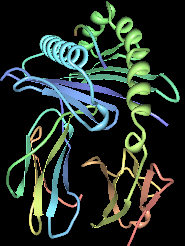
14-3-3 proteins are a conserved family of seven isoforms with diverse cellular functions, found predominantly intracellularly. The 14-3-3eta isoform has been studied as a proinflammatory mediator in RA pathogenesis (1). There is little evidence on its expression in patients with axial spondyloarthritis (axSpA). The need for early diagnosis and the current lack of biomarkers prompted the study of anti-14-3-3eta autoantibodies (AAbs) as a potential biomarker.
Abstr 0378 evaluated a bead-based assay targeting five immunogenic peptide regions of 14-3-3eta to determine its ability to distinguish axSpA from other conditions. The groups were 30 patients with axSpA, 60 healthy controls, and 61 disease controls, mainly rheumatoid and psoriatic arthritis. Median AAb levels were significantly higher in axSpA than in both control groups across all five peptides (p<0.05).
Additionally, Abstr 0377 tested whether anti-14-3-3eta AAbs can aid in axSpA diagnosis by distinguishing it from mechanical back pain (MBP) and other conditions. It included 109 axSpA patients, 51 MBP controls, and 375 non-axSpA comparators (RA, PsA/psoriasis, Crohn’s disease, UC, osteoarthritis, gout). Anti-14-3-3eta AAbs distinguished axSpA from MBP (AUC 0.77, 95% CI 0.69-0.84, with 90% specificity and 42% sensitivity). However, when compared with the broader non-axSpA group, diagnostic yield decreased (diagnostic odds ratios 2.7 for AAbs alone and 2.3 for the combined model).
Similarly, Abstr 0376 compared anti-14-3-3eta AAb levels (five peptides) and 14-3-3eta protein between 100 radiographic and 20 non-radiographic axSpA patients. It found that peptide expression differed by radiographic status, with AAb levels to peptide 5 significantly associated with r-axSpA (OR 0.64, 95% CI 0.42-0.97, p=0.036; AUC 0.69).
Abstr 0734 investigated whether anti-14-3-3eta AAbs may be useful for diagnosing axSpA independent of HLA-B27. In serum samples from 43 Japanese patients with axSpA, of whom only 5 were HLA-B27 positive, AAb levels did not differ significantly between HLA-B27 groups, suggesting a potential role as a complementary diagnostic biomarker.
These findings suggest that anti-14-3-3eta AAbs carry a real but modest signal in axSpA and support anti-14-3-3eta AAbs as a possible complementary tool, most plausibly for distinguishing axSpA from mechanical back pain and for patients who are HLA-B27 negative. However, they do not support use as a stand-alone test. Given these studies are small and mostly unvalidated, larger independent cohorts are needed to define clinical value, particularly for earlier diagnosis.
- Maksymowych WP, Marotta A. 14-3-3η: a novel biomarker platform for rheumatoid arthritis. Clin Exp Rheumatol. 2014 Sep-Oct;32(5 Suppl 85):S35-9.
More ACR Coverage:
Related Content
HLA-B27 remains the dominant genetic link to spondyloarthritis (SpA) across the age spectrum, but B27 related clinical expression diverges between children and adults. New mechanistic data on autoreactive T cells, HLA-B27 misfolding, and gut-joint trafficking point to new plausible, targetable pathways.
Obesity in axial spondyloarthritis (axSpA) is not a minor comorbidity. Beyond the scale, there are several factors that need to be considered with obesity in axSpA.
An editorial in Lancet Rheumatology calls for "..reframing axSpA as a systemic, autoimmune inflammatory disease with multiorgan involvement and substantial unmet need."The pathogenesis relies on not only HLA-B27, but also on environmental triggers, immune dysregulation, and gut inflammation. AxSpA…



If you are a health practitioner, you may Login/Register to comment.
Due to the nature of these comment forums, only health practitioners are allowed to comment at this time.