


Articles By Adela Castro, MD

Not All Pain in Rheumatic Disease is Inflammatory
The term nociplastic pain refers to pain arising from altered central nervous system processing, without evidence of tissue or nerve damage.
Read Article
Beyond HLA-B27: Anti-14-3-3eta Autoantibodies as a Candidate Marker in axSpA
14-3-3 proteins are a conserved family of seven isoforms with diverse cellular functions, found predominantly intracellularly. The 14-3-3eta isoform has been studied as a proinflammatory mediator in RA pathogenesis (1).
Read Article
Reading the Sacroiliac Joint Early: What MRI Reveals in axSpA
Axial spondyloarthritis is notorious for being diagnosed late. Imaging is one of the best tools for catching it sooner, and the 2025 ASAS-SPARTAN revised classification criteria reflect that: the most heavily weighted variable is “MRI indicative of axSpA in the sacroiliac joints (SIJ).” Three new abstracts from the SPACE and SPARTAN CLASSIC cohorts show what that finding means in practice.
Read Article
Diagnosing and Managing GCA and Takayasu’s Arteritis
Giant-cell arteritis and Takayasu’s arteritis are both large-vessel vasculitides, but each brings its own diagnostic and management challenges. Many of the difficulties overlap because they are rare, heterogeneous, and lack perfect diagnostic tests or specific biomarkers.
Read Article
A Modern Approach to Osteoporosis Management
Currently, fewer than half of patients diagnosed with osteoporosis receive appropriate pharmacologic therapy. This treatment gap reflects several challenges in osteoporosis management, including limited disease awareness, barriers to medication access, clinician discomfort with therapy selection, and uncertainty regarding the optimal timing of treatment initiation.
Read Article
Imaging in Axial Spondyloarthritis
The diagnosis of axial spondyloarthritis (axSpA) is clinical, however, there are still unmet needs, particularly in the diagnosis of early disease and evaluation of disease activity and progression. As imaging technology continues to evolve, its role in axSpA management is expected to expand, offering more precise, individualized care. Here are two studies presented at EULAR 2025.
Read Article
Expanding the IL-17 Therapeutic Landscape
IL-17 inhibitors are an effective therapeutic for a broad spectrum of inflammatory and autoimmune diseases and its blockade has revolutionized management of diseases such as psoriasis, psoriatic arthritis and SpA. Is there a need for more medications within the same therapeutic class?
Read Article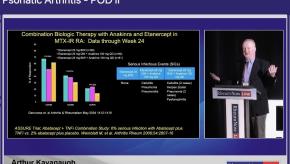
Combination biologics in PsA: are we there yet?
Despite various and efficacious options for management of PsA there is still an unmet need for patients with inadequate responses to current therapies or difficult-to-treat disease. The role of dual biologic therapy targeting different inflammatory pathways has become an area of great interest in the field.
Read Article
Will AI put me out of a job?
The development of AI and other technologies brings new possibilities for optimizing diagnosis, management and has potential for improving outcomes in RA. At RheumNow Live 2025, Dr. Jeff Curtis, University of Alabama at Birmingham, presented a talk on, "AI applied to Rheumatoid Arthritis Care: Practically (Not) Perfect".
Read Article
ICYMI: Sex related differences in PsA
Different factors are known to influence disease characteristics and outcomes in psoriatic arthritis (PsA).
Read Article