


Obinutuzumab drives histologic remission in lupus nephritis Save

The phase III REGENCY trial has already established obinutuzumab as one of the most promising therapies in lupus nephritis (LN), demonstrating superiority over standard therapy alone for complete renal response at week 76. At EULAR 2026, investigators are presenting perhaps the most biologically compelling data yet from the study, with evidence that obinutuzumab induces deep intrarenal B-cell depletion alongside markedly higher rates of histological remission (abstract OP0336).
The exploratory analyses from REGENCY move the discussion beyond proteinuria and serum creatinine, and towards the impact on inflammation within the kidney. This is important because clinical remission and histological remission are often discordant in LN. Patients can appear clinically improved while ongoing inflammatory activity persists within renal tissue, potentially driving progressive chronic kidney disease. Previous biopsy studies have consistently highlighted this discordance, but interventional trial data linking therapy to histological outcomes have remained limited.
The REGENCY investigators analysed paired baseline and week-76 kidney biopsies from patients with proliferative LN treated with obinutuzumab plus standard therapy or placebo plus standard therapy. This represents the largest longitudinal kidney biopsy cohort reported in a registrational lupus nephritis trial.
Patients receiving obinutuzumab were significantly more likely to achieve complete or near-complete histological remission, defined by NIH activity index (AI) scores of 0 or ≤1. Among patients not achieving complete renal response, over half of those treated with obinutuzumab still achieved an AI of 0, compared with only 8% in the placebo arm.
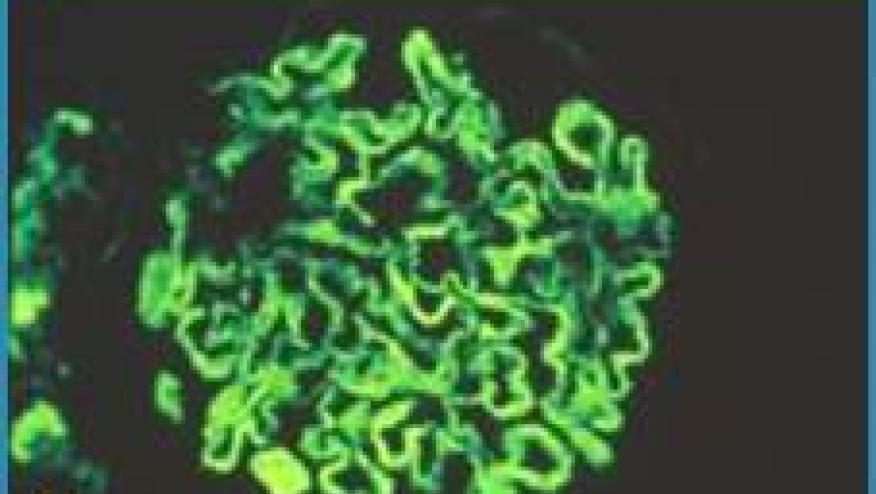
Mechanistic data, using immunofluorescence microscopy and digital whole-slide analysis, showed profound depletion of CD79a+CD138- B cells within renal tissue in the obinutuzumab-treated group. The reduction in kidney B-cell counts was substantially greater than with placebo and represents, according to the authors, the first demonstration of deep kidney parenchymal B-cell depletion by any anti-CD20 therapy in a glomerular disease.
This may help explain why obinutuzumab appears to outperform earlier anti-CD20 approaches in LN. Randomised trials of rituximab in lupus nephritis have failed to meet primary endpoints despite encouraging clinical experience. Obinutuzumab, a type II glycoengineered anti-CD20 antibody, achieves more potent and sustained B-cell depletion than rituximab, with enhanced antibody-dependent cellular cytotoxicity and direct cell death. The REGENCY biopsy data now suggest that this mechanistic advantage may extend directly into the kidney itself.
These results are important, as lupus nephritis is increasingly understood to involve highly organised local immune responses within the kidney. Tissue-resident B cells may contribute to antigen presentation, cytokine production, and intrarenal inflammation more generally. Effective depletion of these cells may therefore be necessary for renal remission.
The abstract also contributes to a broader trend emerging across rheumatology and nephrology, a shift toward precision immunopathology, also seen in research in the fields of vasculitis, inflammatory bowel disease and psoriatic disease, where imaging, histology, or molecular remission may prove more meaningful than traditional composite clinical outcomes alone.
It is important to note that these were exploratory analyses involving relatively small biopsy subsets, and repeat kidney biopsy is not standard clinical practice in LN. Whether histological remission ultimately predicts superior long-term renal survival in REGENCY remains to be shown. However, the data presented here are promising.
At a time when lupus therapeutics are rapidly evolving, the obinutuzumab data stand out because they show that removing B cells more effectively may directly translate into reducing inflammation within the kidney itself. It may well be that in lupus nephritis, deeper B-cell depletion may genuinely translate into long-lasting remission.





If you are a health practitioner, you may Login/Register to comment.
Due to the nature of these comment forums, only health practitioners are allowed to comment at this time.