
Article
The current edition of JAMA Internal Medicine describes an Asian gout patient who presents with an allopurinol hypersensitivity reaction that could have been diagnosed by testing for HLA-B*5801.

Search for Terms or Answers
The current edition of JAMA Internal Medicine describes an Asian gout patient who presents with an allopurinol hypersensitivity reaction that could have been diagnosed by testing for HLA-B*5801.

Researchers at University of California San Diego School and the Icahn School of Medicine have found a high-resolution epigenomic landscape of rheumatoid arthritis (RA) that overlaps with that seen in Huntington's disease, suggesting potentially new unanticipated pathways that could be devel

Dr. Jack Cush discusses the news and journal articles from the past week on RheumNow.com.

The identification of a genetic susceptibility locus for systemic juvenile idiopathic arthritis (sJIA) has important implications for treatment of this severe, poorly understood illness, researchers reported.

Proceedings of the National Academy of Sciences (PNAS) has published new research on the mechanistic link between the rheumatoid arthritis (RA) "shared epitope" (SE) risk alleles and environmental triggers such as cigarette smoke that leads to joint inflammation and bony destruction.
Investigators from Glasgow and Oxford have identified changes in genomic architecture, represented by a chromosome conformation signature, that can predict nonresponse to methotrexate in early rheumatoid arthritis patients.
Recognizing that studies show 35–59% of RA patients do not achieve clinically meaningful responses after starting MTX, they sought to identify a pattern of genetic changes in 59 early RA patients that would predict poor responses to MTX therapy.
A recent report in Nature Communications has studied multiple nationalities has shown a "disentangled complex HLA multigenic effect" underlying the genetic basis of systemic lupus erythematosus (SLE).
Pianta, et al have published their findings in the Journal of Clinical Investigation showing that two novel autoantigens, GNS and FLNA, are highly expressed in synovium and share a sequence homology with gut microbesa; thereby providing a potential link between gut mucosal and joint immunity in rheumatoid arthritis.

Researchers from Augusta University have examined exosomes from patients with knee osteoarthritis (OA) to enhance our molecular understanding of the pathogenesis of OA. (Citation source http://buff.ly/2tuDZ3v)

The risk of developing ankylosing spondylitis (AS) if you are HLA-B27+ and a first degree relative is often said to be 20%.
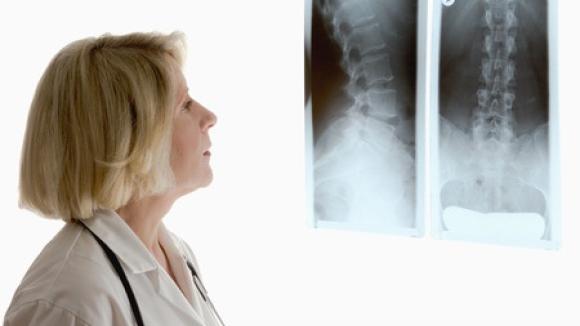
Dr. Jack Cush reviews highlights from the journals and news this week on RheumNow.com.

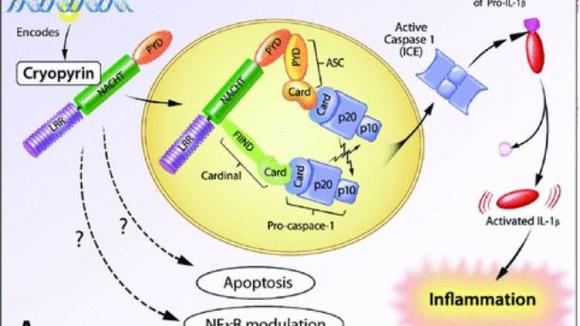
Tumor necrosis factor (TNF) receptor-associated periodic syndrome (TRAPS) is an autosomal-dominant autoinflammatory disease resulting from mutations of the TNF super family receptor 1A (TNFRSF1A) gene.

The gene mutations underlying inflammasome activity have been well described, but there appears to be variable penetrance among patients with the same gene mutation, suggesting additional mechanisms may influence disease expression.
Systemic lupus is a clinically heterogeneous disorder, unified by requisite clinical features and exuberant humoral response to unknown triggers. While the diagnosis is easy, the disease course and management can be complicated and challenging.

While the phenotypes of RA and SLE are quite different, genome-wide association studies (GWAS) performed in the past have shown a genetic overlap between both.

Choi and colleagues analyzed US hospitalizations (2009–2013) to assess the frequency and racial distribution of patients hospitalized with Stevens-Johnson Syndrome (SJS) and Toxic Epidermal Necrolysis (TEN) related to the use of urate-lowering (ULT) therapy (predominantly allopurinol).
Systemic lupus is a clinically heterogeneous disorder, unified by requisite clinical features and exuberant humoral response to unknown triggers. While the diagnosis is easy, the disease course and management can be complicated and challenging.
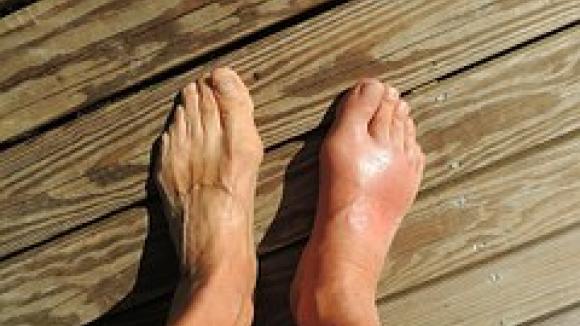
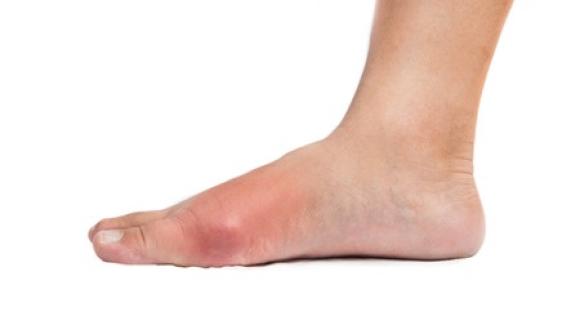
Diuretics are frequently implicated causes of hyperuricemia and gout. And there are gout variants wherein age, renal dysfunction and diuretic use may give rise to gouty attack in the hands of women with nodal osteoarthritis.
A prospective cohort of RA first-degree relatives were prospectively studied for genetic and environmental factors (smoking, body mass index, education, and parity) and RA-related autoantibodies that may influence future development of inflammatory joint symptoms over a 2 year 

By downloading this material, I acknowledge that it may be used only for personal use and personal education and that I will accredit RheumNow.com as the source and owner of this material. Commercial use or mass reproduction of this material without permission from RheumNow (info@rheumnow.com) is prohibited.