All News

Does Control of Inflammation Lower Cancer Risk?
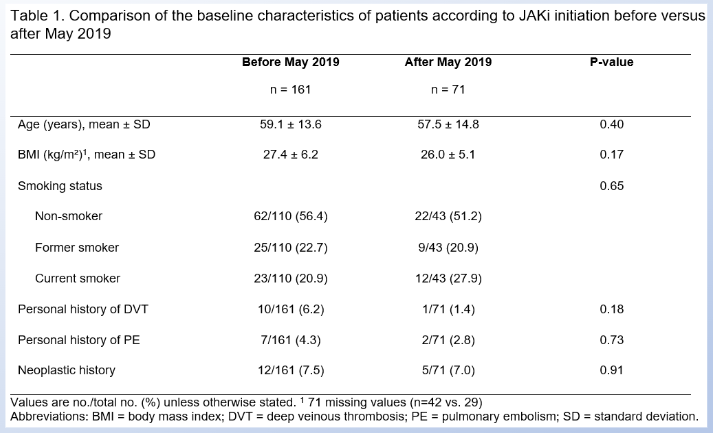
Dr. Jonathan Kay's provocative video addresses whether the increased cancer risk associated with tofacitinib (Tofa) seen in the Pfizer Oral Surveillance (1133) study represents a real increased risk, an increased risk relative to a decreased risk with TNF inhibitors (TNFi) or an actual decreased cancer risk (unknown as there was no placebo comparator in this trial).
Read Article
Improving Rheumatology Practice
How to best book patient appointments in rheumatology clinic? Should these be scheduled every 3 or 4 months regardless of patient status? Should they be scheduled by patient need or disease activity?
Read Article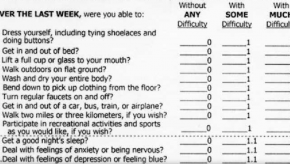
RAPID3 in Assessing Psoriatic Arthritis
My research shows that up to 50% of rheumatologists measure something in the course of their daily assessments, and RAPID3 is most popular, being employed by 31% of rheumatologists.
Read Article
GLORIA Study - Is Prednisone Harmful in Elder RA?
The GLORIA study (ABST# 1678) was a pragmatic, blinded placebo-controlled randomized trial from Dr. Martin Boers and colleagues where they assessed whether prednisolone (vs. placebo) use would alter clinical outcomes over 2 years.
Read Article
An Old Friend – Methotrexate in Psoriatic Arthritis
Methotrexate (MTX) remains one of our most used and reliable tools against a variety of rheumatic diseases, including PsA. When the time comes, as it often does, to escalate from a MTX-monotherapy approach, we have several options. In clinic, initiation of these other medications has often been in the form of addition rather than substitution. But what do the patients want, and how much more is the MTX adding in those cases?
Read Article
More severe COVID-19 outcomes in African American, Hispanic individuals with SLE
A study from ACR21 convergence discussing data from the Global Rheumatology Alliance (GRA) describes the association between race/ethnicity on COVID-19 outcomes specifically in lupus patients.
Read Article
RheumNow Podcast - ACR 2021 Rehash (the good stuff..)
The ACR 2021 meeting has concluded. Dr. Jack Cush recounts a few more great abstracts from this past week’s virtual meeting.
Read Article
Racial/ethnic disparity in U.S. lupus nephritis mortality
At #ACR21, the plenary session included an analysis of deaths from SLE throughout the US comparing 1999 to 2019 (Abstract #0454).
Read Article
Psoriatic Arthritis: "What Matters" to Patients, Physicians
A study presented today by Mease et al. addresses the vital gap between what patients and physicians consider disabling because of PsA, and emphasizes “what matters” in a daily clinical encounter while dealing with PsA.
Read Article
Day 4 Report from ACR21
My favorite three presentations from day 4 (Tuesday) at ACR 2021 included the following.
Read Article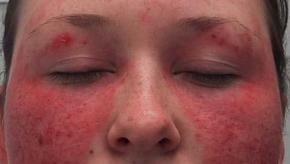
Predictors of Remission and Low Disease Activity in SLE
A treat-to-target strategy has been shown to improve clinical outcomes in patients with rheumatic diseases like rheumatoid arthritis, psoriatic arthritis, ankylosing spondylitis including systemic lupus erythematosus. The goal of treatment in SLE is aimed at remission or low disease activit
Read Article
ACR21 – Day 3 Report
Hitting the home stretch, day 3 presentations were big! Here are a few of my favorites: secukinumab efficacy in juvenile PsA; VEXAS - predicting poor outcomes; and the FDA Safety Update session.
Read Article
Risks associated with mortality in VEXAS
Vacuoles, E1 enzyme, X-linked, autoinflammatory, somatic syndrome (VEXAS) took the centre stage when it was first introduced at ACR20 last year. It got everyone’s thinking that they might have encountered one or two patients in their rheumatology lifetime who might have this condition.
Read Article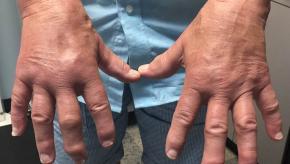
The Need for Comparative Treatment Trials in Psoriatic Arthritis
Psoriatic arthritis is currently experiencing a burgeoning selection of treatment options. While this is a very welcome development in a disease which has had less treatment options compared to RA, it leaves us with a difficult conundrum: which agent to choose for an individual patient.
Read Article
Eric Dein ericdeinmd ( View Tweet)

Bella Mehta bella_mehta ( View Tweet)
Bella Mehta bella_mehta ( View Tweet)