Saturday June 15th was the last half-day at EULAR 2019 but was highlighted by the “late-breaking” (LB) presentations that were presented from the podium and by poster.
Below are the top “LB” presentations from EULAR this year:
Search for Terms or Answers
Saturday June 15th was the last half-day at EULAR 2019 but was highlighted by the “late-breaking” (LB) presentations that were presented from the podium and by poster.
Below are the top “LB” presentations from EULAR this year:
Dr. Jack Cush reports from Madrid on several novel presentations from EULAR 2019.
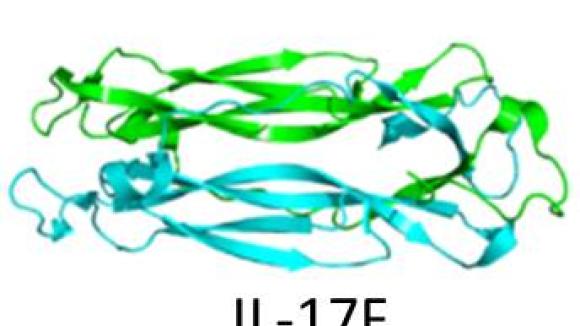
Interleukin 17 (IL-17) inhibitors are highly effective and FDA approved for use in psoriasis, psoriatic arthritis and ankylosing spondylitis. However, many of the initial trials were done in rheumatoid arthritis (RA) where it was projected to be effective, but was not. A recent metanalysis examines how effective IL-17 inhibition was in two RA populations: biologic-naïve or tumor necrosis factor inhibitor inadequate responders (TNF-IR).
Dr. Jack Cush presents the news and best of rheumatology and medicine from the past week on RheumNow.com
Rituximab (Rituxan) may be an option for maintenance therapy in patients with difficult-to-treat systemic lupus erythematosus (SLE), European researchers reported.
Upadacitinib (UPA) is an oral, selective JAK1-selective inhibitor being developed for use in rheumatoid arthritis patients; Lancet has reported the SELECT-MONOTHERAPY trial showing that UPA is safe and effective in RA patients with an inadequate response to methotrexate (MTX).
The risk of serious infectious events (SIE) with rituximab (RTX) is similar to that seen in other biologics (e.g., RA: 2% or 4.3/100PY), but with prolonged use the risk may change. Recent research says that low IgG levels, RTX induced neutropenia, prior SIE and comorbidities can significantly augment this risk.
A retrospective longitudinal single center study of 700 rheumatic and musculoskeletal diseases (RMDs) treated monitored serum immunoglobulins (at baseline and 4–6 months after each cycle), clinical outcomes and SIE over time.

In August 2018, the CMS announced that Medicare Advantage (MA) plans would be allowed to utilize step therapy for Part B drugs. The American College of Rheumatology (ACR) expressed strong concerns about this proposal.
The NEJM reports a randomized placebo controlled trial of nintedanib, a tyrosine kinase inhibitor, in systemic sclerosis patients with interstitial lung disease (ILD) resulted in less pulmonary decline, but had no effect on other features of systemic sclerosis.
Medicare and Truven MarketScan administrative data study (2006 through 2015) of rheumatoid arthritis (RA) undergoing arthroplasty found that while that the risks of perioperative infection was similar across biologics, the infection risk with glucocorticoid use, especially at
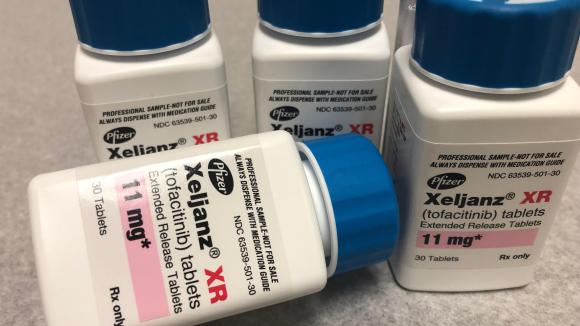
The Pharmacovigilance Risk Assessment Committee of the European Medicines Agency issued recommendations limiting the use of Xeljanz (tofacitinib) 10 mg twice daily in patients with ulcerative colitis in the EU.
The new recommendations are temporary while PRAC undertakes a review of all available evidence on the safety and efficacy of tofacitinib. The review follows warnings of an increased risk of pulmonary embolism (PE) and death from the U.S. Food and Drug Administration based on Pfizer's large post-marketing safety study (in high risk rheumatoid arthritis patients with one or more underlying cardiovascular risk factors) wherein those receiving in tofacitinib 10 mg twice daily in study A3921133 had more PE and mortalities than comparator groups (tofacitinib 5 mg bid or adalimumab).
Dr. Jack Cush reviews the news and journal articles from the past week on RheumNow.com
The FDA has published an industry guidance document to define interchangeability as regards to biosimilar use in the United States under section 351(k) of the Public Health Service Act (PHS Act) (42 U.S.C. 262(k)).
The American College of Rheumatology (ACR) and the Arthritis Foundation (AF) have released two guidelines on management of juvenile idiopathic arthritis (JIA).
Namilumab, a monoclonal antibody that targets the granulocyte-macrophage colony-stimulating factor (GM-CSF) ligand, showed promise as a treatment for rheumatoid arthritis (RA) in a phase II study.
AbbVie has announced that the US FDA has granted the approval of Skyrizi (risankizumab-rzaa) for the treatment of moderate to severe plaque psoriasis.
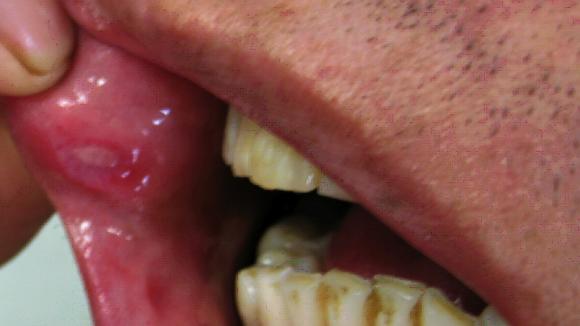
A small prospective study has shown that ustekinumab is safe and effective in Behçet's disease (BD) with recurrent oral ulcers (OU).
A study from the British Society for Rheumatology Biologics Register (BSRBR-RA) demonstrates that polypharmacy is a predictor of lower treatment responses and more serious adverse events (SAEs) in rheumatoid arthritis (RA) patients.
The goal of SLE treatment is remission or low disease activity and flare prevention. Hydroxychloroquine is recommended in all patients with lupus, at a dose not exceeding 5 mg/kg real body weight. Glucocorticoids (GC) should be minimised to less than 7.5 mg/day (prednisone equivalent). Appropriate initiation of immunomodulatory agents (methotrexate, azathioprine, mycophenolate) can be tailored to the clinical scenarios and may allow for tapering or discontinuation of GC.
By downloading this material, I acknowledge that it may be used only for personal use and personal education and that I will accredit RheumNow.com as the source and owner of this material. Commercial use or mass reproduction of this material without permission from RheumNow (info@rheumnow.com) is prohibited.