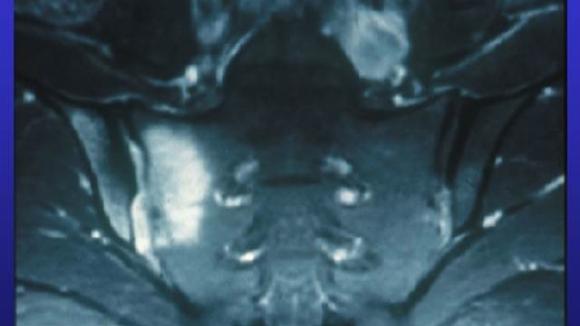
Lancet has published the results of a study showing that ixekizumab (an IL-17A inhibitor) yielded significant clinical benefit and radiographic protection when given to NSAID treated patients with radiographic axial spondyloarthritis (AxSpA).
All News
“Autoimmunity is the Achilles heel of onco-immunotherapy” per Dr. Leonard Calabrese, which leaves a dilemma for rheumatologists.
Onco-immunotherapy induces immune dysregulation to allow patients to develop an immune response to their cancer cells. An unfortunate side effect for patients taking onco-immunotherapy is often autoimmune-like diseases referred to as immune adverse reactions (irAEs). Studies in France and the United States have shown that irAEs can be a good prognostic sign, suggesting these therapies are working. Rheumatology is faced with new problems as onco-immunotherapies may induce new chronic diseases in multiple different forms secondary to the treatment.
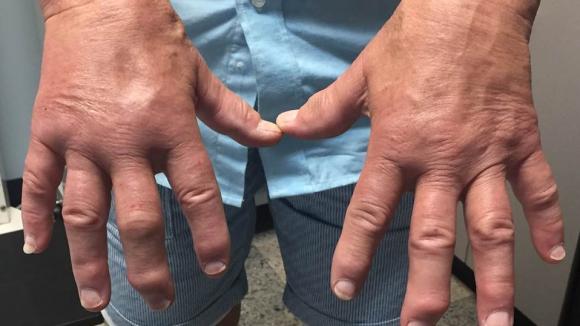
The monoclonal antibody bimekizumab, which neutralizes both interleukin (IL)-17A and 17F, was effective for both musculoskeletal and skin outcomes in psoriatic arthritis (PsA) in a phase IIb study.
This past week in Chicago gave us a plethora of new and eye-opening research, people, KOLs, exhibits, sessions, guidelines, posters and a never-ending supply of coffee served in small paper cups. ACR 2018 highlights for me included:
Highlights from Tuesday and Wednesday (days 3 and 4) from the ACR annual meeting include: the important and impactful abstracts covered by the Rheumatology Roundup session; upadacitinib clinical trials; and the baricitinib CV and VTE safety analysis.
I think 2018 was the year that belonged to psoriatic arthritis (although some may argue in favor of immune conditions induced by Checkpoint inhibitors). Many years ago the late Professor Verna Wright in Leeds (UK) was a lone voice for many years describing the clinical subtypes of Psoriatic arthritis as something distinctive from rheumatoid arthritis. For a long time we thought that the treatments for PsA were just the same as RA since we were treating the same problem of synovitis.
Monday was a packed day of sessions and studies. Here are our just a few of our highlights.
Monday afternoon's session on the treatment of Axial Spondyloarthritis presented us with a great selection of studies addressing important issues in modern treatment paradigm of AxSpA.
RheumNow is in Chicago covering the ACR annual meeting. Here are the highlights from Sunday (day one). Be sure to check our complete coverage, including articles, video reports and tweets, at acr18.rheumnow.com.
Dr. Jack Cush summarizes the news and reports from RheumNow.Com this past week and previews RheumNow activities at the upcoming ACR 2018 meeting in Chicago.
Some clinical benefits were seen among patients with adult-onset Still's disease treated with tocilizumab (Actemra) in a small clinical trial, but the study's primary endpoint was not met, Japanese researchers reported.
Dr. Jack Cush reviews the news from the past week on RheumNow.com.
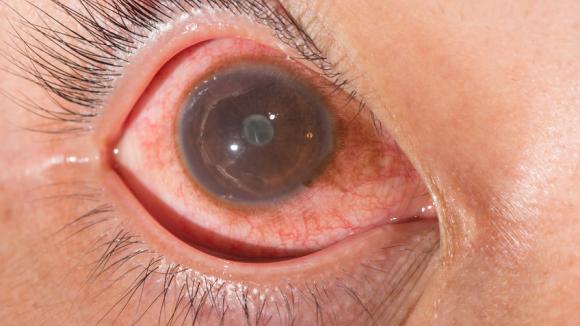
Researchers from Germany have studied a large cohort of juvenile idiopathic arthritis (JIA) patients and shown that JIA disease activity scores and laboratory biomarkers could be used to better define the group of JIA patients at high risk of uveitis onset.
Multiple studies have shown that elderly rheumatoid arthritis (RA) patients tend to be under-treated and receive DMARD therapies less often than younger RA patients.
Only inhibitors of IL-1 (canakinumab) and IL-6 (tocilizumab) are FDA approved for use in children with systemic onset juvenile idiopathic arthritis (sJIA). Now, long-term data from the extension studies from two phase III studies shows that canakinumab yields long-term improvements with reduced glucocorticoid dosing with no new safety findings with long-term use.
Dr. Jack Cush reviews the news from the past week on RheumNow.com, including news on inappropriate opioids, pre-clinical RA treatment, DMARDs in Gout, the decline of arthroscopy, and a pain in the mouth.
Ronald F van Vollenhoven and colleagues have reported in Lancet that ustekinumab (UST), an interleukin-12 and -23 inhibitor, when added to usual therapy in systemic lupus erythematosus (SLE) patients, was shown to be superior to placebo at improving clinical efficacy and laboratory param
Stem cell clinics are popular and proliferating as they are largely a cash business and fall outside of FDA regulatory control. In lieu of scientific proof, most advocates use patient testimonials and the placebo effect to back up their claims.