

All News
Rituximab in Systemic Sclerosis?
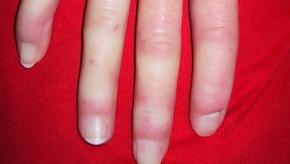
No drug is FDA approved to manage the skin or joint complaints of systemic sclerosis (SSc); a recent metanalysis suggests that rituximab may improve skin score and disease activity indices (DAS, mRSS) while stabilizing organ involvement in SSc patients.
Read Article
US Senate Introduces the Safe Step Act
The American College of Rheumatology (ACR) today commended leaders in the United States Senate for introducing the bipartisan Safe Step Act of 2021 (S. 464), new legislation that would place reasonable limits on insurer use of step therapy.
Read Article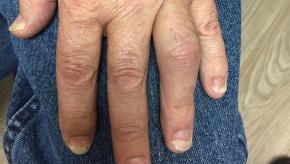
Upadacitinib Clinical Efficacy in Psoriatic Arthritis
McInnes and colleagues have published the results of the SELECT - PsA trial in NEJM showing updacitinib (UPA) to be superior to placebo in active psoriatic arthritis (PsA) patients, with 15 mg UPA equal to adalimumab (ADA) and 30 mg UPA qd being superior to ADA.
Read Article
Hypertension Unaffected by Urate Lowering Therapy
Does uric acid contribute to the risk of hypertension (HTN)? A recent cohort trial shows that allopurinol in young adults does not sufficiently lower blood pressure (BP).
Read Article
RheumNow Podcast – Infection in ANCA-Associated Vasculitis (3.26.2021)
Dr. Jack Cush reviews the news, FDA Denials and journal articles from the past week on RheumNow.com.
Read Article
Safety of Paternal DMARD or Biologic Use
A large cohort study of expectant fathers treated for immune-mediated inflammatory diseases (IMIDs) failed to show any detrimental effect from paternal exposure to immunosuppressive or biologic agents on offspring outcomes.
Read Article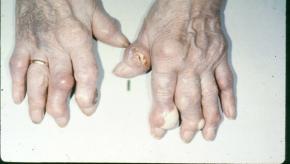
RECIPE Trial - Mycophenolate to Suppress Immunogenicity with Pegloticase in Gout
Pegloticase is indicated in the treatment of severe gout patients but prolonged use may be limited by immunogenicity to the PEG moiety. A randomized, controlled trial has shown that concomitant mycophenolate mofetil (MMF) may prolong the efficacy of pegloticase in gout.
Read Article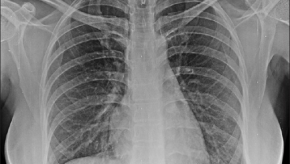
Rituximab vs. JAK inhibitors in Rheumatoid Lung Disease
There are no current FDA approved therapies for rheumatoid arthritis associated interstitial lung disease (RA-ILD) or bronchiectasis, but a recent retrospective cohort study showed equivalent outcomes when RA-ILD patients were treated with either rituximab or janus kinase inhibitors.
Read Article
Are You a Super Rheum?
Several weeks ago, at the Rheumatology Winter Clinical Symposia, an interesting debate between Drs. Orrin Troum and Marty Bergman hashed over the concept of whether rheumatologists should sub-specialize with a practice, research or career devoted to one disease ("Super Rheum"), or be "selective" about what disorders and diseases they would treat or just be a generalist.
Read Article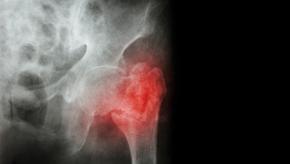
Potent Topical Corticosteroids and the Risk of Osteoporotic Fractures
JAMA Dermatology has published a Danish national cohort study showing that potent topical corticosteroid use was associated with an increased risk of osteoporosis and major osteoporotic fractures with a dose-response association for cumulative use.
Read Article
Rheumatic Patients Are at Risk for COVID Death
Patients with rheumatic diseases who developed COVID-19 were at increased likelihood of death, with risk factors similar to those seen in the general population but also because of factors specific to their underlying disease and its treatment, analysis of data from an international registry foun
Read Article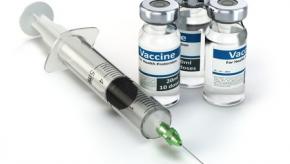
Low Anaphylaxis Risk with COVID mRNA Vaccines
JAMA reports a safety survey of hospital employees showing that the risk of anaphylaxis from mRNA vaccines is 2.47 per 10,000 individuals.
Read Article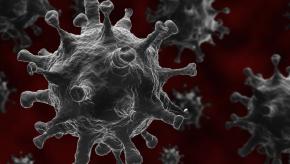
COVID-19-Related Deaths in Rheumatic Disease Patients
There is a growing body of evidence regarding COVID-19 outcomes (including death) in rheumatic disease patients; analysis of a German registry shows that poor control, rituximab, sulfasalazine and other immunosuppressives could be risk factors for COVID-related death.
Read Article
Comparison of Three Coronavirus Vaccines
On Feb. 27, the Food and Drug Administration announced it has issued an emergency use authorization for Johnson & Johnson’s one-dose Covid vaccine, making it the third COVID-19 vaccine to be commercially available. We've compiled a comparison table and some key information relevant to your delivering patient guidance henceforth.
Read Article
Low IBD Risk with IL-17 Inhibition
Incident or worsening colitis is a rare complication of IL-17 inhibitor therapy; a real world study confirms very low rates of new IBD in patients starting secukinumab.
Read Article
RheumNow Podcast – Pounds of Prevention (3.5.2021)
Dr. Jack Cush reviews and discusses nearly a dozen news reports and journal articles from the past week on RheumNow.com.
Read Article
Baricitinib Therapy in Covid-19 Pneumonia
The NEJM has published the results of the ACCT-2 Study, a double-blind, randomized, placebo-controlled trial evaluating baricitinib, an inhibitor of Janus kinase 1 (JAK1) and JAK2, plus remdesivir in hospitalized adults with Covid-19. The primary outcome was the time to recovery.
Read Article
Weight Loss to Avert Risk of Gout
Analysis of the NHANES population survey data shows weight gain during adulthood increases the risk of gout and that maintaining normal weight could reduce the overall gout risk by nearly 33%.
Read Article
Paucity of Effectiveness Research on Telemedicine in RA
A systematic review of telehealth in delivering equivalent care in RA patients demonstrates there is limited evidence that virtual RA care is equivalent to conventional face-to-face care. Despite current widespread use, there is a great need for credible well-designed research that will address comparable patient outcomes, implementation strategies and long‐term health system consequences.
Read Article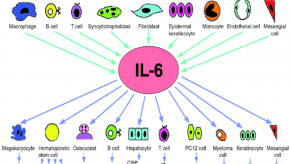
NEJM: Interleukin-6 Inhibition in Critically-Ill COVID-19
The pendulum and jury are wavering with regard to the benefits of interleukin-6 receptor antagonists in COVID-19; the current NEJM reports the results of a study favoring such biologic therapy in in critically ill COVID-19 patients.
Read Article
