
Article
In a head-to-head trial against methotrexate, JAK1 inhibition with upadacitinib was shown to be more effective in early, DMARD-naive RA patients. Here are the primary results.

Search for Terms or Answers
In a head-to-head trial against methotrexate, JAK1 inhibition with upadacitinib was shown to be more effective in early, DMARD-naive RA patients. Here are the primary results.
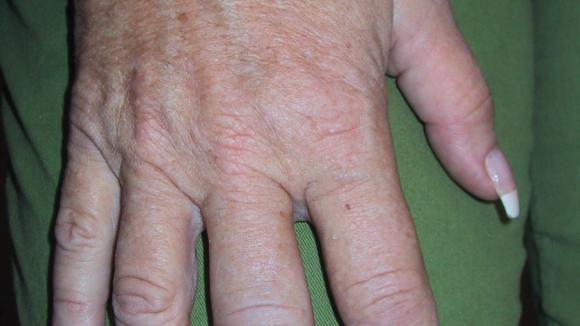
Topical nonsteroidal anti-inflammatory drugs (NSAIDs) are recommended as first-line therapy in a new guideline for treating acute, non-low back pain from musculoskeletal injuries in outpatient settings.
JAMA Network Open reports that after adjusting for inflammation, lupus anticoagulant (LA) is significantly increased (positive) in COVID-19 patients and that LA positivity was associated with incidence risk of thrombotic events.

Dr. Jack Cush updates the news and journal articles from the past week on RheumNow.com, with information on enthesitis, nr-Ax-SpA, UAB, Blockbuster Rheum Drugs and use of ACE inhibitors.

Several recent publications have focused on the risk and outcomes of rheumatic disease (RDD) and autoimmune patients who become infected with SARs-CoV-2.

Cachexia is an underappreciated complication of systemic lupus erythematosus, researchers reported.

Risk factors for perioperative infections include age, comorbidity, rheumatoid arthritis and steroids to name a few; whether concurrent use of TNF inhibitor (TNFI) therapy adds to this risk has been debated. In a study of elderly patients receiving infliximab infusions, infliximab use prior to surgery did not change the risk of post-operative infections.
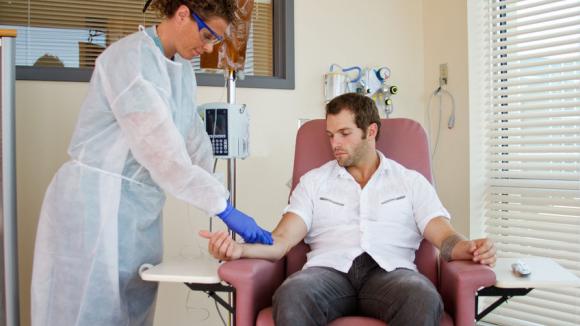
An observational study of patients with systemic autoimmune inflammatory rheumatic diseases (AIRD) who also had COVID-19 disease shows that AIRD increased the risk of hospitalization, but that the use of disease-modifying antirheumatic drugs (DMARDs) were not associated with hospitalization.

The PREVENT trial was a one year, phase III study that showed significant benefits when secukinumab (SEC) was given to patients with active non‐radiographic axial spondyloarthritis (nr‐axSpA) for 52 weeks.

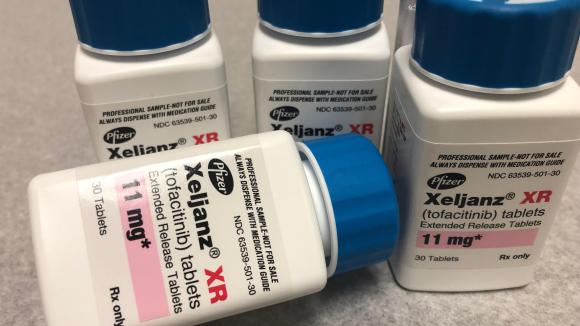
An analysis of the tofacitinib (Xeljanz) drug development program in patients with rheumatoid arthritis (RA), psoriatic arthritis (PsA) and ulcerative colitis suggests a low level risk for venous (VTE) and arterial thromboembolism (ATE).
The Annals of Internal Medicine reports that biannual rituximab infusions over 18 months was effective at maintaining remission in patients with antineutrophil cytoplasmic antibody–associated vasculitis (AAV).

A case-controlled study shows that methotrexate (MTX) use in rheumatoid arthritis (RA) is not associated with interstitial lung disease (ILD) according to a report in the European Respiratory Journal.
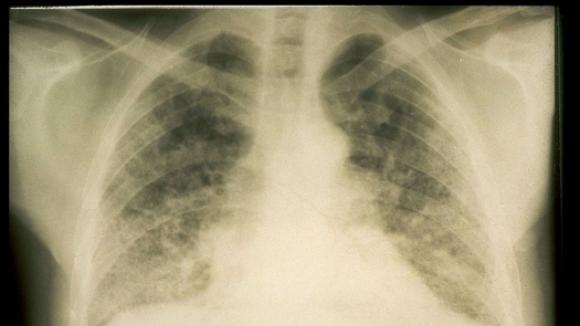
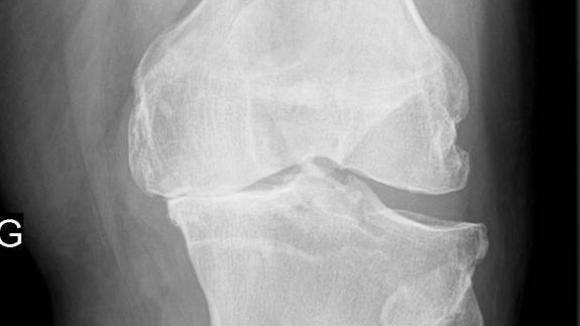
The interleukin (IL)-1β inhibitor canakinumab (Ilaris) showed promise for preventing the need for hip or knee replacement among patients with osteoarthritis in an exploratory analysis of data from a randomized clinical trial, investigators reported.
Among patients enrolled in CANTOS, the pooled incidence rate for total hip replacement/total knee replacement was 0.31 events per 100 person-years for those receiving the monoclonal antibody every 3 months for up to 5 years compared with 0.54 per 100 for those given placebo, according to Paul M. Ridker, MD, of Harvard Medical School in Boston, and colleagues.
In this lockdown, virtual medicine, post-COVID world, wouldn't it be ideal to have an reliable digital readout on patient activity as a measure of health?

Ridker and colleagues have shown that statins (3-hydroxy-3-methylglutaryl coenzyme-A (HMG Co-A) reductase inhibitors) are effective at treating hyperlipidaemia and lowering C-reactive protein levels; Aranaow and colleagues have shown that lovastatin, when given to rheumatoid arthritis (RA) patients with elevated CRP levels failed to significantly lower disease activity.
JAMA Internal Medicine has posted an Editor's note on the use of hydroxychloroquine for COVID-19; noting the sequence of dysfunction since the president promoted its use on March 21, 2020, when he said “What do you have to lose? I’ll say it again: What do you have to lose? Take it.”.

By downloading this material, I acknowledge that it may be used only for personal use and personal education and that I will accredit RheumNow.com as the source and owner of this material. Commercial use or mass reproduction of this material without permission from RheumNow (info@rheumnow.com) is prohibited.


