
Article
On Wednesday, August 2, the FDA convened the Arthritis Advisory Committee (AAC) to evaluate the safety and efficacy of Janssen’s anti-IL-6 monoclonal antibody, sirukumab.

Search for Terms or Answers
On Wednesday, August 2, the FDA convened the Arthritis Advisory Committee (AAC) to evaluate the safety and efficacy of Janssen’s anti-IL-6 monoclonal antibody, sirukumab.

Patients with systemic lupus erythematosus (SLE) incur substantial morbidity and complications that may lead to hospitalizations and increased cost of lupus care. Researchers from the University Health Network in Toronto have published a review of SLE hospitalizations showing thta while comm

In the wake of the well-publicized "opioid epidemic", researchers report in the Annals of Internal Medicine (online July 31) that more than one third of U.S.

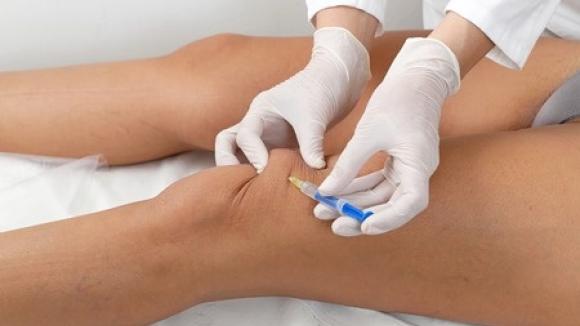
In March 2017, an outbreak of 41 cases of septic arthritis associated with intra-articular injections administered at an single outpatient practice occurred in New Jersey. A public health investigation identified multiple breaches of recommended infection prevention practices during the preparation and administration of PBP products. The intraarticular injections were done using fluoroscopic visualization. The CDC has reported the results of its investigation.
On August 2, the US Food and Drug Administration (FDA) will convene a hearing of the Arthritis Advisory Committee (AAC) to review the safety of the novel IL-6 inhibitor, sirukumab, being developed by Janssen (Johnson & Johnson).
Dr. Jack Cush reviews the news and articles from the past week on RheumNow.com:

Despite the approval of four anti-TNF biosimilars in 12 months, their introduction into the U.S. market has been slow and - until now - with paultry discounts compared to their introduction throughout Europe, where discounts averaged 50% and were as high as 70% (compared to the price of Remicade).

Systemic lupus erythematosus (SLE) poses numerous vascular risks, many of which are thought to be autoantibody mediated.
Eli Lilly and Co disclosed today that upon further discussions with the US Food and Drug Administration (FDA) there would be a delay in further regulatory decisions regarding baricitinib, a JAK inhibitor, that is being developed for use in rheumatoid arthritis (RA).

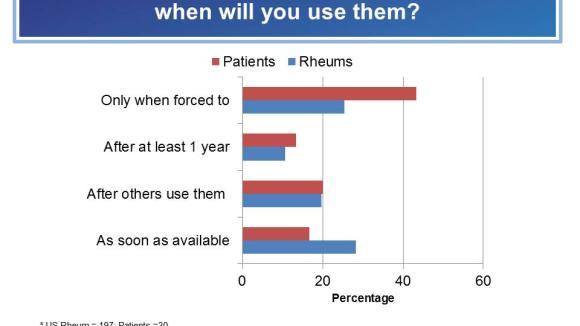
The RheumNow “Live Vote” on the use, uptake and safety of biosimilars contrasts rheumatologist and patient views. Despite FDA approval and looming introduction, there is considerable concern, knowledge gaps and hesitancy regarding their uptake in the US. The survey's primary question demonstrates that less than one-third of US rheumatologists are prepared to adopt biosimilars when they are available.
Dr. Jack Cush reviews the news from the past week on RheumNow.com:
A population-based claim study from Sweden has shown that lupus and pre-lupus patients are at risk for adverse maternal and fetal outcomes.

Investigators with the Swiss Clinical Quality Management (SCQM) program have studied the effects of obesity on patients with axial spondyloarthritis (axSpA) and, specifically, their response to tumor necrosis factor inhibitors (TNFi).

Streptococcus pneumonia is a leading cause of morbidity and mortality in adults; including patients with autoimmune diseases who are at particular risk.

It does not come as a surprise to anyone anymore that Acute Coronary Syndrome (ACS) is one of the major causes of morbidity and preterm mortality in RA. What we don’t know is what measures need to be taken to modify the risk and how effective such measures are.

Curbside Consults are cases submitted by our rheumatology colleagues as challenging therapeutic or safety issues. Answers are based on experience, with added evidence from the medical literature and published guidelines. Here are four new cases.

Systemic lupus erythematosus (SLE) is associated with an increased risk of cardiovascular disease (CVD). The cardioprotective benefits of aspirin (ASA) are well known and the ancillary CV and diabetogenic effects of hydroxychloroquine (HCQ) have also been shown.

The U.S. Food and Drug Administration (FDA) has approved the IL-23 inhibitor, Tremfya (guselkumab), for patients with moderate to severe plaque psoriasis.

Dr. Jack Cush reviews highlights from the past week on RheumNow.com:

Systemic inflammation (from underling inflammatory polyarthritis) clearly accelerates atherosclerosis with a resultant increase risk of cardiovascular disease.
By downloading this material, I acknowledge that it may be used only for personal use and personal education and that I will accredit RheumNow.com as the source and owner of this material. Commercial use or mass reproduction of this material without permission from RheumNow (info@rheumnow.com) is prohibited.

