
Article
Dr. Jack Cush reviews the 2020 ACR Reproductive Health Guidelines presented all week here on RheumNow.

Search for Terms or Answers
Dr. Jack Cush reviews the 2020 ACR Reproductive Health Guidelines presented all week here on RheumNow.

In this third excerpt from the ACR guidelines on managing reproductive health issues in rheumatic disease patients, we present recommendations regarding the use of glucocorticoids and guidance on lactation and medication use post-partum.

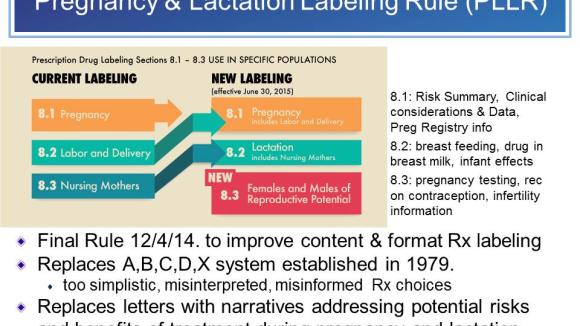
A recent article from Healio.com reviewed the FDA’s Pregnancy and Lactation Labeling Rule (PLLR) that became effective June 30th.
The American College of Rheumatology (ACR) has published guidelines to manage reproductive health issues in rheumatic disease (RMD) patients before, during and after pregnancy.

Rheumatoid arthritis affects women in their child-bearing years and many will face the issue of pregnancy and RA management at some point. Here are11 considerations for those managing RA patients who wish to become pregnant.

The American College of Rheumatology established a guidelines committee that consisted of both patients, rheumatologists and maternal-fetal health experts. After a a systematic review of the medical literature regarding contraception, assisted reproductive technology, fertility preservation, hormone replacement therapy pregnancy, lactation, and medication use in rheumatic disease patients, they published 12 good practice statements and 131 recommendations for reproductive health care in RMD patients.

Hydroxychloroquine (HCQ) helped reduce recurrent maternal autoantibody-mediated congenital heart block (CHB) in fetuses, an open-label study suggested.

Extraintestinal manifestations (EIMs) frequently accompany inflammatory bowel disease, often augmenting morbidity and mortality are associated with disease activity and may increase the need for surgery or treatment escalation. A recent review in GUT details the treatment options for patients with EIM.



By downloading this material, I acknowledge that it may be used only for personal use and personal education and that I will accredit RheumNow.com as the source and owner of this material. Commercial use or mass reproduction of this material without permission from RheumNow (info@rheumnow.com) is prohibited.


