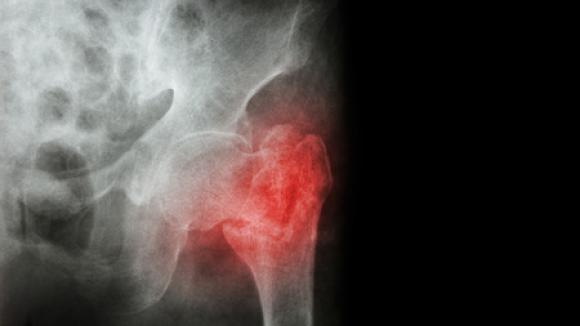
It is unknown if inhibiting cholesterol synthesis (with statins) might influence sex-hormone production and therefore, the risk of osteoporosis. A new study shows that, in statin-treated individuals, the development of osteoporosis is statin dose-dependent.

All News
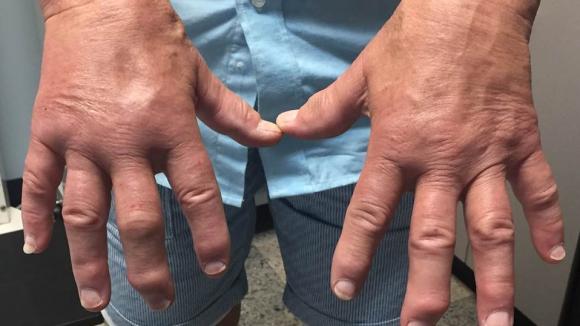
Dannish study has shown that one-third of psoriatic arthritis (PsA) will have joint surgery that that PsA patients have twice the rate of joint surgery when compared with the general population.
A 3 year, multicenter, European, study shows that rivaroxaban was inferior to warfarin in preventing thrombosis in patients with antiphospholipid syndrome (APS) according to the Annals of Internal Medicine. Thus despite the inconvenience of warfarin, it remains the best option for patients with APS.
A study of 527 patients receiving daily hydroxychloroquine (HCQ) concluded that hydroxychloroquine blood levels may predict future HCQ retinopathy.
Arthritis Care & Research reports that juvenile arthritis (JA) patients may have a higher risk if coronary artery disease (CAD) in adulthood.
Dr. Jack Cush delivers select commentary on select news and journal articles from the past week on RheumNow.com.
The National Rheumatoid Arthritis Society's (NRAS) annual audit has identified significant treatment delays for patients with suspected early inflammatory arthritis could result in unnecessary harm.
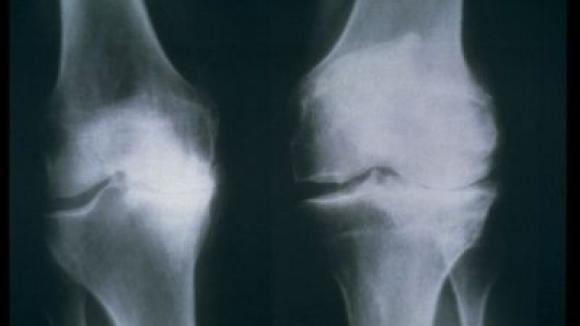
Intra-articular sprifermin given to patients with symptomatic and radiographic knee osteoarthritis has been shown to significantly improve total femorotibial joint cartilage thickness after 2 years, but without significant clinical benefits. Which begs the question, why is there a disconnect between radiographic disease modification (cartilage thickness) and symptomatic improvement?
Even though oral bisphosphonates are widely used, there is an inordinate concern over the risk of osteonecrosis of the jaw (ONJ). A new UK study suggests that the risk of ONJ is elevated six fold by the use of biphosphonates.
Reuters has reported the results of a recent Institute for Clinical and Economic Review (ICER) analysis showing that biologics, especially Humira and Rituxan, are leading the way in the cost of drugs in the USA.
All told, Humira and Rituxan topped a list of seven treatments whose combined 2017 and 2018 price hikes accounted for a $5.1 billion increase in U.S. drug spending. ICER said their analysis points to price hikes that were more than twice the rate of medical inflation and were not warranted by any new clinical evidence.
Patients diagnosed with interstitial pneumonia with autoimmune features (IPAF) are at an increased risk of developing a systemic autoimmune rheumatic disease (ARD).
Dr. Jack Cush reviews the News and Journal Reports from this week on RheumNow.com.
The American Society for Bone and Mineral Research has developed multistakeholder consensus clinical recommendations for the prevention of secondary fractures for those aged 65 years and older after an initial hip or vertebral fracture.
The Annals of Rheumatic Disease reports a psoriatic arthritis study where in ixekizumab was non-inferior to adalimumab for achievement of ACR50 responses but was superior to adalimumab for achievement of PASI100 by week 24.
While the efficacy and safety of interleukin 1 (IL-1) inhibitors (e.g., anakinra) in the acute management of gout and pseudogout has been repeatedly shown, the cost efficacy of such biologic therapy has rendered it impractical for most. A new retrospective study has shown that IL-1 inhibitors may be effective and appropriate for some medically complex, hospitalized patients with acute gout or calcium pyrophosphate crystal arthritis.
The NEJM reports on a randomized comparison of hemiarthroplasty and total hip arthroplasty in displaced femoral neck fractures and shows no difference in function and quality of life over 24 months.
The NEJM reports the results of a one year trial wherein ustekinumab (UST) was shown to be effective at inducing and maintaining remission in patients with moderate-to-severe ulcerative colitis. Ustekinumab, currently approved for use in psoriasis, psoriatic arthritis and Crohn's disease, is a monoclonal antibody against the p40 subunit of interleukin-12 and interleukin-23.
The U.S. Food and Drug Administration has approved Rituxan (rituximab) for the treatment of granulomatosis with polyangiitis (GPA) and microscopic polyangiitis (MPA) in children 2 years of age and older in combination with glucocorticoids.
This is the first approved treatment for children with vasculitis.
Dr. Jack Cush reviews the news and articles from the past week on RheumNow.com.
RheumNow Podcast is up! When youre hot youre hot! Watch it on youtube>> https://t.co/GlqMzjUnhE or listen to the podcast in your car on iTues, Apple podcast or on Stitcher or SoundCloud>> https://t.co/a1zE7VXtog