A new study in Scientific Reports suggest that circadian rhythms play an important role in wound healing, and that nonsteroidal anti-inflammatory drugs (NSAIDs) may be disruptive if taken at night given primary healing that occurs in a body at night.
All News
The 2019 update to the EULAR recommendations on the use of synthetic and biological disease-modifying antirheumatic drugs in rheumatoid arthritis (RA) have been published in Annals of Rheumatic Disease - highlighting the efforts of an international consensus committee effort.
In the end, the task force put forth 5 overarching principles and 12 recommendations concerning use of conventional synthetic DMARDs, glucocorticoids, biological DMARDs, biosimilar DMARDs, and targeted synthetic DMARDs (the Janus kinase (JAK) inhibitors tofacitinib, baricitinib, filgotinib, upadacitinib).

Dr Jack Cush comments on this week's journal articles, reviews and studies.
QD Clinic - Lessons from the clinic. In this video: Patients stable on a biologic need guidance on when, and if, they can stop their biologic.
QD Clinic - Lessons from the clinic
Active HBV infection (HGsAg+) on anti-viral therapy but needs a biologic - what should you use?
The availability of biologic biosimilars has thus far had negligible impact on prescribing practices in the United States, in stark contrast to what has been observed in some European countries, researchers reported.
QD Clinic - Lessons from the clinic. Today’s clinic topic: Dealing with Non-Adherence in the Clinic.
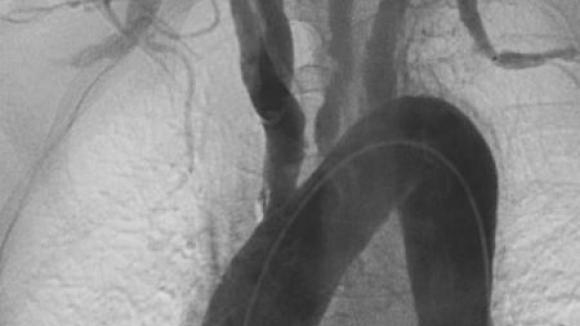
A controlled clinical trial has shown that giving the IL-6 receptor antibody, tocilizumab (TCZ), to patients with Takayasu arteritis (TAK) results in clinical efficacy and has a steroid sparing efffect.
Dr. Jack Cush reviews the journal reports and news from RheumNow.com.
Be sure to register for RheumNow Live 3/13/2020 in Fort Worth
Rheumnow.live.
Non-steroidal anti-inflammatory drugs (NSAIDs) are widely used for acute or chronic arthritis, headache, visceral pain, postoperative pain, etc but come with a small but significant risk of serious adverse effects, including hypertension, cardiovascular disease, kidney injury and GI complica
NEJM has published the results of the TULIP2 trial with anifrolumab, an alpha interferon blocker, in the treatment of systemic lupus erythematosus, showing significant improvement (over placebo) in multiple lupus outcome measures, including BICLA, SRI-4, CLASI and others.
The Journal of Neurology, Neurosurgery & Psychiatry reports there is moderate evidence that six sleep disorders (insomnia, fragmentation, daytime dysfunction, prolonged latency, rapid eye movement sleep behaviour disorder and excessive time in bed) significantly increases the ri
Do postmenopausal women, under age 65 years, need a baseline BMD testing? A JAMA Insights review suggests that the absolute risk of fracture is low in this group and that USPSTF guidelines should be considered - that we should be screening women younger than 65 years who are at increased risk of osteoporosis and we should be using a formal risk assessment tool to identify candidates for bone density testing.
Researchers from the Brigham and Women's Hospital have reported that adults with type 2 diabetes who were treated with SGLT2 inhibitors had a lower risk of gout compared to GLP1 agonist, suggesting that sodium–glucose cotransporter-2 inhibitors may reduce the risk for gout with type 2 diabetes mellitus (T2DM).
Lancet Rheumatology has reported the results of a multicenter follow-up study of systemic lupus erythematosus (SLE) patients showing that organ damange is linked to glucocorticoid use, independent of clinical or serological disease activity.
Statin-induced myositis, often with anti-HMGCR autoantibodies can be difficult to manage, Arthritis Research & Therapy yhas published the experience of 55 patient with HMGCR myopathy, demonstrating that while steroid management may be reasonable in select patients, the use of tr
Dr. Jack Cush reviews the news and journal reports from this past week on RheumNow.com. The podcast covers: best therapies for dactylitis and enthesitis; we have a new knockout for knee pain in OA; and are you on the naughty or nice list when it comes to the new ACR-AF guidelines for arthritis? This and more. Tune in.
Today, the American College of Rheumatology (ACR), in partnership with the Arthritis Foundation (AF), released the 2019 ACR/AF Guideline for the Management of Osteoarthritis of the Hand, Hip and Knee.
Ixekizumab (IXE), an interleukin-17A (IL-17A) inhibitor, was recently approved for use in ankylosing spondylitis (also known as radiographic axial spondyloarthritis- axSpA).