

All News

RheumNow Podcast- A Good First Impression (1.24.20)
Dr Jack Cush comments on this week's journal articles, reviews and studies.
Read Article
QD Clinic - "Doc, When Can I Stop?"
QD Clinic - Lessons from the clinic. In this video: Patients stable on a biologic need guidance on when, and if, they can stop their biologic.
Read Article
Low Risk of Inflammatory Arthritis in Hidradenitis Suppurativa Patients
JAMA Dermatology reports that after the onset and diagnosis of hidradenitis suppurativa (HS), such patients have a higher risk of certain forms inflammatory arthritis.
Read Article
Biosimilars for Rheum Disease: Failure to Launch
The availability of biologic biosimilars has thus far had negligible impact on prescribing practices in the United States, in stark contrast to what has been observed in some European countries, researchers reported.
Read Article
RheumNow Podcast- The Down Side of Steroids (1.17.20)
Dr. Jack Cush reviews the journal reports and news from RheumNow.com.
Be sure to register for RheumNow Live 3/13/2020 in Fort Worth
Rheumnow.live.

NSAID Safety Guidelines
Non-steroidal anti-inflammatory drugs (NSAIDs) are widely used for acute or chronic arthritis, headache, visceral pain, postoperative pain, etc but come with a small but significant risk of serious adverse effects, including hypertension, cardiovascular disease, kidney injury and GI complica
Read Article
RheumNow Podcast- Knee Pain Knockout (1.10.20)
Dr. Jack Cush reviews the news and journal reports from this past week on RheumNow.com. The podcast covers: best therapies for dactylitis and enthesitis; we have a new knockout for knee pain in OA; and are you on the naughty or nice list when it comes to the new ACR-AF guidelines for arthritis? This and more. Tune in.
Read Article
Genicular Artery Embolization to Treat Osteoarthritis Knee Pain
A study from the Journal of Vascular and Interventional Radiology has shown that knee pain secondary to osteoarthritis (OA) may be effectively treated by selective vascular interruption (embolization) showing efficacy and safety in a small pilot trial.
Read Article
ACR-Arthritis Foundation Treatment Guidelines for Osteoarthritis
Today, the American College of Rheumatology (ACR), in partnership with the Arthritis Foundation (AF), released the 2019 ACR/AF Guideline for the Management of Osteoarthritis of the Hand, Hip and Knee.
Read Article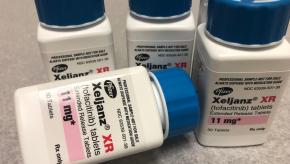
Best of 2019 - Is Methotrexate Necessary with Tofacitinib?
Rheumatoid arthritis patients taking tofacitinib (Xeljanz) plus methotrexate who achieved low disease activity (LDA) may be able to withdraw from the latter agent without significant worsening of disease activity, a researcher reported at EULAR 2019 in Madrid.
Read Article
Best of 2019 - War on RA - Part 1: Walk on the Moon
It’s a great time to be a rheumatologist and to manage RA. But, if you keep doing what you’re doing, you’re going to keep getting what you’ve got.
Read Article
Best of 2019 - Biologic Safety Guidelines from the British Society for Rheumatology
In the United Kingdom, NICE has looked to the British Society of Rheumatology (BSR) to develop evidence based guidance on the safe use of biologic DMARDs in patients with inflammatory arthritis.
Read Article
Best of 2019 - Ups and Downs with Abatacept
Two recent studies have examined the effect of starting abatacept upon the risk of serious hospitalized infections or cancer, showing divergent results from claims data analyses.
Read Article
Best of 2019 - War on RA - Part 3: Useless Drugs
We have options that are endless – we have 28 biologics in rheumatology; 19 approved for RA in the last 20 years, but 15 of these are me-too copies or biosimilars. We currently have 2 JAK inhibitors and may have 3 or 4 by year end. But what we really need is the right drug, at the right time, in the right patient – but how will we know.
Read Article
Best of 2019 - Are Non-TNF Biologics Superior to TNF inhibitors?
Current ACR and EULAR guidelines list TNF-inhibitors (TNFi) abatacept, rituximab, and tocilizumab as being equally effective after methotrexate or as second line therapies when treating rheumatoid arthritis.
Read Article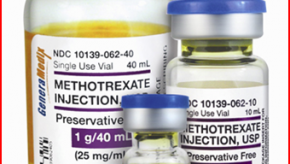
Best of 2019 - Methotrexate and the Risk of Lung Disease
Rheumatology has a comprehensive overview of methotrexate (MTX) and the risk of lung injury, MTX-related pneumonitis and interstitial lung disease (RA-ILD) with rheumatoid arthritis (RA). Past reports suggest the frequence of MTX-pneumonitis to be between 0.3 and 11.6%; recent studies suggest it may be much lower.
Read Article
Best of 2019 - New EMA Warnings for Tofacitinib in Patients at Risk for Clots
The European Medicines Agency safety committee (PRAC) has concluded that Xeljanz (tofacitinib - TOFA) could increase the risk of blood clots in the lungs and in deep veins in patients who are already at high risk for venous thromboembolic events. The PRAC is recommending that TOFA should be used with caution in patients at high risk of blood clots (VTE), regardless of dose used.
Read Article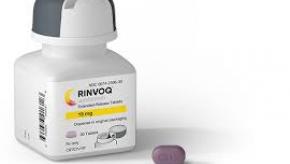
Best of 2019 - Upadacitinib (RINVOQ) FDA Approved for Rheumatoid Arthritis
The US Food and Drug Administration (FDA) on Friday, August 16, approved AbbVie JAK1 inhibitor, Rinvoq (upadacitinib) for adults with rheumatoid arthritis with moderately to severely active disease either not responding to, or intolerant of, methotrexate (MTX).
Read ArticleRheumNow Podcast – Merry Lupus XMAS (12.20.19)
Dr. Jack Cush reviews the news from the past week on RheumNow.com, just in time for Christmas!
Read Article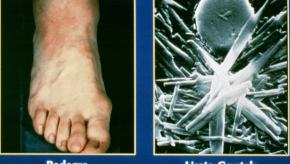
A Role for SGLT2 Inhibition in Gout?
The antidiabetic medication canagliflozin (Invokana) lowered serum urate and reduced the risk of gout flare in a post-hoc analysis of data from two large clinical trials.
Read Article
