All News
Wearable Activity Trackers Don't Improve Weight Loss
JAMA has reported the results of a 24-month trial showing that obese individuals on a long-term healthy diet and exercise program do not have significantly more weight loss from using a wearable device that tracks their activity.
Read ArticleCPAP Use Fails to Prevent CV Events in Sleep Apnea Patients
There are numerous health hazards associated with obstructive sleep apnea (OSA), including an increased risk of cardiovascular events.
Read ArticleDASH Diet: A Role in Gout?
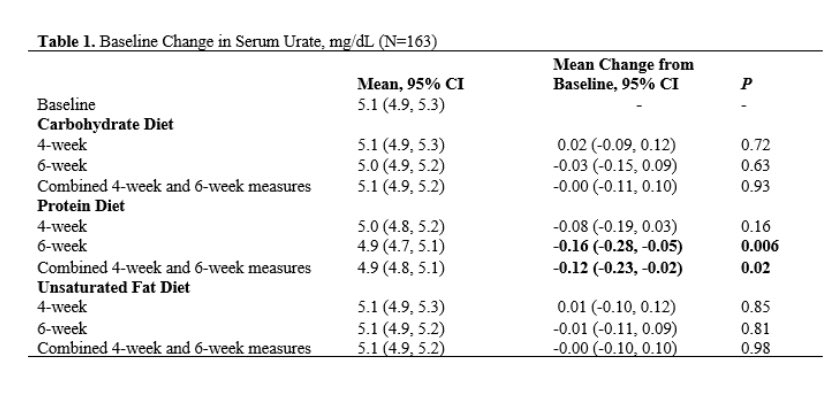
People with hyperuricemia who followed the blood-pressure-lowering DASH diet showed significant decreases in serum urate levels, post-hoc analysis of data from an influential randomized study found.
In the Dietary Approaches to Stop Hypertension (DASH) study, participants adhering to the diet, which emphasizes the consumption of vegetables, fruits, and low-fat dairy foods as well as whole grains, poultry, fish, and nuts, had a mean decrease in serum urate levels of -0.35 mg/dL (95% CI -0.65 to -0.05), according to Stephen P. Juraschek, MD, PhD, of Johns Hopkins University, and colleagues.
RheumNow Week in Review – 15 July 2016
Dr. Jack Cush reviews highlights from this week's rheumatology news on RheumNow.com.
Read Article
A Rheumatologist's Guide to Bariatric Surgery
Obesity is epidemic in North America, affecting nearly 76 million adults. Obesity is not only a risk factor for rheumatoid arthritis and osteoarthritis, it clearly worsens pain and function in most musculoskeletal (MSK) conditions and has been shown to blunt DMARD and biologic resp
Read ArticleLeflunomide and Weight Loss in Rheumatoid Arthritis
Weight change can have substantial effects on the outcomes of patients with arthritis. It has long been known that weight loss and low body mass index (BMI) are associated with poorer arthritis outcomes.
Read ArticleReduced Uric Acid from Weight Loss Tied to Triglycerides
Weight loss is one of several nonpharmaceutical interventions to reduce serum urate (SUA) levels and control gout. French researchers examined the role of xanthine oxidase (XO), low-grade inflammation, and weight loss on SUA levels in obese patients.
Read ArticlePrudent Diet Reduces Risk of RA and Gout
The 2015 ACR meeting in San Francisco highlighted several studies wherein dietary patterns predicted a reduced risk of both rheumatoid arthritis (RA) and gout.
Read ArticleUCSF Study Shows Weight Loss Protects OA Cartilage
Researchers at the University of California at San Francisco have shown that >10% weight loss may impact the rate of cartilage loss as determined by MRI scanning. They presented their findings yesterday at the annual meeting of the Radiological Society of North America (RSNA).
Read ArticleWestern Diet Increased the Risk of Rheumatoid Arthritis
Liu and coworkers from Boston presented abstract #1213, with data from the NHS II Survey. They examined 93,859 women (without RA) and their dietary data from 1991 to 2011.
Read ArticleSleep Apnea Increases Risk of Gout
Zhang and colleagues from Boston analyzed patients with physician diagnosed sleep apnea from The Health Improvement Network in the UK and compared these with 5 controls (age, sex, BMI matched). They studied 9,865 patients with sleep apnea and 43,598 controls.
Read ArticleDiet, Exercise and Glucosamine Fail to Prevent Knee Osteoarthritis
Primary prevention of osteoarthritis is an ideal goal for which there has been little success in clinical trials.
Read ArticleHealth Hazards of Fructose and Soda
The health consequences of fructose-containing sugars, sucrose and high fructose corn syrup, found in sugar-sweetened beverages and foods, may be numerous and include obesity, type 2 diabetes, gout and cardiovascular disease.
Read ArticleHigh Sodium Intake Linked to Risk of RA
Diet has long been considered a potential risk factor for the onset or pathogenesis of rheumatoid arthris. Obesity and the microbiome are being intensively studied as risk factors for RA.
Read ArticleObesity Protects Men from Rheumatoid Arthritis
Researchers from Malmo, Sweden have analyzed data from 383 patients, taken from two population based health surveys with a total of 50,705 participants, and found there is a strong association between a high BMI in men and a lower risk of developing rheumatoid arthritis (RA).
Read ArticleBMI at Age 20 Influences Future Risk of Low Back Pain
A nationwide, cross-sectional study of men aged 30–50 years (n=1385) examined the relationship between weight and back pain over time.
Read ArticleVitamin D Fails in Postmenopausal Osteoporosis Prevention
JAMA reports that investigators from the University of Wisconsin in Madison studied the impact of vitamin D supplements on 230 women who were at least five years past menopause but no older than 75, and without osteoporo
Read ArticleLimited Counseling for Increased Sodium Intake in the U.S.
Increased sodium intake has been shown to increase Th17 cell activity, and in animal models high-salt diets have been shown to drive IL-23-dependent TH17 cells to cause experimental allergic encephalomyelitis (citation source (http://url.ie/z238). I
Read ArticleHalf of US Women are Overweight during Pregnancy
Obesity is associated with adverse outcomes in pregnancy, especially with higher rates of infertility and miscarriage.
Read ArticleObesity Drives Rheumatoid Arthritis
Systematic review of the literature examined whether obesity is associated with a higher risk of rheumatoid arthritis (citation source http://url.ie/z1y6) and found that obese individuals (BMI > 30) are at
Read Article