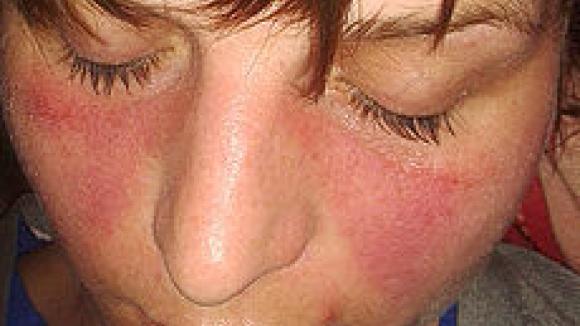
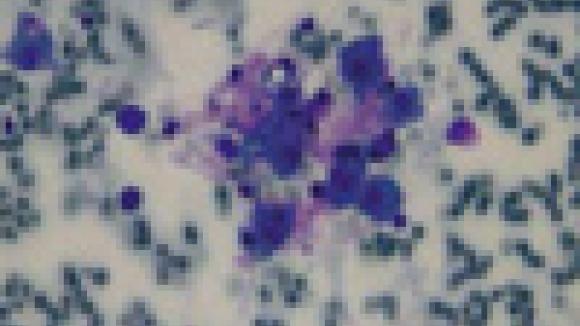
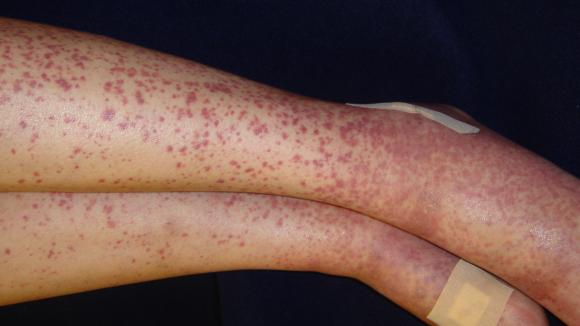
Despite striking improvements in survival among patients with systemic lupus erythematosus (SLE) in recent decades -- from 1-year survival of less than 50% before the introduction of prednisone to 90% today in most specialized treatment centers -- many challenges remain in this perplexing, multis

All News
There seems to be both hope and uncertainty regarding the use of weekly methotrexate (MTX) in giant cell arteritis (GCA) patients whom need to limit their glucocorticoid use.
Tocilizumab (Actemra) was effective for refractory giant cell arteritis (GCA) in real-world practice, although serious infections occurred relatively frequently, Spanish investigators reported.
It has been historically said that risk factors for scleroderma renal crisis (SRC) includes include cold exposure, steroid use, dehydration, rapid progression of skin disease, tendon friction rubs, anti-RNA polymerase III antibodies and pregnancy. A new study examines risk factor for S
Dr. Jack Cush discusses the highlights from the past week on RheumNow.com:
Dr. Jack Cush reviews the news and journals for the beginning of 2019. All from RheumNow.com.
Best wishes for a charmed 2019! My advice: 1. Just show up. 2. If you can, then you must do. 3. Live each day as if it twas your 1st day/last day/make or break day. 4. Teach.
Dr. Jack Cush reviews the news from RheumNow for the week ending 12/21/18.
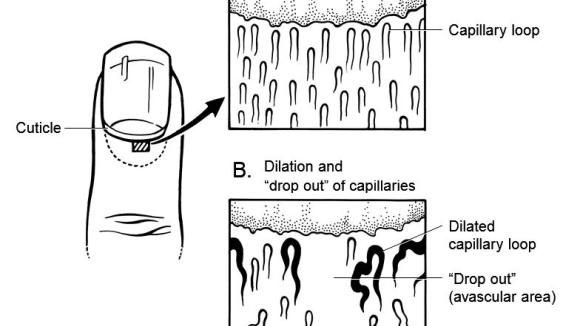
A study of nailfold videocapillaroscopy (NVC) in patients with idiopathic inflammatory myopathies (IIMs) finds abnormalities in more than half of patients suggesting this could be a useful clinical tool in diagnosing and managing patients with IIM.
The NEJM has reported the NIH's Undiagnosed Diseases Network (UDN) study results of genetically identifying new diseases from prospectively followed persons with undiagnosed disorders.
The UDN was formed in 2014 as a network of seven clinical sites, two sequencing cores, a coordinating center, central biorepository, a metabolomics core, and a model organisms screening center. It was established to apply a multidisciplinary model in the evaluation of the most challenging cases and to identify the biologic characteristics of newly discovered diseases.
Dr. Jack Cush reviews the news and new journal articles from the past week on RheumNow.com:
The U.S. Food and Drug Administration on Wednesday approved Celltrion biosimilar of rituximab called Truxima; previously called CT-P10, now generically labeled as rituximab-abbs. This is the first biosimilar to the Rituxan currently approved to treat non-Hodgkin’s lymphoma. Truxima is not approved for use in rheumatoid arthritis, vasculitis, pemphigus vulgaris or chronic lymphocytic leukemia.
A multicenter study of early systemic lupus erythematosus (SLE) patients examined manifestations at disease onset and found that certain clinical features can help to distinguish early SLE from other SLE‐mimicking conditions.
The first drug specifically for primary hemophagocytic lymphohistiocytosis (HLH) was approved today, the FDA announced.
Dr. Jack Cush reviews the news from the past week at RheumNow.com.
Management of Henoch-Schonlein purpura (HSP) can be challenging as supportive care and avoidance of corticosteroids are often insufficient options. A new series of case reports and literature review of steroid refractory HSP suggests that rituximab may be effective in reducing hospital admissions, overall steroid use, and is capable of inducing remission.
Dr Jack Cush reviews the News and Journal reports from the past week on RheumNow.com. Be sure to check out our upcoming meeting in March 2019 - RheumNow Live.
Here are a few important advances in our understanding of interstitial lung disease (ILD) from the ACR 2018 meeting last week.
This past week in Chicago gave us a plethora of new and eye-opening research, people, KOLs, exhibits, sessions, guidelines, posters and a never-ending supply of coffee served in small paper cups. ACR 2018 highlights for me included:
Highlights from Tuesday, day 3 of the ACR Annual meeting in Chicago, included:
The PEXIVAS Study – 2x2 Trial of Plasma Exchange and Reduced Steroids in ANCA-Associated Vasculitis (AAV) - Abstract #2788
During medical training, we were taught about rare diseases that are unlikely to be encountered, but there is a reason why our professors even mention these diseases. It is not just for our board exams; the lectures are for us to recognize the features of the disease when the rare patient comes across our exam table.