The SEMIRA trial studied the tapering vs continuing oral glucocorticoids in rheumatoid arthritis (RA) patients who achieved a low disease activity state (with tocilizumab) were more likely to show safety and better disease control with continuing steroids - even though two-thirds of patients were able to safely taper their glucocorticoid dose.
All News
Dr. Jack Cush reviews the News and Journal Reports from the past week on RheumNow.com.
A recent study from the Netherlands has shown that patients with severe COVID-19-associated cytokine storm syndrome (CSS) with high dose steroids and tocilizumab had a faster recovery, less need for invasive mechanical ventilation and fewer deaths when compared to CSS patients receiving supportive care only.
They studed COVID-19 patients with CSS, defined as rapid respiratory deterioration plus at least two of the following biomarkers: a) C-reactive protein >100mg/L; b) ferritin >900 µg/L; or c) D-dimer >1500 µg/L.
Inflammatory events following infection with SARS-CoV-2 can often worsen the morbid or mortal outcomes with COVID, yet it has been unclear if glucocorticoids may modulate inflammation-mediated damage and lung injury. The RECOVERY trial reports that dexamethasone (DEX) use lowered 28-day mortality among COVID-19 patients requiring respiratory support.
The RECOVERY trial was performed in the UK and enrolled hospitalized COVID-19 patients who were randomly assigned patients to usual care alone or the addition of oral or intravenous dexamethasone (at a dose of 6 mg once daily) for up to 10 days. The primary outcome was 28-day mortality.
Dr. Jack Cush reviews the news, tweets and journal articles from the past week on RheumNow. Let's dig into this week's 14 highlights.
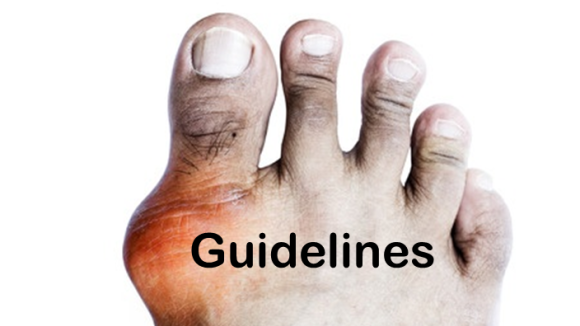
In May, the American College of Rheumatology (ACR) released the"2020 Guideline for the Management of Gout"reflecting new clinical evidence since the last guideline published in 2012.
Patients with the idiopathic inflammatory myopathies (IIMs) dermatomyositis and polymyositis are at increased risk for cardiovascular events, with risks similar to what has been documented for rheumatoid arthritis (RA), during the first 5 years after diagnosis, U.K. researchers reported.
Two recent reports further characterize the newly described, Kawasaki-like, syndrome affecting children with COVID-19 infections.
The NEJM describes the childhood syndrome as having Kawasaki’s disease, fever, toxic shock syndrome, acute abdominal conditions, and encephalopathy; hence the label Childhood Multisystem Inflammatory Syndrome. The disorder emerged in late April 2020, first in the U.K., and then similar cases were reported from many other countries. The CDC named this multisystem inflammatory syndrome in children (MIS-C).
Multisystem inflammatory syndrome in children (MIS-C) associated with COVID-19 infection has both similarities and differences with Kawasaki disease, and requires distinct clinical management, according to draft guidance from the American College of Rheumatology (ACR).
The high potency calcineurin inhibitor voclosporin plus standard of care was superior to standard of care alone in a phase III study of lupus nephritis known as AURORA.
Yesterday, the FDA approved canakinumab (Ilaris) as treatment for adult-onset Still's disease (AOSD), the first ever FDA approved drug for AOSD.
Canakinumab, an interleukin-1 inhibitor, was FDA approved in 2013 for use children (aged 2 years and older) with systemic juvenile idiopathic arthritis and has since been approved for use in other periodic fever disorders (e.g., FMF, CAPS, TRAPS, Hyper IgD syndrome).
Preliminary results released today shows dexamethasone (DEX), given to hospitalized, severly ill, COVID-19 patients, is capable of reducing mortality rates by one-third, with researchers calling this a “major breakthrough” in coronavirus management.
The results stem from a UK trial, called the RECOVERY trial, launched in March 2020, compared outcomes of around 2100 patients who were randomly assigned to DEX treatment compared with 4,300 patients not on DEX.
The prevalence of atherosclerotic vascular events among patients with systemic lupus erythematosus (SLE) today is considerably lower than in the past, analysis of multicenter data found.
Among patients enrolled in an inception cohort from 1999 to 2017, only 3.6% of patients had an atherosclerotic vascular event, at a rate of 4.6 per 1,000 patient-years, according to Murray B. Urowitz, MD, of the University of Toronto in Canada, and colleagues.
In this week's podcast, Drs. Artie Kavanaugh and Jack Cush present highlights from the virtual EULAR2020 meeting held June 3-6, 2020. Featured reports include the SELECT-CHOICE study, the EXCEED trial, Avacopan in AAV, BeST mortality outcomes, BLISS-LN study, biosimilars and tofa in systemic sclerosis.
These were my top abstracts from Thursday, 4th of June at EULAR 2020:
In difficult times, it's reassuring to reflect on the similarities that bring us together. In the case of the EULAR and ACR COVID19 guidelines as discussed at #EULAR2020 by Drs.
Gianfresco et al have published the first peer-reviewed analysis of COVID-19 infected, rheumatic disease patients entered into the Rheumatology Global Alliance registry; showing that a) rheumatic disease patient can be infected with COVID-19, b) that DMARD and biologic use has no apparent effect on outcomes and c) steroid increase and TNF inhibitor decrease the odds of hospitalization.
Dr. Jack Cush reviews the news and journal articles from the past week on RheumNow.com.
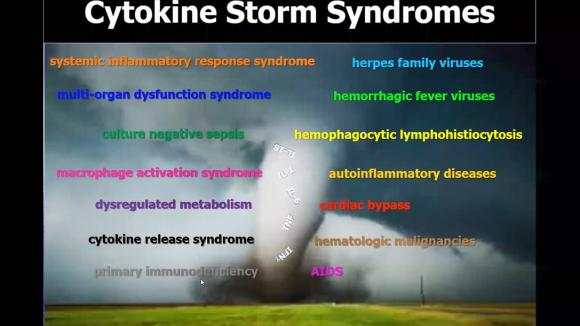
This week's Tuesday Nite Rheumatology featured Dr Randy Cron from the University of Alabama - Birmingham as he spoke and took questions on the immunology, immunopathogenesis and treatment of Cytokine Storm Syndrome, especially as they relate to COVID-19 and rheumatic disease patients. The program was moderated by Dr. Jack Cush.