
Article
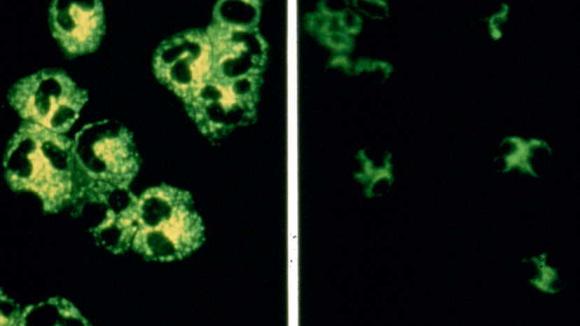
Research presented in the Journal of Experimental Medicine shows that ANCA-associated vasculitis (AAV) may be propagated by pathogenic mechanisms triggering cGAS/STING/IRF3-dependent IFN-I release.

Search for Terms or Answers
Research presented in the Journal of Experimental Medicine shows that ANCA-associated vasculitis (AAV) may be propagated by pathogenic mechanisms triggering cGAS/STING/IRF3-dependent IFN-I release.
Dr. Jack Cush reviews the news and journal reports from this past week on RheumNow and discusses a case of refractory juvenile dermatomyositis with calcinosis.

We've got a lot to discuss this week: psoriasis; fatigue; sleep; sural nerve biopsies; uveitis and SpA; diet and RA; tofacitinib and the ORAL surveillance study; what not to take with mycophenolate - and more. In what order should these items be discussed? This week the run down is based on popularity, measured by rheumatologist engagements on the website and social media.
Another analysis of the mandatory postmarketing safety study for tofacitinib (Xeljanz) has confirmed what most observers expected: that rates of infection with the drug in rheumatoid arthritis are higher than with tumor necrosis factor (TNF) inhibitors.

A small retrospective study suggests that patients with difficult to treat adult-onset Still's disease (AOSD) or sytemic juvenile idiopathic arthritis (sJIA) may respond well to JAK inhibitor (JAKi) agents - presumable by blocking pro-inflammatory cytokines, notably IL-6 and IFN.

Dr. Jack Cush reviews the news, FDA approvals, journal articles from the past week on RheumNow; plus viewer questions. This week great hopes for vitamin D, the great unknows of CSA and the great big mess that is the gout.
The ACR has posted a new ACR Clinical Practice Guideline Summary providing recommendations on the use of vaccinations for children and adults with rheumatic and musculoskeletal diseases (RMDs).

Tan and Buch have reviewed the approach to difficult to treat rheumatoid arthritis (D2T-RA), with a new EULAR definiation of D2T-RA to foster an approach rationale and concideration of treatment options.
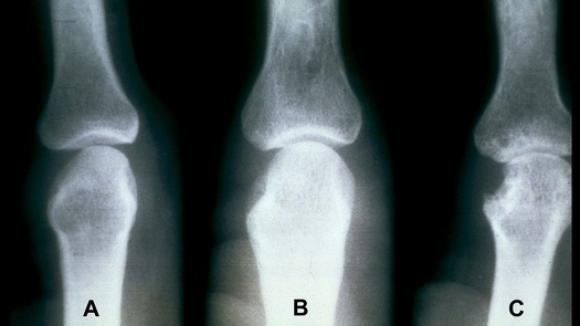
Are you treating “systemic” or “articular” (arthritis) Still’s disease? Most Still’s patients have a dominance of one or the other. With certainty, the right therapy for the right symptoms can be chosen. What about patients who have an incomplete or no response, or who become unresponsive to a drug that once worked well?










By downloading this material, I acknowledge that it may be used only for personal use and personal education and that I will accredit RheumNow.com as the source and owner of this material. Commercial use or mass reproduction of this material without permission from RheumNow (info@rheumnow.com) is prohibited.
