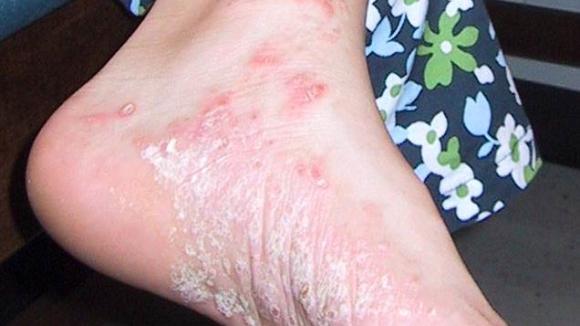
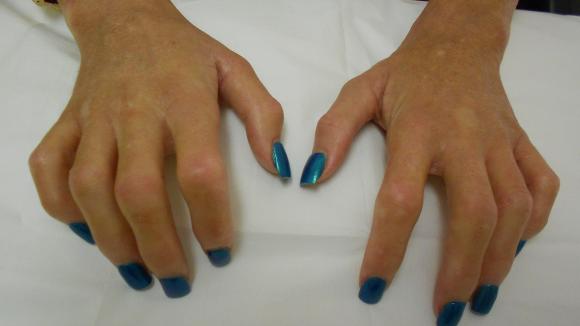
Annals of Internal Medicine reports a large, binational study finding SARS-CoV-2 infection was associated with an increased risk for autoimmune inflammatory rheumatic diseases (AIRDs) that extends up to 12 months after infe

All News
Dr. Jack Cush reviews the news and journal reports from the past week on RheumNow.com. Are these associations with infection, biomarkers and weather real or imaginary? Linked or luck? Causal or casual? You decide....
Despite the availability of numerous advanced therapies for psoriatic arthritis (PsA), there remains a substantial burden and unmet need for improved therapies, according to a newly published Canadian study.
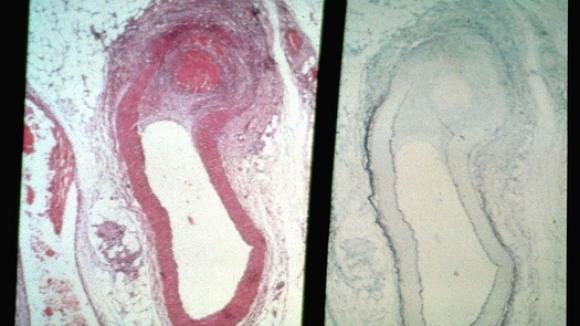
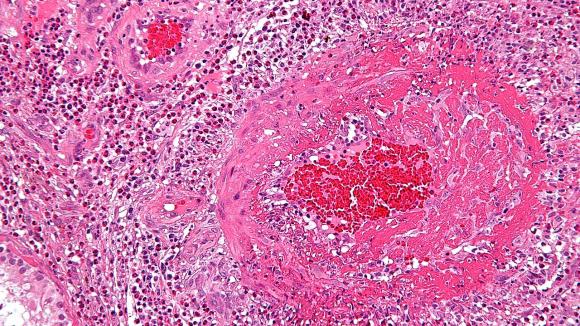
A multinational study of polyarteritis nodosa (PAN) through the international GLOBAL-PAN network shows PAN to be a complex, multisystem disorder with a high risk of relapse and low risk of death (11% at 10 years).
A UK population cohort study has shown that gout carries an increased risk for a wide variety of cardiovascular disorders.
The TARGET (Treatments Against RA and Effect on FDG PET/CT) trial showed that different treatment strategies equally benefited arterial inflammation (by FDG-PET) in rheumatoid arthritis. A subsequent analysis of these patients showed several candidate biomarkers that may correlate with baseline and treatment‐associated changes in arterial inflammation in patients with RA.
The common inflammatory condition sinusitis is linked to a 40% heightened risk of a subsequent diagnosis of rheumatic disease, particularly in the 5 to 10 years preceding the start of symptoms, finds research published in the open access journal RMD Open.
A multicenter, double-blind, phase 3, randomized, active-controlled trial has shown that Benralizumab (BEN) was noninferior to mepolizumab (MEP) for the induction of remission of patients with relapsing or refractory Eosinophilic granulomatosis with polyangiitis (EGPA).
A comprehensive overview of Behcet's syndrome appeared in last week's NEJM, reviewing the numerous advances in the immunogenetics, syndrome recognition, and targeted therapeutic approaches.
Dr. Jack Cush reviews the news and journal reports from the past 2 weeks on RheumNow.com; but begins with a discussion of what constitutes "immunosuppression" and how it applies to our patients.
The NEJM has published the results of CD19 B cell depletion (by CAR-T cell therapy) in autoimmune disease patients, demonstrating it to be feasible, safe, and efficacious.
The ARIAA trial tested the utility of IV abatacept in individuals ACPA+ arthralgia patients with subclinical inflammation and showed abatacept to decrease MRI inflammation, clinical symptoms, and risk of future rheumatoid arthritis (RA) development.
Is temporal artery ultrasound equivalent or superior to the reference standard of temporal artery biopsy when diagnosing giant cell arteritis (GCA)?
Dr. Jack Cush answers audience clinical case questions sent by email or "ask Cush anything". Cases and questions from:
Abatacept has been studied in seropositive clinically suspect arthralgia patients (at risk for rheumatoid arthritis) and shows the potential to delay or prevent the disease.
The NEJM has published the results of the FRONTIER 1 trial demonstrating the efficacy of JNJ-77242113, an oral interleukin-23 (IL-23) receptor antagonist peptide, in patients with psoriasis (PSO).
Dr. Jack Cush reviews the journal reports from the past week on RheumNow.com. Highlights are summarized by three songs: "Stairway to Heaven", "You're No Good", and "How Long (has this been going on)".
Refractory of difficult to treat (D2T-RA) rheumatoid arthritis (RA) comprises a minority of patients that can be categorized by clinical and imaging parameters to formulate a better therapeutic approach.
Inflammatory arthritis (IA) is a common manifestation in systemic sclerosis (SSc), affecting nearly one-third of patients.
In the 2 years that followed the termination of the VITAL study, the preventative effect of vitamin D on incident autoimmune disease disappeared with supplement discontinuation; but n-3 fatty acid treated individuals had a sustained benefit in reducing the risk of autoimmune disease.