


Beyond Chondrocalcinosis - What’s New in CPPD Disease Save

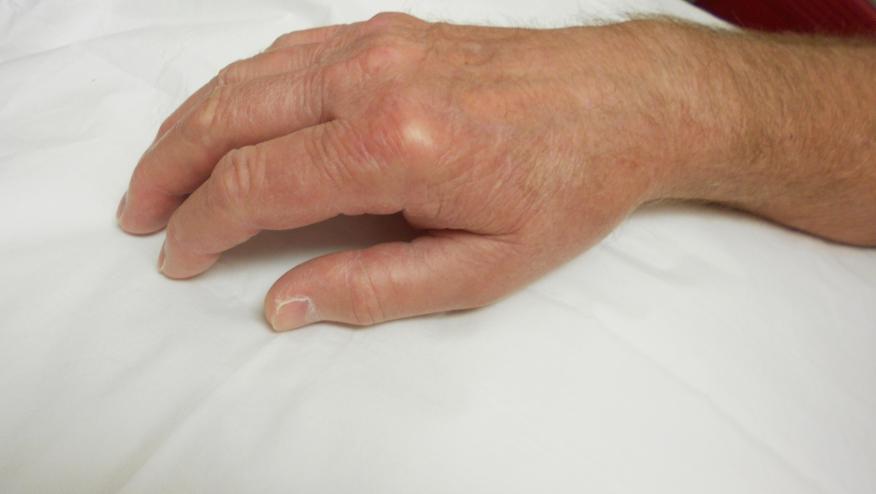
Know-it-now
- CPPD is not benign. Chondrocalcinosis independently predicts incident knee OA, cartilage loss and persistent pain.
- Think systemically. CPPD disease carries excess cardiovascular and fracture risk, which supports bone-health and cardiovascular risk assessment and prevention.
- Linked symptoms are most meaningful. Confirm CPPD in the symptomatic joint, ideally by synovial fluid or ultrasound, and image the knees and wrists.
- ENPP1 is the leading therapeutic target. It is supported by GWAS, functional data and repurposable inhibitors.
- CPPD trials are possible. Validated classification criteria, ultrasound and CT scores, and OMERACT core domains are in place. Asymptomatic high-burden patients, who may not meet classification criteria, also deserve inclusion.
An overview of calcium pyrophosphate deposition (CPPD) disease by Sara Tedeschi presents our evolving understanding of CPPD with advances affecting nomenclature, classification, imaging, genetics, long-term outcomes and potential future targeted therapies. This review builds on other important reports on CPPD:
- 2026 Arthritis & Rheumatology, Expert Perspective on CPPD (by Dr. S. Tedeschi) discusses:
- CPPD nomenclature, diagnosis, imaging, distinguishing from gout, and standards of care.
- 2024 Lancet Rheumatology CPPD Review (by Dr. T Pascart), discusses:
- Risk factors and associations (including osteoarthritis), crystals, NLRP3 inflammasome, and treatments.
In the current Rheumatology review Dr. Tedeschi sheds light on imaging studies, CPPD clinical trials, new genetic associations, and updates to the nomenclature.
Nomenclature: The G-CAN consortium has published consensus terminology for clinical care and research. It distinguishes these primary forms of CPPD:
- acute CPP crystal arthritis
- chronic CPP crystal arthritis
- OA with CPPD
The diagnosis of CPPD still favors the 50-year-old, never-validated Ryan and McCarty criteria: joint symptoms, synovial fluid CPP crystals and radiographic chondrocalcinosis. Today, ultrasound, CT and dual-energy CT supplement the imaging. Tedeschi prefers to see CPPD in the symptomatic joint before attributing symptoms to CPPD, even if crystals are present elsewhere.
The 2023 ACR/EULAR classification criteria hinge on: a) having at least one episode of peripheral joint pain, swelling, or tenderness (entry criterion); b) not having an exclusionary alternative disease (exclusion criterion), and c) meeting the sufficient criteria of having the crowned dens (C1/C2) syndrome or calcium pyrophosphate crystals in synovial fluid. These have 99% sensitivity. Synovial fluid CPP crystals in a symptomatic joint are sufficient for classification. There is a gap, however: patients with a heavy imaging burden but no inflammatory symptoms. For instance, bilateral knee and wrist CPPD with lateral patellofemoral OA, may not be classified. That would exclude them from future disease-modifying trials.
Imaging and CPPD. EULAR 2023 recommends radiography and ultrasound, or CT for axial disease. It advises imaging the knees and wrists in addition to symptomatic joints, and it discourages routine serial imaging. Validated imaging scoring systems exist:
- the OMERACT ultrasound score, for knee and wrist;
- the CT-based Boston University Calcium Knee Score (BUCKS), for the knee only.
Radiographic scores remain unvalidated. AI is emerging: a convolutional neural network detected CPPD on hand radiographs with an AUROC of 0.86.
Genetic association. Rare early-onset familial disease involves two genes: ANKH (gain of function) and TNFRSF11B/osteoprotegerin (loss of function). A large 2025 CPPD GWAS study included more than 3,000 million Veteran Program patients. It found genome-wide signals at ENPP1 and RNF144B in both European- and African-ancestry cohorts. A separate meta-analysis of more than 11,000 chondrocalcinotic knees confirmed RNF144B and added ANKH, RGS7 and ZNF445. The lead ENPP1 variant is gain of function, which implies more pyrophosphate generation.
Linkage. Prospective cohorts now link chondrocalcinosis to joint damage. In the MOST study, subregional mineralization predicted MRI cartilage damage in the same subregion over 2 years. MOST participants with chondrocalcinosis also had more persistent and worsening knee pain. In the Rotterdam Study, chondrocalcinosis predicted incident knee OA over up to 20 years of follow-up.
Outside the joint, CPPD disease is associated with: a) higher risk of non-fatal cardiovascular events (in Veterans Administration and tertiary-care cohorts); b) lower cortical bone mineral density; and c) higher risk of fragility fractures, similar in men and women.
CPPD clinical trials. Past trials used inconsistent endpoints: DAS44 in a 3-month MTX trial, and ≥30% reductions in joint counts in a 6-month HCQ trial. OMERACT has now established core domain sets for acute and for chronic/recurrent disease. These include: pain; joint tenderness and swelling; function; patient global assessment; and adverse events.
Future targets. Unlike gout, CPPD disease has no disease-modifying therapy. Candidate targets are the proteins that regulate pyrophosphate:
- ANKH: In a pilot of 5 patients treated for 5 days, probenecid lowered synovial fluid ATP to 4.4 vs 31.4 nmol/mL. The difference was numerical only.
- ENPP1: Inhibitors already in oncology development are an obvious candidate.
- Alkaline phosphatase: Repletion with asfotase alfa is untested in patients with normal ALP.
Experimental crystal-dissolving approaches include zinc–pyrophosphate cation exchange, a phage-derived peptide (R25) that lowered pyrophosphate by about 20%, and HDAC inhibitors. Any dissolution strategy will need monitoring for flares, much as gout patients flare when urate-lowering therapy begins.
CPPD disease has moved from an incidental radiographic finding to a disease with real joint, cardiovascular and bone consequences. The research infrastructure for disease-modifying trials now exists; what is missing is a drug.
Related Content
ADD THE FIRST COMMENT
Disclosures
Disclosures
The author has no conflicts of interest to disclose related to this subject
The author used AI to research and organize this content, and maintains responsibility for its accuracy






If you are a health practitioner, you may Login/Register to comment.
Due to the nature of these comment forums, only health practitioners are allowed to comment at this time.