



Falls Hide in Plain Sight in Rheumatic Disease Save

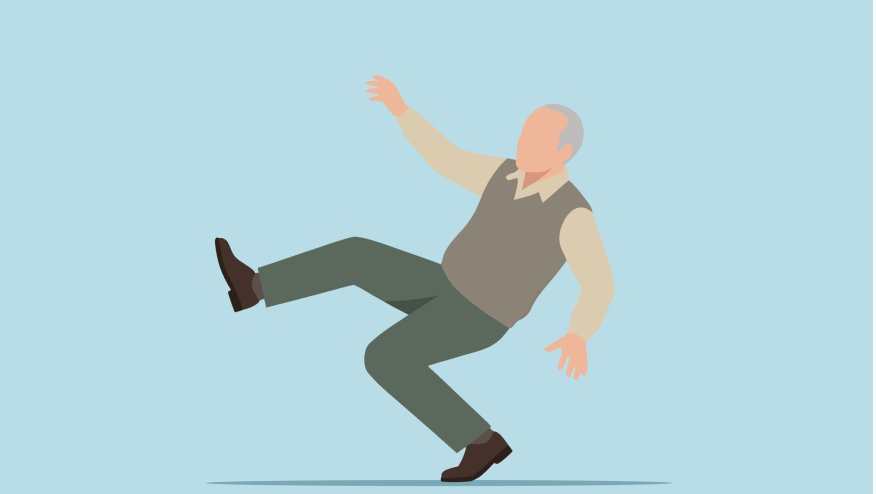
A patient with arthritis pitches forward onto her knees and wrists while bending to grab something. Another time she tries to get up and lands on the bed. Another time she uses a chair to lower herself to the floor.
By the World Health Organization definition (coming to rest inadvertently on the ground, floor, or another lower level), all of these count as falls.
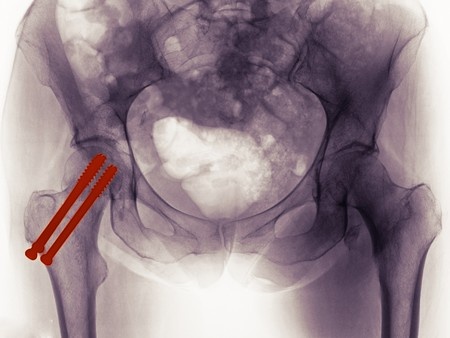
Katherine Wysham, MD, in the session “Rheumatology for Every Age” at ACR 2026 noted that falls are common in people with arthritis and underreported. A fall tends to start a cycle: lost confidence, less going out, reduced social participation, deconditioning, and then more falls and fractures. As patients age, rheumatologists will see this cycle more often, and about 25% of hip fracture patients die within a year.
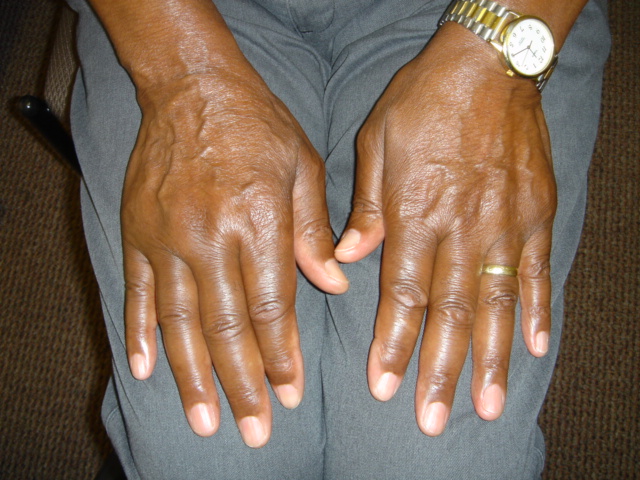
This concern extends to other rheumatic conditions, including systemic lupus erythematosus (SLE). Abstract 2750, from Laura Plantinga and colleagues, showed pooled data of 780 adults with SLE from the California Lupus Epidemiology Study and Georgians Organized Against Lupus (mean age 47.9, 91.9% women, 52.6% Black). In the prior year, 26.0% reported a fall. Among those who fell, 59.1% fell twice or more and 31.0% had an injury needing medical attention.
Falls were not confined to older patients: 20.7% of those aged 20 to 44 reported one, compared with 37.4% of those 65 and older. Higher disease activity (38.5% vs 13.5%), pain interference (43.8% vs 16.5%), fatigue (39.2% vs 18.8%), and lower cognitive function (39.7% vs 18.9%) were each linked to more falls. Low physical function showed the stronger signal (34.2% vs 13.4%, adjusted).
Obesity was also associated with falls (21.0% vs 17.3% after adjustment), and reduced mobility is one plausible explanation. Outside lupus, a meta-analysis of 31 studies in adults 60 and older linked obesity to more falls (relative risk 1.16) but not clearly to fall-related injuries, and an earlier report from the Georgia lupus cohort found higher odds of falls with obesity (adjusted odds ratio 1.58).
How can clinicians catch this in a busy visit? Dr. Wysham starts with what can be observed: how long a patient takes to stand and whether arms are needed, walking speed, shuffling gait, posture, a limp, or a new cane, walker, or wheelchair. Then any one of three quick tests, each under 30 seconds for most patients, can put a number on it:
- Timed Up and Go: stand, walk 10 feet at a normal pace, turn, return, and sit. 12 seconds or more signals higher fall risk.
- Five times sit to stand: arms crossed, five rises from a chair. 15 seconds or more signals higher fall risk.
- Single leg stance: near a wall or stable chair. Under 6.5 seconds signals higher fall risk.
In the case, the patient’s Timed Up and Go was 17 seconds. A positive result or a reported fall warrants follow-up on the mechanism, environment, vision, dizziness, joint buckling, and footwear.
For patients at risk, options include falls-specific programs that combine balance and strengthening, such as Otago, Tai Chi, and YMCA Moving for Better Balance, as well as physical therapy referral. Exercise should combine aerobic, strengthening, and balance work, paced for inflammatory disease, and be something the patient enjoys. Community options include Walk With Ease from the Arthritis Foundation and SilverSneakers, which many Medicare Advantage plans cover. Home safety, footwear review, bone health (calcium, vitamin D, no tobacco, limited alcohol), and properly fitted mobility aids round out the plan.
Dr. Wysham closed on a hopeful note: after falls-specific physical therapy, the patient took up Tai Chi, joined the YMCA (Zumba is her favorite), and now walks her grandson to and from school. What kept her going was what mattered most to her.
In summary, clinicians should ask about falls, support efforts to increase mobility, acknowledge setbacks, and align with patient goals. A few questions, a stopwatch, and a referral can keep patients on their feet and doing what they love.
More ACR Coverage:
Related Content
The July 16th edition of JAMA reviews the highly prevalent problem of hip fractures - a major global health burden: 14.2 million occur worldwide annually (280,000 in the US), with global incidence higher in women (833.9/100,000) than men (510.0/100,000). Lifetime risk at age 50 is 22.9% for women, 10.7% for men. Mortality is substantial.
Lee, Levinson, and Makris have published an approach to evaluating inflammatory joint pain in older adults in JAMA Internal Medicine. While intended to be a practical guide for primary care clinicians, the tenets and clues ring true for all.
Dr. Akhil Sood reports on abstract 1849 presented at ACR Convergence 26.




If you are a health practitioner, you may Login/Register to comment.
Due to the nature of these comment forums, only health practitioners are allowed to comment at this time.