


Increased Polypharmacy in SLE Patients Save


A cross-sectional study of US adults with systemic lupus erythematosus (SLE) shows significantly increased prevalence of polypharmacy, related to age, disease outcomes and often, non-SLE common medications.
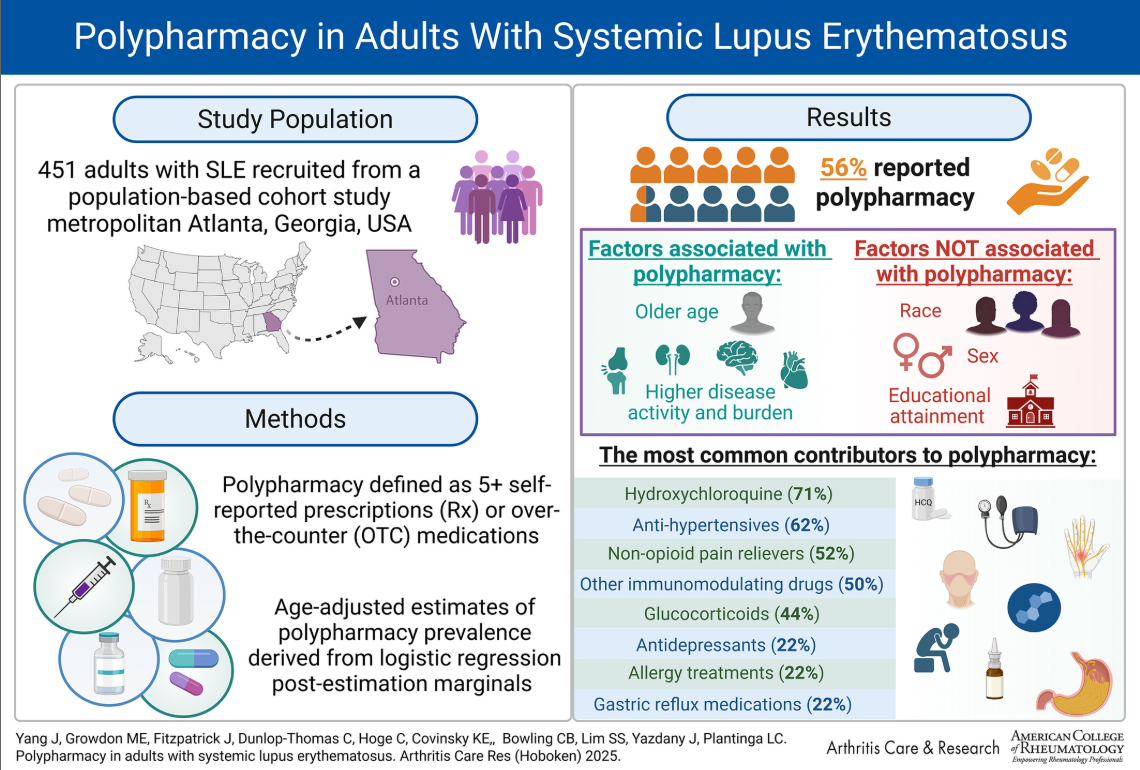
A population-based cohort of adults SLE patients in Atlanta, Georgia were analyzed for both prescribed and over-the-counter (OTC) medications. Polypharmacy was defined as five or more prescription or OTC medications.
More than half (56%) of 451 SLE patients (15.3% ≥60 yrs, 92% women, 82% Black) reported polypharmacy.
Factors associated with increased polypharmacy were numerous:
- Increases with age. Older age (68% for those ≥60 years)
- Higher vs lower disease activity (66% vs 46%)
- SLE-related damage (69% vs 42%)
- Longer disease duration (62% vs 50%)
- Number of immunosuppressants: 3-5 IS=80%; 0-1 IS=38%
Polypharmacy was not statistically significantly different by sex, race, or education.
Although hydroxychloroquine (71%), glucocorticoids (44%), and other immunomodulating drugs (50%) were common, polypharmacy was most often driven by other medications, such as antihypertensives (62%), nonopioid pain relievers (52%), allergy treatments (22%), antidepressants (22%), and gastric reflux medications (22%).
Clinicians need to address the burden of medication regimens, taking into consideration both OTC and non-SLE medications.
Continue Reading
ADD THE FIRST COMMENT
Disclosures
Disclosures
The author has no conflicts of interest to disclose related to this subject




If you are a health practitioner, you may Login/Register to comment.
Due to the nature of these comment forums, only health practitioners are allowed to comment at this time.