


Which Fibromyalgia Drugs are Cost-Effective? Save

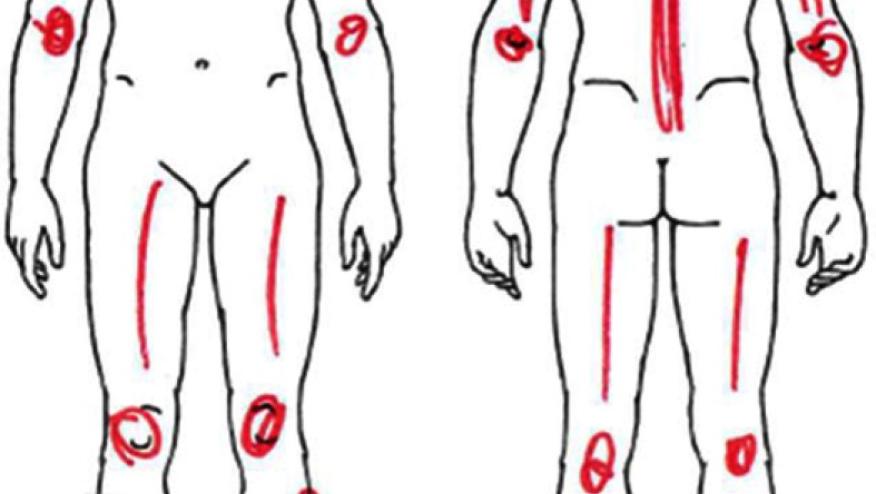
A cost-effectiveness analysis compared FDA approved fibromyalgia (FM) drugs (pregabalin, duloxetine, milnacipran) with amitriptyline and found duloxetine was the preferred strategy across perspectives.
Fibromyalgia (FM) affects up to 6% of US adults. Such patients may be complex to manage and the annual US health care costs for FM are nearly 3 times higher than controls. FM patients are more likely to seek healthcare and incur substantial productivity losses. Lastly, the global FM market worth $3.6 billion. In the US, the FDA approved 3 agents (pregabalin, duloxetine, milnacipran) for use, with being approved since 2009.
This analytical study used a Markov cohort state transition model to estimate lifetime costs and quality-adjusted life-years (QALYs) for each investigated pharmacologic strategy. The simulated cohort reflected adults with moderate to severe FM. Amitriptyline (25-100 mg) was the reference drug to which others were compared - pregabalin (150, 300, 450, and 600 mg), duloxetine (60 and 120 mg), and milnacipran (100 and 200 mg). They reported expected lifetime cost, QALYs, incremental cost-effectiveness ratios (ICERs), and incremental net monetary benefit (iNMB) at willingness-to-pay (WTP) thresholds of $50 000, $100 000, and $150 000 per QALY.
Outcomes were reported according to either US health care payer or societal perspectives. The US health care payer perspective incorporated direct medical and nonmedical costs. The societal perspective included the same plus a much wider inclusion of all that comprises the economic burden of FM.
From the US health care payer perspective, duloxetine 120 mg was associated with increased QALYs versus amitriptyline at slightly higher cost (ICER, $1536 per QALY), while pregabalin 450 mg was dominated by duloxetine 120 mg.
When societal costs were considered, duloxetine 120 mg and pregabalin 450 mg were cost saving relative to amitriptyline.
Amitriptyline remained both more effective and less costly than milnacipran, lower doses of pregabalin and duloxetine, and no treatment. At a $100 000 WTP threshold, iNMB for duloxetine 120 mg was $40 375 from the health care payer perspective and $70 063 from the societal perspective; for pregabalin 450 mg, iNMB was $21 211 and $40 190 for the health care payer and societal perspectives, respectively.
While duloxetine was the preferred strategy, amitriptyline provided greater net benefit than milnacipran and the lower doses of pregabalin and duloxetine.
ADD THE FIRST COMMENT
Disclosures
Disclosures
The author has no conflicts of interest to disclose related to this subject





If you are a health practitioner, you may Login/Register to comment.
Due to the nature of these comment forums, only health practitioners are allowed to comment at this time.