


Bespoke Telehealth in Gout: A Missed Opportunity Save
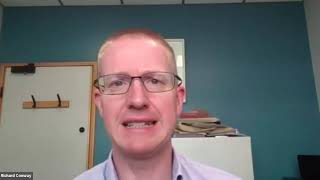
Dr. Richard Conway discusses the benefits of telehealth visits with gout patients.
Transcription
Hello everyone. I'm Dr. Richard Conway from Dublin, Ireland, and I'm here to talk to you today as part of RheumNow's Gout campaign. And I'm going to talk to you today about Bespoke Telehealth in gout, a missed opportunity.
So telehealth is something I do. I love doing it. I think it allows great flexibility and opportunities for us and for our patients. But I don't think all of you really do it. I think we as rheumatology as a specialty we did do telehealth. We did lots of it. We had to during COVID, and then after COVID we kind of just slowly, or not so slowly, went back into our old habits. And I think for some patients absolutely telehealth was a step too far. It was too technically challenging. They just couldn't really cope with the interaction with their clinicians that way. But I think that was probably a relative minority of patients. I think there were kind of a similar sized minority who found telehealth fantastic and continue to find telehealth fantastic and are very very — they much prefer doing it. It gives them the opportunity to build their appointments into their daily work-life balance type thing. And they're not having to take half a day off work to come into their appointment.
And then I think the majority of people probably don't really care one way or another. They both work for them. And sometimes face-to-face appointments would be better. Sometimes telehealth is better. Perhaps it might depend on what their actual appointment is about, which they prefer. So I think there's a huge opportunity there that we're not utilizing to give better flexibility and better choice to our patients.
And I think it does depend a little bit on the disease, and we are here talking about gout, and I think gout is probably one of the best cases for something that should be done by telehealth. And I think probably a lot of people are acting like, what — we want gout, we want to be seeing this, we need to see that it actually is gout and examine it, we need to put a needle into it and take some crystals out and whatever else, maybe inject the joint. But actually, yes, that's true. But that is a very small minority of what we actually do with gout or what we should be doing with gout. We see those people maybe during an acute flare in our clinics or we see them as an inpatient consult. But most of the work of gout is not dealing with that group of patients. It's dealing with people who are not flaring at the minute and they need their gout managed better. And perhaps we feel a greater proportion of our work is more the flares because we're not doing the other stuff well and we're not seeing people back as frequently or as thoroughly as we should for gout.
The other things about gout — I like treating gout. I love my gout patients. They're great people. But with the best will in the world, people with gout are not good at coming into clinic. Their follow-up rate is not good for all sorts of reasons. They're often relatively young people with busy lives. If they're feeling well, they'll often put their appointments on the back burner. Especially when they're doing well, they are not the most adherent, for similar reasons, either to their appointment schedule or to their medications. So I think there is huge value in offering these people more flexibility, and also a case of, oh I forgot my appointment, but actually I can just do it over telehealth right now — I can just step into an empty room, or into my car, and do it there, somewhere that's quiet. We can do this five-minute appointment and keep our management of the gout on track.
So I think the gout patient's poor attendance, poor adherence — both factors that are potentially amenable to telehealth. I think it's hugely important with patients who have gout that we're constantly reinforcing the messages of the need to take their medication, how to take their medication, because it can be confusing. They're often on a couple of different things — a urate-lowering therapy and maybe some colchicine or something else, maybe something else again if they're having a flare. So there's a lot of moving parts here.
Again, another factor is that outpatient visits, especially when they're doing well, are quick. So it might be five or ten minutes. It's very quick, something that's very easily doable over telehealth, and that can then be allowed to fit into someone's day.
Like this — when we're starting someone on urate-lowering therapy, either febuxostat or particularly with allopurinol, there's a lot of dose titration going on. We're starting the medication, repeating the blood test in about four weeks, we're then potentially increasing the dose, and all of that doesn't happen naturally — it has to happen in a clinic appointment. And why can't that be done over telehealth? Literally,
all we're doing is checking the bloods, seeing if they're good enough or not. Probably increasing up the urate lowering therapy until we reach a target. Something quick and easy to do over telehealth. Likewise, if we have somebody on colchicine prophylaxis as they are titrating up their urate lowering therapy, then that is also something which is stopping at some point. And the stopping or reduction of that is something that's best done in a controlled fashion.
I have often told patients that oh we'll do this for 6 months and then stop it. Nobody remembers. It has to be said at the time it's meant to stop or it just won't happen.
I think we have been neglecting our patients in some ways due to this kind of combination of issues and we kind of have an attitude of oh if the patient isn't bothered showing up about their gout, what can we do, that's just how gout patients are, we'll just see them the next time they flare and try again. And I don't think that's good enough. I think we should be more proactive about this, to be utilizing telehealth to manage gout and improving our patients' lives and long-term outcomes.
Feel free to agree with me, feel free to disagree with me, give out to me on Twitter or on RheumNow. But I think we're really missing a trick with our lack of adoption of telehealth, in particular in gout. I'm Dr. Richard Conway and check out RheumNow for all the content on this gout campaign.
So telehealth is something I do. I love doing it. I think it allows great flexibility and opportunities for us and for our patients. But I don't think all of you really do it. I think we as rheumatology as a specialty we did do telehealth. We did lots of it. We had to during COVID, and then after COVID we kind of just slowly, or not so slowly, went back into our old habits. And I think for some patients absolutely telehealth was a step too far. It was too technically challenging. They just couldn't really cope with the interaction with their clinicians that way. But I think that was probably a relative minority of patients. I think there were kind of a similar sized minority who found telehealth fantastic and continue to find telehealth fantastic and are very very — they much prefer doing it. It gives them the opportunity to build their appointments into their daily work-life balance type thing. And they're not having to take half a day off work to come into their appointment.
And then I think the majority of people probably don't really care one way or another. They both work for them. And sometimes face-to-face appointments would be better. Sometimes telehealth is better. Perhaps it might depend on what their actual appointment is about, which they prefer. So I think there's a huge opportunity there that we're not utilizing to give better flexibility and better choice to our patients.
And I think it does depend a little bit on the disease, and we are here talking about gout, and I think gout is probably one of the best cases for something that should be done by telehealth. And I think probably a lot of people are acting like, what — we want gout, we want to be seeing this, we need to see that it actually is gout and examine it, we need to put a needle into it and take some crystals out and whatever else, maybe inject the joint. But actually, yes, that's true. But that is a very small minority of what we actually do with gout or what we should be doing with gout. We see those people maybe during an acute flare in our clinics or we see them as an inpatient consult. But most of the work of gout is not dealing with that group of patients. It's dealing with people who are not flaring at the minute and they need their gout managed better. And perhaps we feel a greater proportion of our work is more the flares because we're not doing the other stuff well and we're not seeing people back as frequently or as thoroughly as we should for gout.
The other things about gout — I like treating gout. I love my gout patients. They're great people. But with the best will in the world, people with gout are not good at coming into clinic. Their follow-up rate is not good for all sorts of reasons. They're often relatively young people with busy lives. If they're feeling well, they'll often put their appointments on the back burner. Especially when they're doing well, they are not the most adherent, for similar reasons, either to their appointment schedule or to their medications. So I think there is huge value in offering these people more flexibility, and also a case of, oh I forgot my appointment, but actually I can just do it over telehealth right now — I can just step into an empty room, or into my car, and do it there, somewhere that's quiet. We can do this five-minute appointment and keep our management of the gout on track.
So I think the gout patient's poor attendance, poor adherence — both factors that are potentially amenable to telehealth. I think it's hugely important with patients who have gout that we're constantly reinforcing the messages of the need to take their medication, how to take their medication, because it can be confusing. They're often on a couple of different things — a urate-lowering therapy and maybe some colchicine or something else, maybe something else again if they're having a flare. So there's a lot of moving parts here.
Again, another factor is that outpatient visits, especially when they're doing well, are quick. So it might be five or ten minutes. It's very quick, something that's very easily doable over telehealth, and that can then be allowed to fit into someone's day.
Like this — when we're starting someone on urate-lowering therapy, either febuxostat or particularly with allopurinol, there's a lot of dose titration going on. We're starting the medication, repeating the blood test in about four weeks, we're then potentially increasing the dose, and all of that doesn't happen naturally — it has to happen in a clinic appointment. And why can't that be done over telehealth? Literally,
all we're doing is checking the bloods, seeing if they're good enough or not. Probably increasing up the urate lowering therapy until we reach a target. Something quick and easy to do over telehealth. Likewise, if we have somebody on colchicine prophylaxis as they are titrating up their urate lowering therapy, then that is also something which is stopping at some point. And the stopping or reduction of that is something that's best done in a controlled fashion.
I have often told patients that oh we'll do this for 6 months and then stop it. Nobody remembers. It has to be said at the time it's meant to stop or it just won't happen.
I think we have been neglecting our patients in some ways due to this kind of combination of issues and we kind of have an attitude of oh if the patient isn't bothered showing up about their gout, what can we do, that's just how gout patients are, we'll just see them the next time they flare and try again. And I don't think that's good enough. I think we should be more proactive about this, to be utilizing telehealth to manage gout and improving our patients' lives and long-term outcomes.
Feel free to agree with me, feel free to disagree with me, give out to me on Twitter or on RheumNow. But I think we're really missing a trick with our lack of adoption of telehealth, in particular in gout. I'm Dr. Richard Conway and check out RheumNow for all the content on this gout campaign.



If you are a health practitioner, you may Login/Register to comment.
Due to the nature of these comment forums, only health practitioners are allowed to comment at this time.