


Takayasu Arteritis: Do TNFis or IL-6- inhibitors come out on top? Save
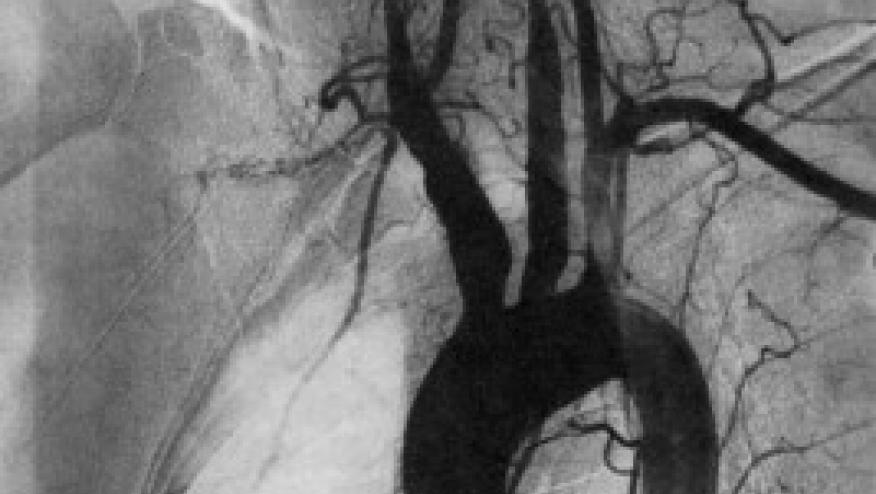
The treatment of active Takayasu Arteritis (TAK) is imperative to quiet vascular inflammation and subsequently maintain vascular integrity while preventing vessel damage. Our upfront management of TAK, beyond glucocorticoids and conventional DMARDs, remains limited to two primary mechanistic categories: tumor necrosis factor inhibitors (TNFi) and the IL-6 inhibitor tocilizumab (toci). While both have independent evidence supporting their use, there is limited “head to head” data comparing their efficacy.
In this article by Sankararaman et al., the authors combine two TAK cohorts to compare response to TNFi and toci and whether responses diverge in specific subsets of patients.1
TAK patients fulfilling ACR 2022 criteria were enrolled prospectively at the NIH or retrospectively at a hospital in Milan, Italy, in total capturing 151 patients. Both cohorts were comprised primarily of young women. Background DMARD use was frequent (87%). TNFi were used more frequently, both upfront and at any point during the disease course, compared to tocilizumab. Of TNFi initial users, a majority were started on infliximab (67%) or adalimumab (28%). Of toci users, a little over one-third of patients received IV therapy with the remaining receiving either weekly or every other week subcutaneous therapy. The demographic characteristics of patients initially treated with either a TNFi or toci were similar with the exception of race – White patients were more likely to receive initial TNFi therapy which was thought to reflect this practice pattern being more frequent in Italy, a cohort that was more predominantly White.
The authors examined whether patient age factored into TNFi vs. toci response with interesting findings.
Patients who responded to TNFi therapy had a lower median age at symptom onset compared to TNFi non-responders (23 vs 34 years). Conversely, toci responders had a higher median age at symptom onset compared to non-responders (35 vs. 21.5 years). These same patterns persisted when age at diagnosis or age at treatment initiation was used. A propensity score analysis using 30 1:1 matched TNFi and toci patients was conducted with bimodal logistic regression demonstrating increasing age at disease onset being associated with higher odds of toci response compared to TNFi (OR 1.19, 1.07-1.37 95%). In the TNFi group, each additional year of age at disease onset was associated with lower odds of response (OR 0.87, 0.76-0.95). When age stratification was removed, no treatment differences between TNFi and toci persisted (72.1% vs. 60.7% response, p=0.17). All patients who failed toci and were switched to TNFi exhibited a response. All patients who failed one TNFi and were switched to another TNFi exhibited a response and a majority of TNFi failures who were switched to toci responded (88%).
Separate cytokine analysis was performed for IL-6, TNF-a, and TNF-b in 38 TAK patients versus 12 healthy controls who were stratified by age 30 or less and those over the age of 30. In the younger group, TAK patients exhibited higher cytokine levels than healthy controls, though this was only statistically significant for TNF-b. In the older group, cytokine levels were comparable.
Within the prospective cohort, time to physician global assessment, CRP, ESR, and FDG-PET responses in TNFi and toci treated patients was assessed; no statistically significant differences in time to response were observed for any of these assessed outcomes. In general, FDG-PET responses were slow and infrequent (<50% by month 12 regardless of TNFi or toci treatment).
This study adds a number of valuable insights to our management of TAK. Supporting previous literature, the efficacy of TNFi and tocilizumab appears to be comparable, acknowledging that these are not powered for true, randomized head-to-head comparison. Interestingly, there may be a role for age stratification in TAK treatment with younger patients benefiting from TNFi treatment and older patients benefiting from toci treatment. This adds interesting questions about a TAK-GCA spectrum, particularly in older individuals where age cannot clearly discriminate between these diseases. The study also demonstrates that in general, switching therapy or mechanism of action upon treatment failure appears to be a fairly effective strategy for non-response. Lastly, the study adds to growing evidence that imaging response, especially FDG-PET, is nuanced and may persist discordantly compared to clinical and laboratory outcomes.
References:
- Sankararaman, S., Tomelleri, A., Campochiaro, C et al. (2026). Comparative effectiveness of tocilizumab and tumor necrosis factor inhibitors in Takayasu arteritis: Age‐Related Differences in Treatment Response. Arthritis Care & Research. https://doi.org/10.1002/acr.80169
Related Content






If you are a health practitioner, you may Login/Register to comment.
Due to the nature of these comment forums, only health practitioners are allowed to comment at this time.