
Article
On Wednesday, August 2, the FDA convened the Arthritis Advisory Committee (AAC) to evaluate the safety and efficacy of Janssen’s anti-IL-6 monoclonal antibody, sirukumab.

Search for Terms or Answers
On Wednesday, August 2, the FDA convened the Arthritis Advisory Committee (AAC) to evaluate the safety and efficacy of Janssen’s anti-IL-6 monoclonal antibody, sirukumab.

Comorbidity is a serious consequence or confounder in patients with inflammatory diseases. This has been well described in both psoriatic and rheumatoid disease.
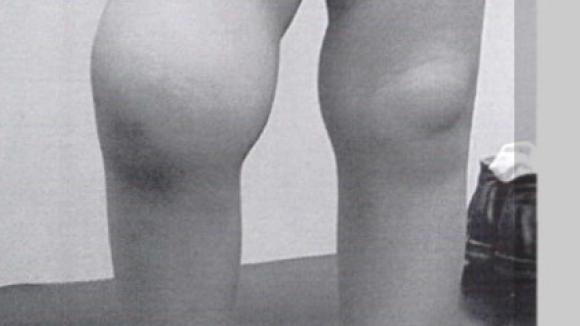
While there are several reports detailing uncontrolled, observational results of biologic use during pregnancy, most are hampered by low numbers, incomplete data and too small a sample to make reliable judgements regarding the teratogenicity. A company sponsored claims data analysis has shown that etanercept exposure during pregnancy was not associated with an increase in major congenital malformations (MCMs).

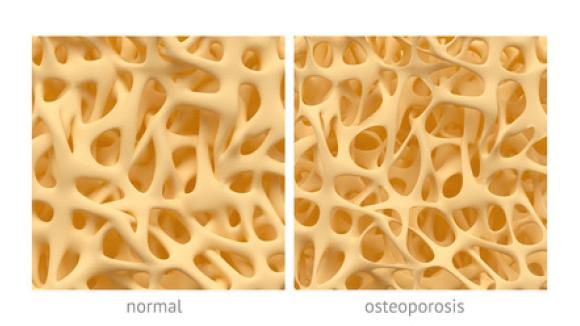
The STRUCTURE trial results have been reported in Lancet and have shown that after 12 months of therapy, romosozumab (ROMO) had superior gains in bone mineral density (BMD) compared to teriparatide (TER) in women with postmenopausal osteoporosis who have previously taken bisphosphonate therapy.
In the wake of the well-publicized "opioid epidemic", researchers report in the Annals of Internal Medicine (online July 31) that more than one third of U.S.
On August 2, the US Food and Drug Administration (FDA) will convene a hearing of the Arthritis Advisory Committee (AAC) to review the safety of the novel IL-6 inhibitor, sirukumab, being developed by Janssen (Johnson & Johnson).
Dr. Jack Cush reviews the news and articles from the past week on RheumNow.com:

Despite the approval of four anti-TNF biosimilars in 12 months, their introduction into the U.S. market has been slow and - until now - with paultry discounts compared to their introduction throughout Europe, where discounts averaged 50% and were as high as 70% (compared to the price of Remicade).

Eli Lilly and Co disclosed today that upon further discussions with the US Food and Drug Administration (FDA) there would be a delay in further regulatory decisions regarding baricitinib, a JAK inhibitor, that is being developed for use in rheumatoid arthritis (RA).

The US Food and Drug Administration (FDA) has approved a new subcutaneous formulation of Benlysta (belimumab) for use in active, autoantibody‑positive Systemic Lupus Erythematosus (SLE) patients.

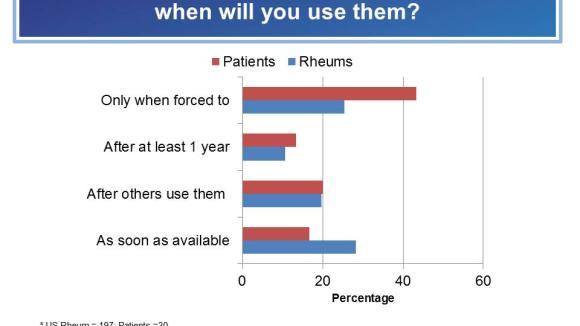
The RheumNow “Live Vote” on the use, uptake and safety of biosimilars contrasts rheumatologist and patient views. Despite FDA approval and looming introduction, there is considerable concern, knowledge gaps and hesitancy regarding their uptake in the US. The survey's primary question demonstrates that less than one-third of US rheumatologists are prepared to adopt biosimilars when they are available.
Dr. Jack Cush reviews the news from the past week on RheumNow.com:
A recent report in Nature Communications has studied multiple nationalities has shown a "disentangled complex HLA multigenic effect" underlying the genetic basis of systemic lupus erythematosus (SLE).

The U.S. Food and Drug Administration (FDA) has approved the IL-23 inhibitor, Tremfya (guselkumab), for patients with moderate to severe plaque psoriasis.

Dr. Jack Cush reviews highlights from the past week on RheumNow.com:

Data made public by the Centers for Medicare & Medicaid Services shows that drug and device makers made nearly $8.2 billion in payments to U.S. physicians and teaching hospitals in the last year. Since 2013, CMS has been tracking physician payments as part of the Affordable Care Act.

The FDA has approved both IV and SC ORENCIA (abatacept) for the treatment of adults with active Psoriatic Arthritis.

Dr. Sharad Lakhanpal, President of the American College of Rheumatology has responded to the Senate's proposed changes to healthcare coverage in the USA.

Dr. Janet Pope reviews her favorite and least favorite presentations and abstracts from EULAR 2017.

The Canadian Medical Association Journal has studied the costs of prescription drugs in 10 high-income countries (seven European countries, Australia, Canada and New Zealand) and found that many of these medicines varied by more than 600%.

By downloading this material, I acknowledge that it may be used only for personal use and personal education and that I will accredit RheumNow.com as the source and owner of this material. Commercial use or mass reproduction of this material without permission from RheumNow (info@rheumnow.com) is prohibited.