
Article
RheumNow Live kicks off its second annual meeting - a little, big meeting in Fort Worth - in just 2 weeks and I think you should be there.

Search for Terms or Answers
RheumNow Live kicks off its second annual meeting - a little, big meeting in Fort Worth - in just 2 weeks and I think you should be there.
Today, the American College of Rheumatology (ACR) published the 2020 Guideline for the Management of Reproductive Health in Rheumatic and Musculoskeletal Diseases.

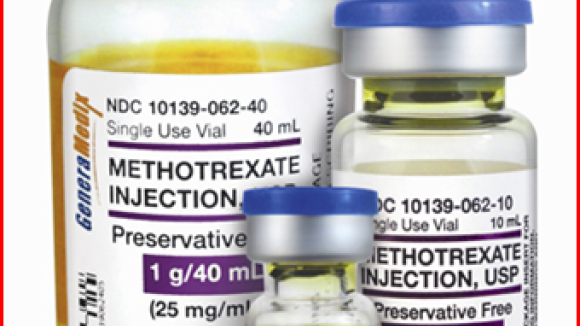
Rheumatology has a comprehensive overview of methotrexate (MTX) and the risk of lung injury, MTX-related pneumonitis and interstitial lung disease (RA-ILD) with rheumatoid arthritis (RA). Past reports suggest the frequence of MTX-pneumonitis to be between 0.3 and 11.6%; r

JAMA Dermatology reports that psoriasis is associated with a slightly increased risk of cancer, particularly keratinocyte cancer and lymphomas.

Low-dose methotrexate (LD-MTX) was studied in high risk cardiac patients in the cardiac intervention trial (CIRT), but was prematurely ended for not showing a change in cardiovascular event rates. Nonetheless this trial studied the safety and adverse event rates of LD-MTX and those results are reported in the current issue of Annals of Internal Medicine.
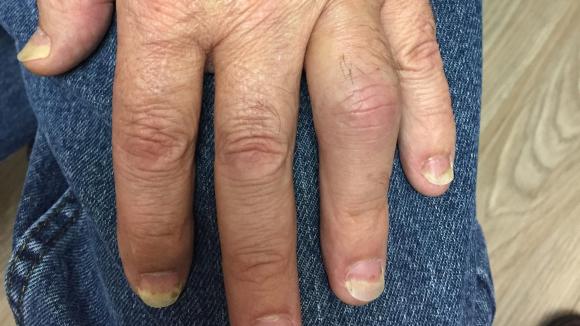
Interleukin 17 IIL-17) is important in the pathogenesis of psoriatic disease, with most current approaches targeting IL-17A. Now there is a noveal approach showing that dual neutralisation of IL-17A and IL-17F in psoriatic arthritis arthritis patients results in clinically significant improvement.

Abbvie has announced top line results of their SELECT-PSA trial of upadacitinib (UPA), wherein both the 15 and 30 mg doses met the primary endpoint of ACR20 response at week 12 and demonstrated radiographic inhibition at week 24.
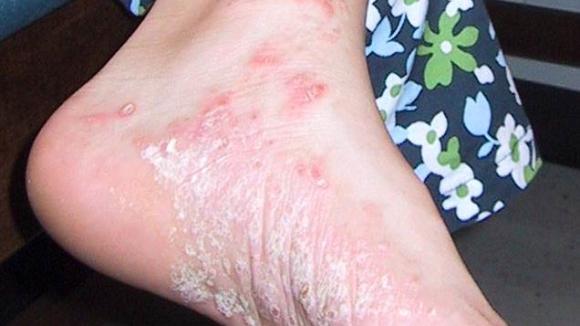
A metanalysis of phase II, III and IV trials in moderate to severe plaque psoriasis suggests comparative efficacy biologic treatments, but that that brodalumab, guselkumab, ixekizumab, and risankizumab-rzaa were shown to have the past skin (PASI) response rates.
A new study in Scientific Reports suggest that circadian rhythms play an important role in wound healing, and that nonsteroidal anti-inflammatory drugs (NSAIDs) may be disruptive if taken at night given primary healing that occurs in a body at night.

Dr Jack Cush comments on this week's journal articles, reviews and studies.

The availability of biologic biosimilars has thus far had negligible impact on prescribing practices in the United States, in stark contrast to what has been observed in some European countries, researchers reported.

Non-steroidal anti-inflammatory drugs (NSAIDs) are widely used for acute or chronic arthritis, headache, visceral pain, postoperative pain, etc but come with a small but significant risk of serious adverse effects, including hypertension, cardiovascular disease, kidney injury and GI complica

Dr. Jack Cush reviews the news and journal reports from this past week on RheumNow.com. The podcast covers: best therapies for dactylitis and enthesitis; we have a new knockout for knee pain in OA; and are you on the naughty or nice list when it comes to the new ACR-AF guidelines for arthritis? This and more. Tune in.
Ixekizumab (IXE), an interleukin-17A (IL-17A) inhibitor, was recently approved for use in ankylosing spondylitis (also known as radiographic axial spondyloarthritis- axSpA).
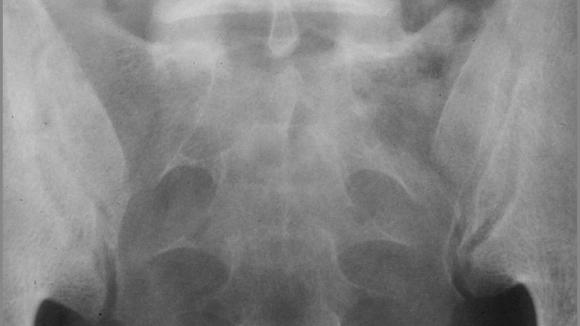
Current ACR and EULAR guidelines list TNF-inhibitors (TNFi) abatacept, rituximab, and tocilizumab as being equally effective after methotrexate or as second line therapies when treating rheumatoid arthritis.

Rheumatology has a comprehensive overview of methotrexate (MTX) and the risk of lung injury, MTX-related pneumonitis and interstitial lung disease (RA-ILD) with rheumatoid arthritis (RA). Past reports suggest the frequence of MTX-pneumonitis to be between 0.3 and 11.6%; recent studies suggest it may be much lower.
The SEAM-PsA study examined the efficacy of methotrexate monotherapy, etanercept monotherapy or the combination of MTX and ETN in psoriatic arthritis patients, and found that ETN monotherapy was equivalent to combination therapy - and that both were superior to MTX alone in clinical (ACR and MDA) and radiographic responses.

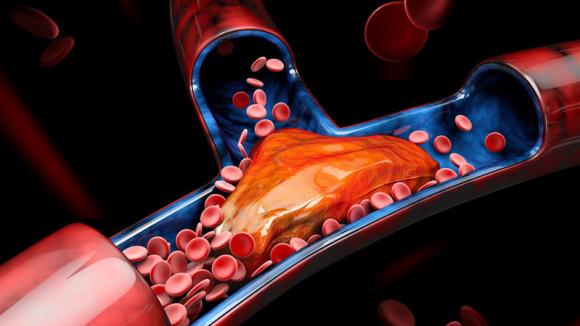
The European Medicines Agency safety committee (PRAC) has concluded that Xeljanz (tofacitinib - TOFA) could increase the risk of blood clots in the lungs and in deep veins in patients who are already at high risk for venous thromboembolic events. The PRAC is recommending that TOFA should be used with caution in patients at high risk of blood clots (VTE), regardless of dose used.
The American College of Rheumatology (ACR), in partnership with the Spondylitis Association of America (SAA) and the Spondyloarthritis Research and Treatment Network (SPARTAN), released the 2019 Update of the Recommendations for the Treatment of Ankylosing Spondylitis (AS) and Nonradiographic Axi

By downloading this material, I acknowledge that it may be used only for personal use and personal education and that I will accredit RheumNow.com as the source and owner of this material. Commercial use or mass reproduction of this material without permission from RheumNow (info@rheumnow.com) is prohibited.
