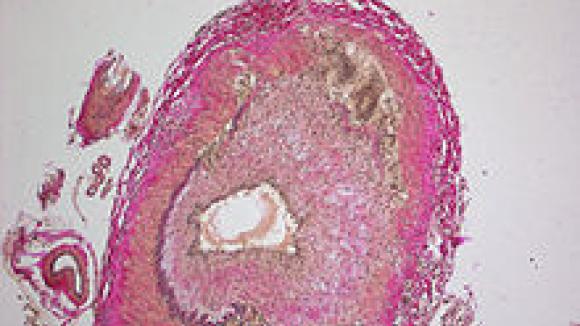
A population-based study of claims data from Korea shows that among inflammatory bowel disease (IBD) patients receiving tumour necrosis factor inhibitors (TNFi) there is a 3.7 per 100 patient-year risk of paradoxically developing psoriasis - a rate that is roughly 3-fold higher than risk in TNFi-naive IBD patients.

All News
Reuters reports that Canada’s Senate on Thursday voted to legalize recreational marijuana, clearing a major hurdle that puts the country on track to become the first Group of Seven nation to permit national use of the drug.
Dr. Jack Cush discusses the past week's news and journal articles featured on RheumNow.com - including reports on advance practice clinicians, baricitinib, gout, disease activity, hypomagnesemia and upadacitinib.
An analysis of SK&A outpatient provider files, covering 90% of physician practices in the United States, shows that between 2008 to 2016, there was a 22% increase in the employment of advanced practice clinicians (APCs) by specialty practices. By 2016, 28% of all specialty practices employed APCs.
Racial discrimination was a key feature at a 2-day summit on pain management and the opioid crisis, hosted by the National Institutes of Health on Thursday and Friday.
Patients with systemic lupus erythematosus (SLE) who were assessed as being in a low disease activity state during more than half of clinical visits had a decrease in organ damage events of approximately 50%, a retrospective study found.
The genetics and heritability of gout has suggested a higher risk in certain families. A UK cohort study examined the prevalence of gout and monosodium urate (MSU) crystal deposition among those at risk (sons of gout patients) for gout and found a high incidence of hyperuricemia and MSU crystal deposition.
Researchers from the Toronto Lupus Clinic have described an atypical “monophasic” course in a small number (7.5%) of systemic lupus erythematosus (SLE) patients who achieved and sustained clinical remission, with most off of all medications for an average of 18 years.
The US Food and Drug Administration has approved baricitinib (Olumiant) for use in adults in moderate-to-severe active rheumatoid arthritis (RA) who have had an inadequate response to TNF inhibitors (TNFi). It is not approved for use, nor has it been studied, in children.
Today the U.S. Food and Drug Administration approved baricitinib (Oluminant) at the lower dose of 2 mg per day for use in adults with with moderate-to-severe active rheumatoid arthritis (RA) who have had an inadequate response to commonly-used treatments known as TNF inhibitors.
Dr. Jack Cush reviews this weeks reports from RheumNow.com, including the risk of autoimmunity with vaccination, early RA outcomes, new FDA approvals for certolizumab and tofacitinib and the risk of death from infection with biologics.
Treatment of refractory giant cell arteritis (GCA) with ustekinumab (Stelara) showed therapeutic promise as a steroid-sparing agent in a small, open-label study, Irish researchers reported.
A meta-analysis has suggested that obesity is an under-reported predictor of inferior response to tumor necrosis factor blockade (anti-TNF) in a range of inflammatory immune-mediated inflammatory diseases (IMIDs), with the results showing a 60% risk of impaired response to anti-TNF across several
Patients with psoriatic arthritis (PsA) were at increased risks for malignancy, and possibly more so if they were treated with conventional disease-modifying antirheumatic drugs (DMARDs), a meta-analysis found.
In nine cohort studies that included more than 43,000 PsA patients, the pooled relative risk for overall malignancy was 1.29 (95% CI 1.04-1.60) compared with the general population, according to Yunyun Fei, MD, and colleagues from Peking Union Medical College in Beijing.
The current issue of Annals of Internal Medicine examines patterns of potential opioid misuse that are associated with subsequent adverse outcomes nationally.
Amgen announced that the U.S.
The New England Journal of Medicine reports that the anti-interleukin (IL)-1β monoclonal antibody canakinumab (Ilaris) was effective in the treatment of three distinct autoinflammatory recurrent fever syndromes (FMF, TRAPS, HIDS) with responses that were far superior to what was see
Dr. Jack Cush reviews the news and journal articles from the past week on RheumNow.com. He discusses opioids, new approval for polyarticular JIA, running and osteoarthritis, and modifiable behaviors that influence outcomes.
Treat-to-target strategy is widely advocated as an important means of optimizing treatment responses in patients with rheumatoid arthritis. Even though T2T is encouraged by most guidelines, a current report shows that US Rheumatologists fail to implement T2T in their daily practice.
Lee and colleagues from Brigham and Women's Hospital have analyzed the last decade of disease‐modifying antirheumatic drugs (DMARDs) use in patients with psoriatic arthritis (PsA) and found nearly 40% were treated with a bDMARD, along with a decreasing trend in complete DMARD discontinuations.