Beyond diagnosis, management of neuropsychiatric lupus (NPSLE) can be challenging. Moreover, there are scant studies addressing optimal management. In this issue of Clinical Rheumatology, researchers show the efficacy of mycophenolate mofetil (MMF) and deflazacort in NPSLE.

All News
Drs. Cush and Gibofsky answer 5 questions about the August 2, 2017 FDA Arthritis Advisory Committee meeting that reviewed the NDA for sirukumab use in rheumatoid arthritis. The panel voted against (1-12) the approval of sirukumab.
On Thursday, August 3, the FDA Arthritis Advisory Committee (AAC) met to consider tofacitinib for use in patients with psoriatic arthritis. The panel voted 10-1 in favor of approval.
Dr. Jack Cush reviews new FDA decisions on sirukumab and tofacitinib as well as other news items from the past week on RheumNow.com.
On Wednesday, August 2, the FDA convened the Arthritis Advisory Committee (AAC) to evaluate the safety and efficacy of Janssen’s anti-IL-6 monoclonal antibody, sirukumab.
Comorbidity is a serious consequence or confounder in patients with inflammatory diseases. This has been well described in both psoriatic and rheumatoid disease.
While there are several reports detailing uncontrolled, observational results of biologic use during pregnancy, most are hampered by low numbers, incomplete data and too small a sample to make reliable judgements regarding the teratogenicity. A company sponsored claims data analysis has shown that etanercept exposure during pregnancy was not associated with an increase in major congenital malformations (MCMs).
The STRUCTURE trial results have been reported in Lancet and have shown that after 12 months of therapy, romosozumab (ROMO) had superior gains in bone mineral density (BMD) compared to teriparatide (TER) in women with postmenopausal osteoporosis who have previously taken bisphosphonate therapy.
Patients with systemic lupus erythematosus (SLE) incur substantial morbidity and complications that may lead to hospitalizations and increased cost of lupus care. Researchers from the University Health Network in Toronto have published a review of SLE hospitalizations showing thta while comm
In the wake of the well-publicized "opioid epidemic", researchers report in the Annals of Internal Medicine (online July 31) that more than one third of U.S.
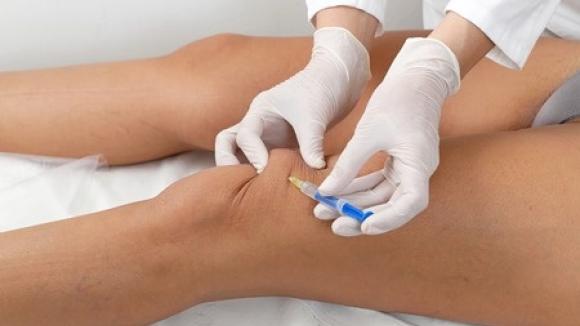
In March 2017, an outbreak of 41 cases of septic arthritis associated with intra-articular injections administered at an single outpatient practice occurred in New Jersey. A public health investigation identified multiple breaches of recommended infection prevention practices during the preparation and administration of PBP products. The intraarticular injections were done using fluoroscopic visualization. The CDC has reported the results of its investigation.
On August 2, the US Food and Drug Administration (FDA) will convene a hearing of the Arthritis Advisory Committee (AAC) to review the safety of the novel IL-6 inhibitor, sirukumab, being developed by Janssen (Johnson & Johnson).
Dr. Jack Cush reviews the news and articles from the past week on RheumNow.com:
Despite the approval of four anti-TNF biosimilars in 12 months, their introduction into the U.S. market has been slow and - until now - with paultry discounts compared to their introduction throughout Europe, where discounts averaged 50% and were as high as 70% (compared to the price of Remicade).
The presence of tubulointerstitial damage (TID) may provide a potential window for early intervention in lupus nephritis (LN) to ward off end-stage renal disease (ESRD), according to a data analysis.
Eli Lilly and Co disclosed today that upon further discussions with the US Food and Drug Administration (FDA) there would be a delay in further regulatory decisions regarding baricitinib, a JAK inhibitor, that is being developed for use in rheumatoid arthritis (RA).
The US Food and Drug Administration (FDA) has approved a new subcutaneous formulation of Benlysta (belimumab) for use in active, autoantibody‑positive Systemic Lupus Erythematosus (SLE) patients.
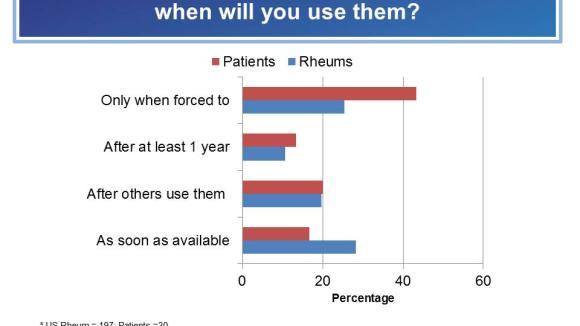
The RheumNow “Live Vote” on the use, uptake and safety of biosimilars contrasts rheumatologist and patient views. Despite FDA approval and looming introduction, there is considerable concern, knowledge gaps and hesitancy regarding their uptake in the US. The survey's primary question demonstrates that less than one-third of US rheumatologists are prepared to adopt biosimilars when they are available.
Dr. Jack Cush reviews the news from the past week on RheumNow.com:
It does not come as a surprise to anyone anymore that Acute Coronary Syndrome (ACS) is one of the major causes of morbidity and preterm mortality in RA. What we don’t know is what measures need to be taken to modify the risk and how effective such measures are.