Rheumatology has published a study demonstrating that bone marrow edema as measured by magnetic resonance imaging (MRI) may be found in healthy people, but that such changes do not change with intense physical activity.

All News
Dr. Jack Cush reviews highlights and news from the past week on RheumNow.com.
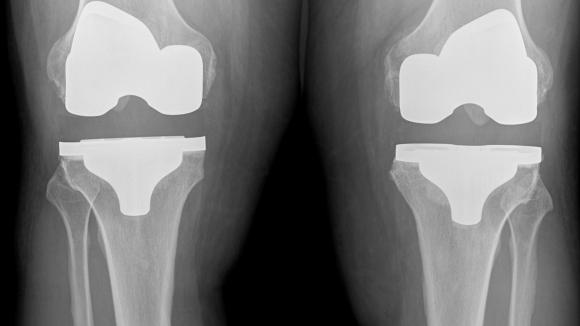
A time-series analysis of incident rheumatoid arthritis (RA) patients seen between 1996 and 2011 in the Danish National Patient Register shows that the incidence of hip (THR) and knee replacements (TKR) began to decrease after the introdution of biologic agents for RA in 2002.
Renal dysfunction is common among patients with rheumatoid arthritis (RA), particularly among older patients, women, and those with hypertension, Japanese researchers reported.
Despite a growing body of evidence suggesting that maternal health is more important than maternal medications to fetal and infant outcomes, little is known about the long term oucomes of infants born to mothers with rheumatoid arthritis (RA). Using Danish population data, researchers have shown in utero exposure to maternal RA is associated with an increased risk of thyroid disease, and an increased risk of future RA.
Dr. Jack Cush covers the news and journal articles published on RheumNow.comin the past week.
Reuters reports that patients who live in low-income communities and lack a college education may have worse pain after knee replacement surgery than their more educated neighbors, citing results from a recent study from the Hospital for Special Surgery in NY.
Staying on a TNF inhibitor (TNFi) throughout major surgery has generatlly been associated with higher rates of perioperative infection (https://buff.ly/2iBFVjp). On the other hand, discontinuation of the TNFi prior to surgery is associated with lower ra
During 2017, the improvements and refinements seen during previous years in the treatment of rheumatoid arthritis have been extending to other conditions ranging from psoriatic arthritis to lupus and for both monoclonal antibodies and oral small molecule medications.
Drug Safety has published a systematic review of the FDA’s Adverse Event Reporting System (FAERS) and finds numerous reports of thromboembolic adverse events (AEs) associated with two currently marketed Janus kinase (JAK) inhibitors, tofacitinib (Xeljanz) and ruxolitinib (Jakafi).
The PRECISION trial reported last year that celecoxib appears to be safer than the NSAIDs naproxen or ibuprofen in treating osteoarthritis (OA) and rheumatoid arthritis patients who are at increased cardiovascular risk. New data suggests that adding aspirin may nullify this advantage, according to a study presented at the annual American Heart Association meeting and reported by Medscape.
Dr Jack Cush reviews nighlights and news from the past 2 weeks on RheumNow.com. This week's report includes new drug approvals, disappointing ACR guidelines, Lyme & Zika, infertility, dermatomyositis skin outcomes and myositis-associated cancer testing.
JAMA Internal Medicine has reported that recommendations and clinical practice guidelines from the American College of Rheumatology are often based on expert opinion, but lack rigorous (grade A) evidence to support many of their recommendations.
Researchers at the Boston University School of Medicine have published a new report showing that arthritis affected 91 million adults in the US in 2015 or 37% of the poplulation. Their prevalence estimate is 68% higher than previously reported arthritis national estimates.
Lyme disease, caused by the spirochete Borrelia burdofgeri, is the most common vector-borne illness reported in the U.S.
Researchers from the University of Birmingham have shown that while Vitamin D may be effective at preventing the onset of inflammation, it is less effective once inflammatory disease is established - largely because, once established, rheumatoid arthritis leads to vitamin D insensitivity.
Dr. Jack Cush reviews the news and highlights from the past week on RheumNow.com. This week he covers FDA warnings on gout drugs, steroid use in Australia, biosimilars lost savings and methotrexate hepatotoxicity in psoriatic arthritis (PsA).
Rheumatoid arthritis (RA) is a chronic, inflammatory disease with systemic effects beyond the joints. While RA patients are known to have signficantly higher risks for cardiovascular disease and venous thromboembolic events, an association with stroke (CVA) is unclear.
A study from the University of Pennsylvania Perelman School of Medicine was published in the Journal of Investigative Dermatology showing that the risk of incident liver disease doubled when patients with psoriasis (PsO) or psoriatic arthritis (PsA) take methotrexate (MTX), but not when
Care to learn what you missed at last weeks ACR 2017 meeting in San Diego? Here are 4 one hour audio podcasts - each with a compliation of 2-4 minute reports from Drs. Cush, Kavanaugh, the RheumNow Faculty and other rheumatology thought leaders and researchers. Another good way to learn from RheumNow.