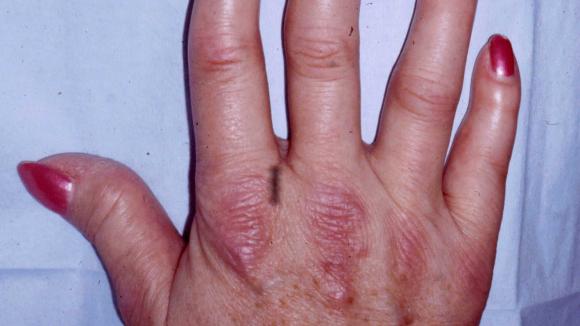
Among patients with rheumatoid arthritis (RA), the strongest risk factors for the development of lymphoma were disease activity and severity, French researchers found.
In a multivariate analysis, having a high Disease Activity Score in 28 joints (DAS28) at baseline conferred twice the risk for lymphoma, with an odds ratio of 2.09 (95% CI 1.41-3.38), according to Gaetane Nocturne, MD, of Hôpital Bicêtre in Ile-de-France, and colleagues.

All News
Analysis of records from the Mass General Brigham healthcare system in the Boston area, shows that breakthrough infections (after receiving SARS-CoV-2 vaccines) in patients with systemic autoimmune rheumatic diseases (SARDs) are not uncommon, and may be severe or fatal.
Chronic inflammatory disease (CID) patients are urged to receive the COVID-19 vaccines; but when a cohort of CID patients treated with immunosuppressive medications were given an mRNA-based SARS-CoV-2 vaccination, only those treated with glucocorticoids and B cell depleting therapies (B
A new descriptive series shows an uncommon association between IgA vasculitis (IgAV) and inflammatory bowel diseases (IBD), with most cases interestingly arising after or during anti-TNF-α therapy.
We have a lot of news, information and approvals to review and discuss, though I need to begin with what's weighing heavily on my mind. After, we'll dive into what we learned this week.
Among the factors that were associated with an increased risk for the development of rheumatic immune-related adverse events following cancer treatment with immune checkpoint inhibitors (ICIs) was the type of malignancy involved, a large case-control study found.
Today, the U.S.
The interleukin-6 inhibitor, tocilizumab (TCZ), was studied in a cohort of difficult systemic sclerosis (SSc) and was shown to be effective in refractory joint and skin disease with good long-term retention rates and disease stabilization.
Booster Shots for Rheumatology Patients on Immunosuppressive Medications
ATLANTA – The CDC's Advisory Committee on Immunization Practices today recommended that rheumatology patients being actively treated with high-dose corticosteroids, alkylating agents, antimetabolites, TNF blockers, and other biologic agents that are immunosuppressive or immunomodulatory receive a third dose of the Pfizer-BioNTech or Moderna mRNA COVID-19 vaccines.
Dr. Jack Cush reviews the news and journal reports from the past week on RheumNow.com.
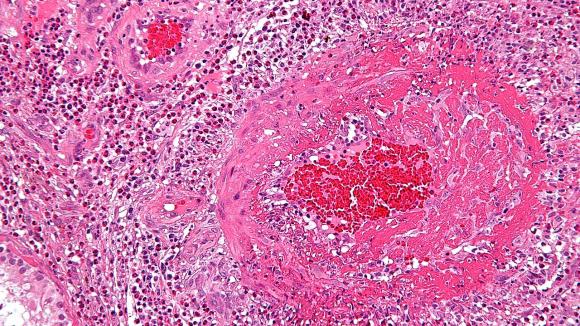
A new European real world experience study shows that mepolizumab is effective at both 100 or 300mg every 4 weeks in patients with the rarely encountered eosinophilic granulomatosis with polyangiitis (EGPA; or Churg-Strauss Syndrome).
The CDC had reported the Advisory Committee on Immunization Practices (ACIP) study of rare serious adverse events after COVID-19 vaccination and assert that the excessive morbidity and mortality from COVID-19 (and the protection afforded by vaccination) far exceeds the risk of rare safety signals
It was a banner week at the FDA; a new drug approval you should know about; a lot of information about pregnancy and safety; and an interesting case plus a question from one of our readers submitted via Back Talk. This and more in this week's podcast. Let's dive in.
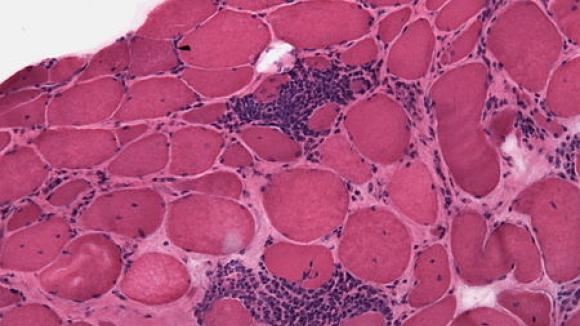
The Journal of Autoimmunity reports that anti-HMRCR antibody positive, necrotizing myositis patients frequently have cutaneous lesions, moreso than previously reported.
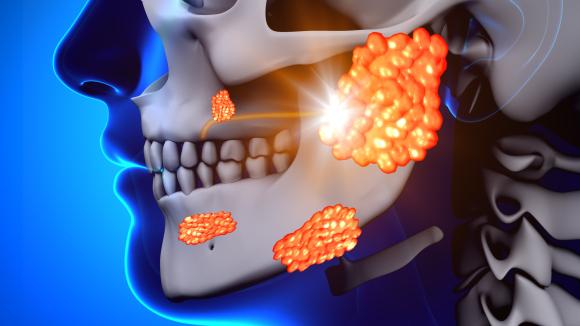
Randomized clinical trials in primary Sjögren's syndrome (pSS) are fraught with fault and inconclusive outcome measures, including the more recently developed EULAR Sjögren's Syndrome Disease Activity Index (ESSDAI). There's a new composite endpoint outcome for RCTs in pSS, called the Composite of Relevant Endpoints for Sjögren's Syndrome (CRESS).
AstraZeneca announced today that anifrolumab (Saphnelo or anifrolumab-fnia) was approved by the the Food and Drug Administration (FDA) for that treatment of adult patients with moderate to severe systemic lupus erythematosus (SLE) who are receiving standard therapy.
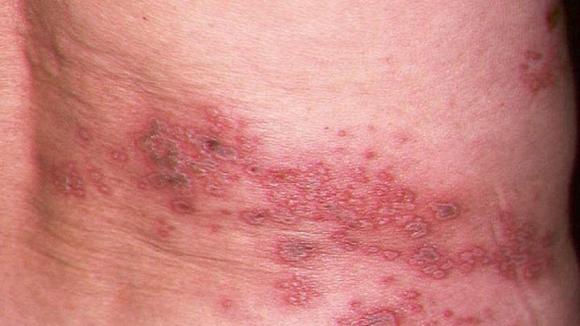
Registry data suggests an increased risk of herpes zoster (HZ, shingles) in rheumatoid arthritis (RA) patients taking JAK inhibitors (JAKi) but also with other biologic DMARDs, compared to csDMARDs.
Medscape has published the annual U.S.
The U.S. Food and Drug Administration (FDA) has approved Octagam 10% [Immune Globulin Intravenous (Human)], as the first and only intravenous immunoglobulin (IVIg) formulation to be approved for adult dermatomyositis (DM).
The ACR and the Vasculitis Foundation have published their evidence-based recommendations and expert guidance for the management of GCA and Takayasu arteritis. These recommendations address a variety of clinical questions and scenarios including diagnostic testing, imaging, treatments, and surgical interventions. Recommendations for GCA and TAK include support for the use of glucocorticoid-sparing immunosuppressive agents and the use of imaging to identify large vessel involvement. Recommendations for TAK include the use of glucocorticoids as initial therapy.