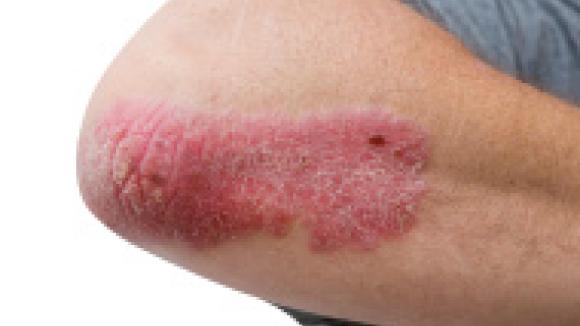
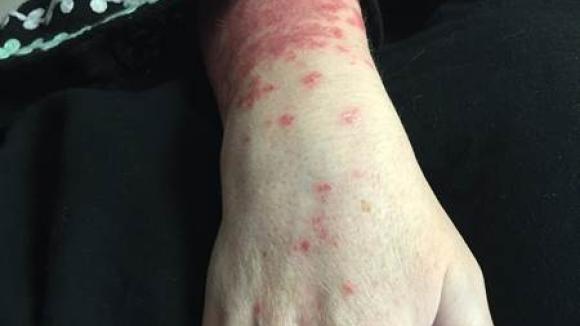
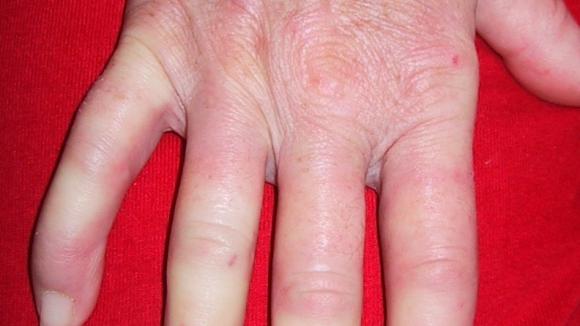
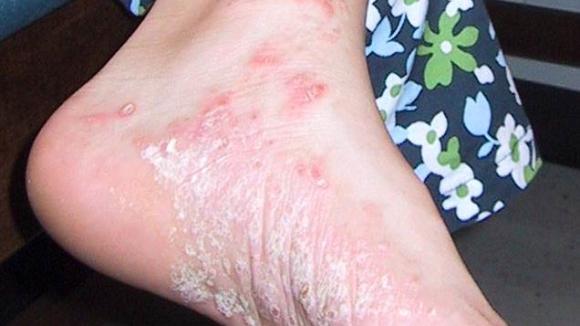
A head-to-head trial has shown that risankizumab was significantly superior to adalimumab in providing skin clearance (PASI90) in patients with moderate-to-severe plaque psoriasis, with no difference in safety signals between the two agents.
All News
Dr. Jack Cush reports the news and important journal articles from the past week on RheumNow.com.
Dr. Jack Cush reviews the journal articles and news reports from the past week on RheumNow.com:
MMP-7 and Myositis-ILD; Post-surgical gout attacks; CV events and testosterone; and a Boxed warning for tofacitinib.
Psoriasis confers a significant risk of comorbidity, but is psoriasis associated with increased coronary inflammation and is this risk attenuated by biologic therapy?
JAMA Cardiology has published a cohort study of 134 consecutive patients with moderate to severe psoriasis, showing that biologic therapy was associated with a significant decrease in coronary inflammation as assessed by perivascular fat attenuation index, a marker of coronary inflammation associated with cardiovascular outcomes. Patients not receiving biologic therapy had no change in perivascular fat attenuation index at 1 year.
Analysis of RA patients in the German biologics register, RABBIT, shows an increased risk of psoriasis with TNF inhibitor (TNFi) compared to csDMARDs and other non-TNFi biologics.
The incidence rate of joint surgery among patients with psoriatic arthritis (PsA) has remained persistently high, double that of the general population, according to a new Danish cohort study.
A 12‐month, Phase 2 trial has shown that subcutaneous abatacept was well tolerated in patients with diffuse cutaneous systemic sclerosis (dcSSc), but failed to significantly change the skin outcomes as measured by the change in modified Rodnan skin score (mRSS)
Dr. Jack Cush reviews the news, journal reports, and FDA releases and deliberations covered this past week on RheumNow.com
Editor's note: July 1 - 5, RheumNow is running the best of the EULAR 2019 meeting. Dr. Jack Cush reports from Madrid on several novel presentations from EULAR 2019, including low-dose steroids in hand OA, ABA vs. ADA in double positive RA patients, psoriasis predictors of PsA, tildrakizumab and more.
The July issue of the Journal of the American Academy of Dermatology reports that patients with psoriasis are frequent users of complementary and alternative medicines (CAMs) largely because of disatisfaction with traditional medications.
Dr. Jack Cush reports from Madrid on several novel presentations from EULAR 2019.
Dr. Jack Cush presents the news and best of rheumatology and medicine from the past week on RheumNow.com
Dr. Jack Cush Reviews the news and journal articles from the past week on RheumNow.com
Dr. Jack Cush reviews the news and journal articles from the past week on RheumNow.com
AbbVie has announced that the US FDA has granted the approval of Skyrizi (risankizumab-rzaa) for the treatment of moderate to severe plaque psoriasis.
A study from UT Southwestern and the Baylor Research Institute examined the preceptions and practices of women with autoimmune or inflammatory rheumatic diseases (AIRD) noting that an AIRD diagnosis changed most womens future hopes and plans regarding pregnancy and lactation.
The JAAD has published joint guidelines from the American Academy of Dermatology (AAD) and National Psoriasis Foundation (NPF) on the approach, management and dermatolgist roles for select comorbid conditions.
The SEAM-PsA study examined the efficacy of methotrexate monotherapy, etanercept monotherapy or the combination of MTX and ETN in psoriatic arthritis patients, and found that ETN monotherapy was equivalent to combination therapy - and that both were superior to MTX alone in clinical (ACR and MDA) and radiographic responses.
This annual appraisal of hallmark moments, news and research articles from 2018 are gleaned from that published in RheumNow during the last year and filtered by other news sources and literature review. The top 10 list herein is rooted in what rheumatologists should know and what will likel
An analysis of SK&A outpatient provider files, covering 90% of physician practices in the United States, shows that between 2008 to 2016, there was a 22% increase in the employment of advanced practice clinicians (APCs) by specialty practices. By 2016, 28% of all specialty practices employed APCs.