

All News

QD Clinic - "Doc, When Can I Stop?"
QD Clinic - Lessons from the clinic. In this video: Patients stable on a biologic need guidance on when, and if, they can stop their biologic.
Read Article
ACR 2018 - Day 3 Report
Highlights from Tuesday, day 3 of the ACR Annual meeting in Chicago, included the PEXIVAS Study, ACR Reproductive Health Draft Guidelines, and a Proof of concept study
Read Article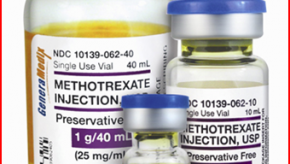
Best of 2019 - Methotrexate and the Risk of Lung Disease
Rheumatology has a comprehensive overview of methotrexate (MTX) and the risk of lung injury, MTX-related pneumonitis and interstitial lung disease (RA-ILD) with rheumatoid arthritis (RA). Past reports suggest the frequence of MTX-pneumonitis to be between 0.3 and 11.6%; recent studies suggest it may be much lower.
Read Article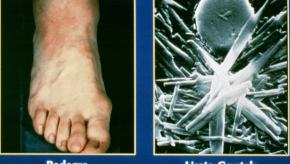
A Role for SGLT2 Inhibition in Gout?
The antidiabetic medication canagliflozin (Invokana) lowered serum urate and reduced the risk of gout flare in a post-hoc analysis of data from two large clinical trials.
Read Article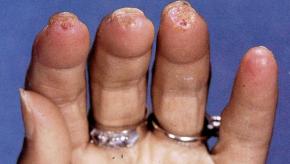
CRP in SSc: Identifying a Severe Phenotype
Patients with systemic sclerosis (SSc) who have persistent inflammation -- characterized by consistently elevated levels of C-reactive protein (CRP) -- have more severe disease and worse outcomes, a retrospective study confirmed.
Read Article
ACR/EULAR Classification Criteria for IgG4 Related Disease
IgG4-related disease (IgG4-RD) is a relatively new disorder since 2003, and may present as a diagnostic challenge as it can cause fibroinflammatory pathology in nearly any organ.
Read Article
RheumNow Podcast –Favorites of ACR 2019 (11.22.19)
Dr. Jack Cush recaps standout presentations and information from ACR 2019 held in Atlanta November 9-12, 2019.
Read Article
RheumNow Podcast – ACR 2019 Round Up (11.15.19)
Dr. Jack Cush presents his favorite abstracts and presentations from Rheumatology Round Up and ACR 2019.
Read Article
Outcomes in Juvenile Idiopathic Arthritis
Arthritis Research & Therapy reports on a prospective cohort of children with juvenile idiopathic arthritis (JIA) shows that the incidence has held steady at 12.8/100,000 children, but that the frequency uveitis and the need for orthopedic surgery has decreased in the last 20 years.
Read Article
Methotrexate and the Risk of Lung Disease
Rheumatology has a comprehensive overview of methotrexate (MTX) and the risk of lung injury, MTX-related pneumonitis and interstitial lung disease (RA-ILD) with rheumatoid arthritis (RA). Past reports suggest the frequence of MTX-pneumonitis to be between 0.3 and 11.6%; recent studies suggest it may be much lower.
Read Article
Warfarin Superior to Xarelto in Antiphospholipid Syndrome
A 3 year, multicenter, European, study shows that rivaroxaban was inferior to warfarin in preventing thrombosis in patients with antiphospholipid syndrome (APS) according to the Annals of Internal Medicine. Thus despite the inconvenience of warfarin, it remains the best option for patients with APS.
Read Article
Stress and the Risk of Incident Inflammatory Arthritis
A prospective analysis of newly diagnosed, inflammatory arthritis (IA) patients suggests that perceived distress (stress) increases the odds of incident IA.
Read Article
Juvenile Arthritis at Risk for Coronary Artery Disease
Arthritis Care & Research reports that juvenile arthritis (JA) patients may have a higher risk if coronary artery disease (CAD) in adulthood.
Read Article
RheumNow Podcast – When You’re Hot You’re Hot (10.11.19)
Dr. Jack Cush delivers select commentary on select news and journal articles from the past week on RheumNow.com.
Read Article
Declining Trends in Antineutrophil Cytoplasmic Autoantibody–Associated Vasculitis Mortality in the USA
Annals of Internal Medicine reports that age-adjusted mortality rates for antineutrophil cytoplasmic autoantibody–associated vasculitides (AAV) have improved over time - with a decline of nearly 2 percent per year in the United States from 1999 to 2017. Nevertheless, long-term outcomes continue to lag behind mortality rates of the general population.
Read Article
FDA Approves Rituximab for Children with GPA
The U.S. Food and Drug Administration has approved Rituxan (rituximab) for the treatment of granulomatosis with polyangiitis (GPA) and microscopic polyangiitis (MPA) in children 2 years of age and older in combination with glucocorticoids.
This is the first approved treatment for children with vasculitis.
RheumNow Podcast – Believe in Vitamin D or Rituximab? (9.20.19)
Dr. Jack Cush reviews the news and journal articles from the past week on RheumNow.com.
Read Article
Sensitivity of Temporal Artery Biopsy
Metanalysis shows that temporal artery biopsy (TAB) for the diagnosis of giant cell arteritis (GCA) has a sensitivity of 77%, similar to results seen with temporal artery imaging. These data suggest clinicians may be willing to accept a GCA diagnosis without proof by TAB.
Read Article
FDA Grants Breakthrough Status for Potential Lupus Nephritis Drug
Obinutuzumab (Gazyva) has been granted Breakthrough Therapy Designation (BTD) by the U.S. Food and Drug Administration (FDA) for use in adults with lupus nephritis (LN). The drug made by Genentech, is going forward based on the Phase II NOBILITY study in adult patients with proliferative lupus nephritis (LN). Currently, there are no FDA-approved medicines for lupus nephritis.
Read Article
Anakinra Shows Benefits in Cytokine Storm
The interleukin (IL)-1 receptor antagonist anakinra (Kineret) showed promise in critically ill children who develop the often-lethal condition known as secondary hemophagocytic lymphohistiocytosis (sHLH)/macrophage activation syndrome (MAS), a retrospective single-center study found.
Read Article
