
Blogs

Best of 2019 - The House of God After 40 Years: A Rheumatologist's Reflection
The House of God is probably more known of than read, with over 3 million copies sold since its release when I was a Chief Medical Resident in the era of its writing. The book itself, according to the author Samuel Schem (aka Steven Bergman, MD, DPhil), a psychiatrist and currently Professor of Humanities at NYU, is a true account of his internship, albeit laden with some liberties of fiction - and it's been quoted for generations. The House of God is cruelly funny and portrays many uncomfortable and dehumanizing aspects of medicine, including substance abuse, bawdy sex (and lots of it), sleeplessness, depression, and suicide to name a few. Taken at face value, it would seem countercultural to our current aspirations of putting patients first, #MeToo and burnout concerns. Is this book merely a humorous anachronistic rant, or a serious work of reflection meritorious of being read and pondered upon?
FEAR: A Perception of Fact In Spite of the Fiction
How do you help your patients who are resistant to your medical recommendations when they are receiving biased information from friends, family, and the internet? I wanted to share with you two cases and my approach.
The House of God After 40 Years: A Rheumatologist's Reflection
The House of God is probably more known of than read, with over 3 million copies sold since its release when I was a Chief Medical Resident in the era of its writing. The book itself, according to the author Samuel Schem (aka Steven Bergman, MD, DPhil), a psychiatrist and currently Professor of Humanities at NYU, is a true account of his internship, albeit laden with some liberties of fiction - and it's been quoted for generations. The House of God is cruelly funny and portrays many uncomfortable and dehumanizing aspects of medicine, including substance abuse, bawdy sex (and lots of it), sleeplessness, depression, and suicide to name a few. Taken at face value, it would seem countercultural to our current aspirations of putting patients first, #MeToo and burnout concerns. Is this book merely a humorous anachronistic rant, or a serious work of reflection meritorious of being read and pondered upon?
When Your Patient Asks Why?
This is probably the most difficult question that a physician is confronted with. A patient is stricken with a new disease or problem and before it even sinks in or is fully comprehended, the patient wants to know “why” or “how” long before they want to know what are we can do about it.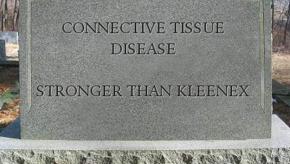
Best of 2018: Rheumatology Dead Word Cemetery 2019
I recently heard of a secondary school assignment wherein students were challenged to “bury” a word that was no longer useful or appropriate. Their exercise has now evolved into an unofficial RheumNow task force to retire diagnostic terms that have grown into misuse in rheumatology and medicine. How did we decide which words should perish? And by what criteria? Who has the final say?
Best of 2018: 5 Mistakes When Diagnosing Adult-Onset Still’s Disease
Adult-onset Still's presents an interesting and diagnostic challenge when encountered. Here are 5 tips to improve your diagnostic acumen for this febrile disorder.

Advice for Young Rheumatologists
You may not want my advice, but I’m going to give it to you anyway.
Rheumatology Dead Word Cemetery 2019
I recently heard of a secondary school assignment wherein students were challenged to “bury” a word that was no longer useful or appropriate. Their exercise has now evolved into an unofficial RheumNow task force to retire diagnostic terms that have grown into misuse in rheumatology and medicine. How did we decide which words should perish? And by what criteria? Who has the final say?
The Medical History – Pitfalls and Preferences
By recognizing the limitations of memory and patient recall, I tend to focus historic elements that have high predictive value and avoid time consuming worm-holes in history-taking that have low predictive value. This leaves me with more time to listen to the patient.
How to Present an Abstract at EULAR
Good News! Your research submission has been accepted for presentation at a national congress (i.e., ACR or EULAR). This is often a first step in the lifetime of a project – Abstract, Presentation, Full Write-up and Publication. Instead of being enthralled or overwhelmed with the notion of doing your first abstract, review my approach to creating, presenting and reviewing abstracts for a major medical meeting.

Ten Things to Do At Every Visit
Busy days, overbooked patients and EMR overloads will certainly derail your day, especially if you don’t have a system to optimize efficiency. However, in your harried efforts you may overlook several simple, smart, if not crucial, tasks while seeing your next patient.


It's the engine that kills ya’, not the caboose
This past weekend I was fortunate to lecture at the Harvard Advances in Rheumatology Course, where I reviewed the safety issues surrounding the use of biologic therapies. In discussing infections, cancer, cardiovascular events, etc., it became very clear to me that these problems, while worrisome, are often escalated in their importance – all at the expense of what is most dangerous: RA itself.