

In my earlier blog, PMR: glad or bad tidings? I mentioned our PMR Voices 2021 public engagement project. This project brought home to me as a physician that although our expertise is essential, one unfortunate side-effect is that our very expertise can give us “blinkers”. One result of our “blinkers” is that we may fail to see the extent of the information gap between us and our patients with newly-diagnosed PMR.

My colleague says, “I simply refer to physiotherapy. I don’t have time to discuss exercises, we need that time to discuss medications, side-effects, etc.” I sympathise. How do we promote activity and muscle strength among our patients?

Another infliximab biosimilar has been FDA approved, but this new version of Inflectra can be given subcutaneously for patients with inflammatory bowel disease.

Dr. Jack Cush reviews RheumNow's top entries the PMR Campaign, news, journal reports and regulatory actions.
#PMR Polymyalgia rheumatica is very common, yet there is little research on the Dx & Management of PMR by #PCPs! Mayo study prevalence 701 per 100,000 (women=870 and men =508 per 100,000 population). https://t.co/7JZFeRPRnn
Among patients with systemic lupus erythematosus (SLE), high titers of anti-phospholipid (aPL) antibodies were most prevalent in whites and Latinos and less so for Black and Asian individuals, researchers found.

JAK inhibitors obviously have dominated a lot of the discussion in our therapeutic landscape over the last couple of years. What about their use in polymyalgia rheumatica? Let's consider.

A TNR Panel discussion on controversies in PMR: diagnosis, imaging, PCP roles, Lumping vs. Splitting.
Featuring Drs. Sarah Mackie, Wolfgang Schmidt, and Len Calabrese.
Moderated by Dr. David Liew.
Recorded on 10/24/2023

Narratives around polymyalgia rheumatica (PMR) often centre around “older people” or even “elderly”. And, indeed, the peak of the age distribution is in the mid-70s – not that everyone that age considers themselves old. Treating “young PMR” can be a very different proposition to treating someone in their seventies or eighties. It’s worth taking time to think this through.

The ACR has published its updated recommendations for prevention and treatment of glucocorticoid-induced osteoporosis (GIOP) for patients receiving >3 months treatment with glucocorticoids (GCs) ≥2.5 mg daily.
Despite increasing treatment options to prevent and treat GIOP, many GC-treated patients are not evaluated or treated.
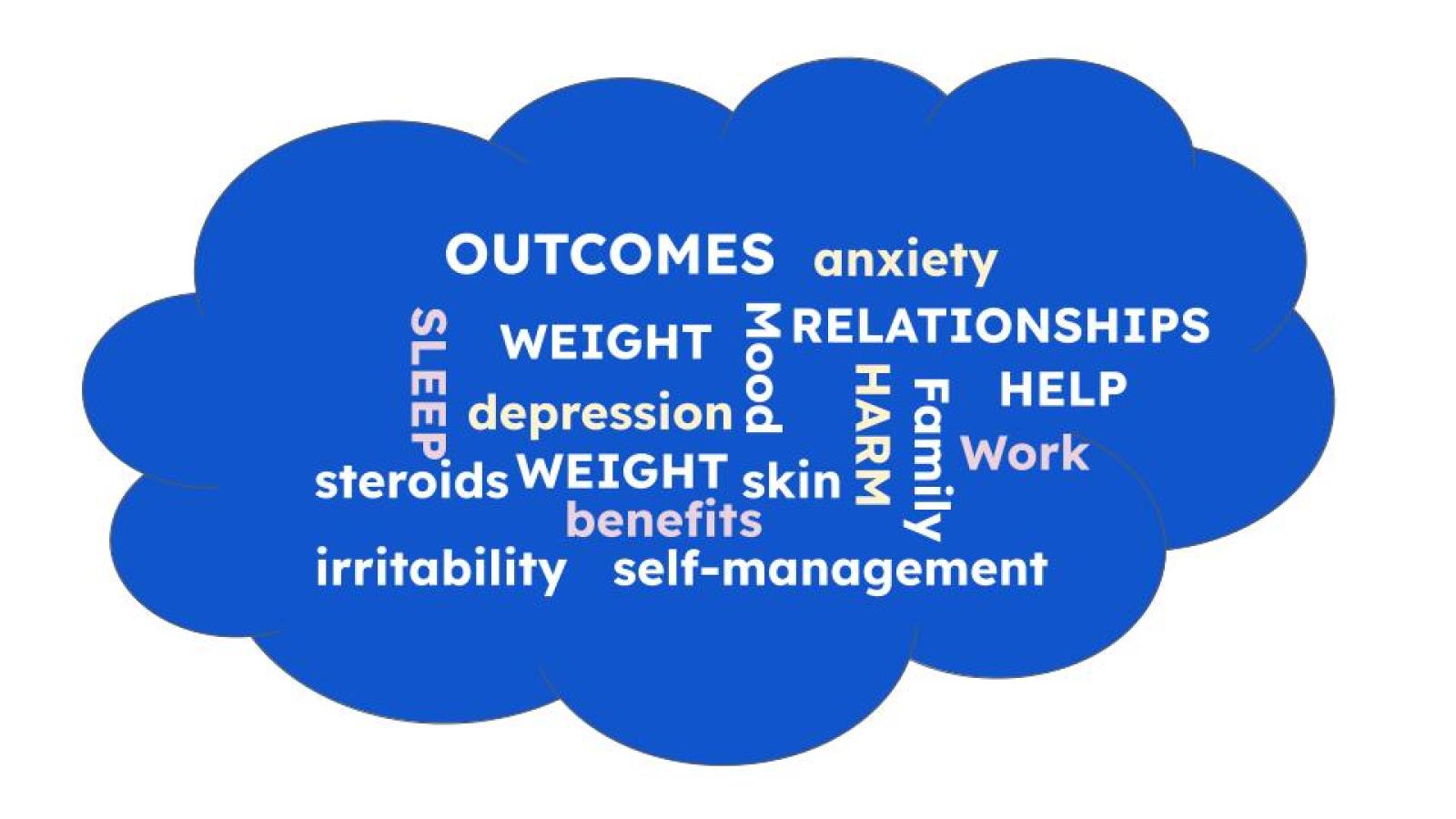
As the sole effective treatment for polymyalgia rheumatica since their development in the 1950’s until recently, the impact of glucocorticoids and PMR outcomes are undeniably intertwined. So much so that when the OMERACT PMR working group first set out to develop a PMR core outcome set, they quickly realised that many of the outcomes important to patients were related to their glucocorticoid use.

When we are considering a diagnosis of PMR, it is key to evaluate the patient accurately and efficiently. Can we use a synchronous audiovisual visit or a rheumatology eConsult to evaluate the patient's symptoms quickly? Does it allow us to make an accurate diagnosis? I would argue that for most of these cases we indeed can.

For decades we've been screening GCA with a patient history and exam. Doing so with imaging would be a sharp departure from the current standard of care. And you may be asking yourself, well, yeah, but what could it hurt? Don't you want to catch GCA early?
Let me tell you the problems with this.

PMR might be one of the most rewarding diagnoses to make in real practice: the patient comes to you in severe debilitating pain, and you prescribe steroids, giving them their lives back! As much as this impressive response makes your intervention appear almost magical, there is the often-forgotten story about the implications of such a diagnosis and treatment on patients' daily lives.
Dr. Jack Cush discusses the news, journal articles and regulatory actions. This week we discuss JAKne, DLE and SLE and more.

What causes polymyalgia rheumatica? It could be said that PMR occurs when trajectories of aging take a wrong turn, but it’s still not clear exactly what it is that causes this to happen. The ideas that follow will doubtless seem, to immunologists, vague and oversimplified; but even a partial picture might still offer a possible framework for clinicians and patients for thinking about treatment and care.

