


Antirheumatic drug use with rheumatoid arthritis pregnancies Save


A nationwide Norwegian registry study of rheumatoid arthritis (RA) pregnancies showed that while medication use increased during pregnancy, many discontinued treatment during pregnancy, only to resumed it after childbirth.
Using registry data between 2006-2018, drug use by pregnant women with RA were assessed from 9 months before the last menstrual period to 9 months after delivery.
They studied a total of 3732 RA pregnancies. Drug use in the period around pregnancy:
- 52.9% used NSAIDs
- 33.6% glucocorticoids
- 17.7% pregnancy-compatible conventional synthetic disease-modifying antirheumatic drugs (csDMARDs)
- 14.8% pregnancy-contraindicated csDMARDs
- 21.6% tumour necrosis factor (TNF) inhibitors
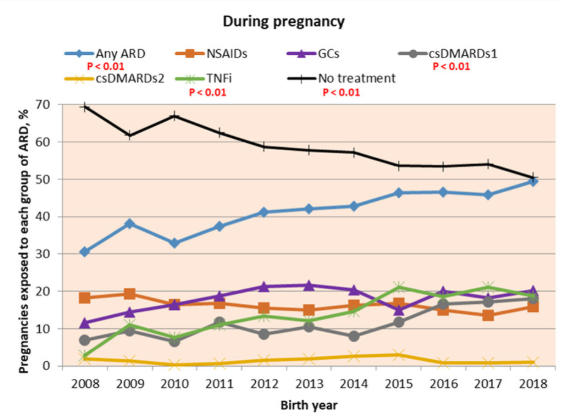
Medication use declined from 61.3% preconceptionally to 37.6%, 22.1%, and 18.9% in the first, second, and third trimesters, respectively, then increased to 53.0% postpartum. Yet in this 10 yr study period (2008 to 2018), antirheumatic medication use increased preconceptionally (59.8%-65.7%), during pregnancy (30.6%-49.5%), and postpartum (45.1%-54.1%), mainly due to increased TNF inhibitor use.
Glucocorticoids showed the least change during pregnancy, from 21.5% preconception to 13.6%, 11.7%, and 11.6% across the trimesters. Sulfasalazine was the most commonly used csDMAR with the highest prevalence before pregnancy (10.3%) and was most used during pregnancy (first/second/third trimester: 7.3%, 5.7%, and 5.4%).
Three distinct medication use patterns of drug use (in pregnant RA patients) emerged:
- NSAID-dominant use prepregnancy
- Glucocorticoid plus pregnancy-compatible csDMARD use continuing into pregnancy
- Pregnancy-contraindicated csDMARD interrupters, mostly discontinuing during pregnancy and restarting postpartum.
ADD THE FIRST COMMENT
Disclosures
Disclosures
The author has no conflicts of interest to disclose related to this subject





If you are a health practitioner, you may Login/Register to comment.
Due to the nature of these comment forums, only health practitioners are allowed to comment at this time.