


Diagnosing and Managing GCA and Takayasu’s Arteritis Save

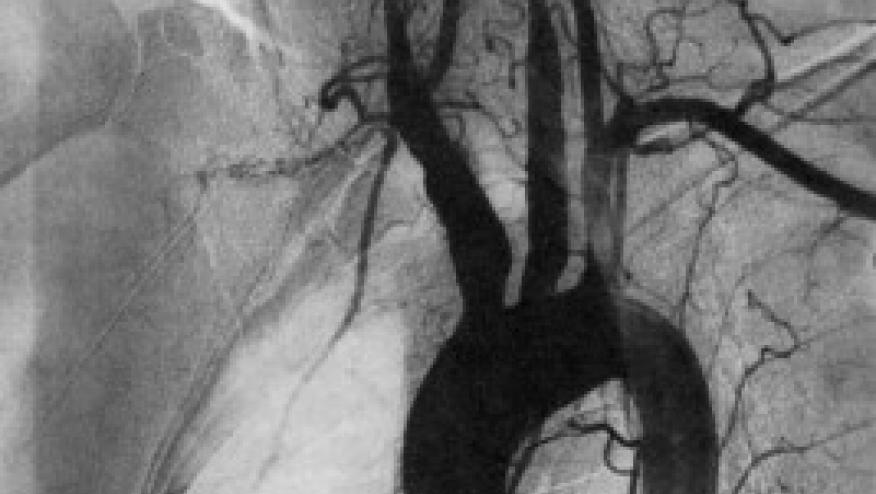
Giant-cell arteritis (GCA) and Takayasu’s arteritis (TAK) are both large-vessel vasculitides, but each brings its own diagnostic and management challenges. Many of the difficulties overlap because they are rare, heterogeneous, and lack perfect diagnostic tests or specific biomarkers.
Imaging in GCA has evolved over time and now there are different modalities aiding in diagnosis and evaluation of extracranial involvement. These include temporal artery ultrasound, which is easily accessible and cost-effective but requires expertise on recognizing typical features. CTA and MRA are mostly used for evaluation of extracranial disease with similar efficacy, with CTA being most frequently used given greater availability and affordability for patients. Recently, the use of PET-CT has brought new insights in the diagnosis of GCA, and is particularly helpful in excluding other diagnoses such as malignancy or infection. It's also useful in patients with changes in clinical status despite being in prior remission. It has not been beneficial in disease monitoring given it can reveal nonspecific findings leading to increase in radiation, cost and unnecessary treatment.
In GCA, glucocorticoids remain the mainstay of therapy. In recent years, two FDA-approved therapies - tocilizumab and upadacitinib - have also become available, with both effective in inducing remission and preventing disease relapses. Nevertheless, a significant number of patients remain on high doses of steroids or are never able to taper off. It is important to remember that flare rates are still present with therapy discontinuation and there is a need for better predictive models and biomarkers to see which subsets of patients need specific management strategies.
The diagnosis of TAK remains challenging due to its nonspecific clinical clinical presentation, lack of specific biomarkers and pathology, resulting in heavy reliance on imaging that may be costly and not readily available. When used, MRA is favored given less radiation, with the recommendation to obtain imaging from neck to pelvis. Studies suggest that the protein pentraxin-3 could be a potential biomarker that could aid in diagnosis and disease monitoring given its independent secretion from IL-6, but more studies are needed to evaluate its applicability.
There are currently no FDA-approved effective therapies for TAK. Most treatments are used off-label as steroid-sparing agents, with the evidence favoring TNF inhibitors and IL-6 inhibitors for severe disease.
Although there are advances in diagnostic modalities and management of GCA and TAK, these entities still rely predominantly on high index of suspicion and common clinical manifestations, which are crucial to prevent delayed diagnosis and irreversible vascular damage.





If you are a health practitioner, you may Login/Register to comment.
Due to the nature of these comment forums, only health practitioners are allowed to comment at this time.