

Saliva and Uric Acid Testing Save

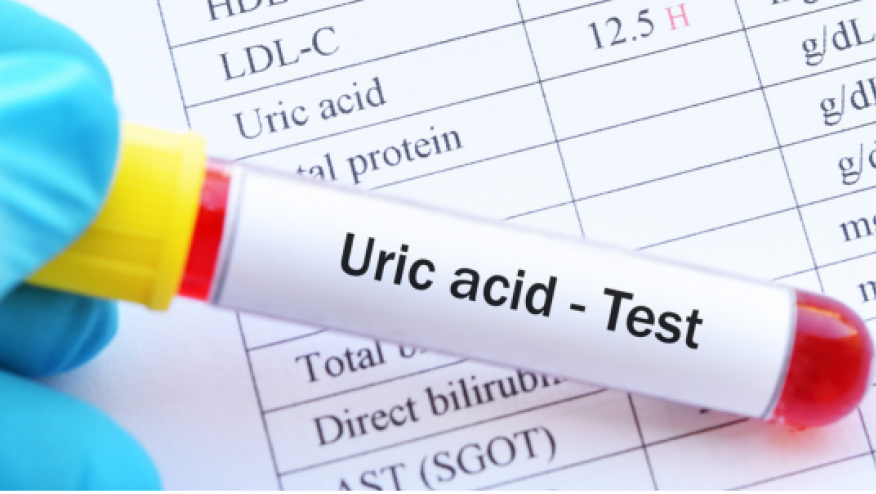
A recent report from China reaffirms the potential utility of salivary uric acid (UA) testing delivers smartphone-guided, enzyme-free gout screening at home for pennies per test.
A report in the Journal of Bioresources and Bioproducts, describes how filter paper cand be used to diagnose elevated uric acid levels (phlebotomy, reagents or electricity). Using naphthylimide-derived fluorescent micro-particles (NIFS) anchored to cellulose fibrescan emit an intense blue-green glow under a 365 nm UV torch. When uric acid is present, hydrogen bonding between UA and the dye quenches the fluorescence; the darker the paper becomes, the higher the UA concentration. A custom smartphone app was used to read the red-green-blue (RGB) values of the spot and converts the green-channel drop into a precise concentration within seconds.
This method can quantify UA from 0 to 5 000 μmol L⁻¹ with a limit of detection of 0.91 μmol L⁻¹—well below the 250 μmol L⁻¹ (4.2 mg/dl) salivary threshold associated with hyperuricemia. Tests on real human saliva, artificial urine and food extracts returned recoveries between 95 % and 108 %, matching hospital enzymatic assays without the need for temperature-controlled reagents or trained technicians. The authors envision the technology enabling self-monitoring for patients with gout, chronic kidney disease or metabolic syndrome, as well as rapid screening in pharmacies, gyms and remote clinics.
There are many other similar reports of salivary testing for UA levels with significant linear correlation with serum/plasma UA levels, but thus far this is a research tool. Correlations vary, ranging from from r = 0.44–0.87 depending on the population and methodology. In nephropathic patients, the correlation was notably strong (r = 0.821, p < 0.001), and post-dialysis changes in salivary UA paralleled plasma changes. Salivary UA levels in healthy adults are reported at approximately 185–240 μmol/L. Some researchers have suggested a proposed salivary cutoff of ~350 μmol/L has been suggested as equivalent to a serum UA of ~420 μmol/L (serum Uric Acid - 7.0 mg/dl).
The future utility of such testing may benefit patients with gout, asymptomatic hyperuricemia, chronic kidney disease, those on dialysis or chemotherapy or new onset acute arthritis.
Home kits for UA saliva testing are available -- MyFitStrip offer at-home, saliva-based test strips that provide near-instant colorimetric feedback. These kits cost $20-$25 per kit, with each test costing less than $1.
Not for public use, a quantitative laboratory kit from Salimetrics Uric Acid Assay provides commercial access to researchers and universities.
ADD THE FIRST COMMENT
Disclosures
Disclosures
The author has no conflicts of interest to disclose related to this subject
The author used AI to research and organize this content, and maintains responsibility for its accuracy




If you are a health practitioner, you may Login/Register to comment.
Due to the nature of these comment forums, only health practitioners are allowed to comment at this time.