


JAMA Review of Hip Fracture Save

Know-it-now
- Rheumatoid arthritis and glucocorticoid use are dual risk factors — impairing both bone strength and fall risk — making RA patients a high-priority population for proactive FRAX-based screening.
- Early IV zoledronic acid post-hip-fracture reduces both new fractures (35%) and mortality - treatment should not be deferred pending further workup.
- Denosumab discontinuation causes rapid rebound bone loss and vertebral fracture risk - never stop without bridging to an alternative antiresorptive.
- Fracture liaison services and orthogeriatric co-management meaningfully improve outcomes - refer post-fracture patients!
- Patients should be assessed by FRAX, especially if glucocorticoid-treated.
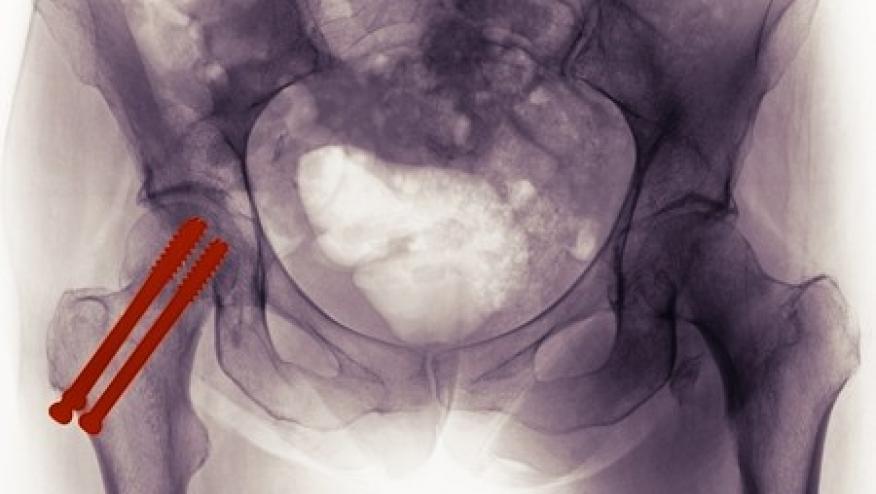
The July 16th edition of JAMA reviews the highly prevalent problem of hip fractures - a major global health burden: 14.2 million occur worldwide annually (280,000 in the US), with global incidence higher in women (833.9/100,000) than men (510.0/100,000). Lifetime risk at age 50 is 22.9% for women, 10.7% for men. Mortality is substantial — 22% at 1 year worldwide (26.9% men, 18.5% women in the US), driven by pneumonia, sepsis, MI, and PE. Functional recovery is incomplete: only 42–71% regain prefracture ADL independence by 6 months, and 25.5% sustain another fracture within a year — directly relevant to rheumatologists managing patients on chronic glucocorticoids or with inflammatory arthritis.
Fractures are either intracapsular (femoral neck, 34%; femoral head, rare) or extracapsular (intertrochanteric, 48%; subtrochanteric, 5.8%). Plain radiographs are ≥90% sensitive for the diagnosis; CT/MRI reserved for the ~1% of clinically-suspected, radiographically-occult fractures.
Risk Factors. Beyond age (HR 1.35 per 5-year increase) and female sex, rheumatoid arthritis is explicitly flagged as a risk factor for both reduced bone strength (chronic inflammation, glucocorticoid use) and falls (pain, functional impairment) .
- Glucocorticoids are the big culprits increasing fracture risk
- Other medications:aromatase inhibitors, SSRIs/TCAs (fall risk plus SSRI-associated bone loss), benzodiazepines, and antipsychotics.
- Additional factors: low BMD (T-score ≤−2.5), prior fracture (1.43-fold risk independent of BMD), sarcopenia (HR up to 2.36 independent of BMD), low BMI (<18.5), and genetic factors (parental hip fracture, HR 1.37).
Assessment. FRAX remains the most validated tool, providing 10-year hip/major osteoporotic fracture probability; a hip FRAX score ≥3% triggers pharmacologic treatment. Alternatives include the Garvan Calculator and QFracture. Notably, existing CT scans (done for unrelated indications) can now be repurposed via FDA-approved biomechanical CT analysis to estimate BMD — potentially useful in patients who already have abdominal/pelvic imaging from unrelated rheumatologic workups. Vertebral fracture assessment is recommended in anyone with T-score <−1.0 plus glucocorticoid use, height loss, or age thresholds — directly applicable to steroid-treated patients.
Fall Risk Assessment. Annual fall-risk screening (AGS/BGS guideline) for adults ≥65 uses the CDC STEADI 12-question tool plus three key questions (unsteadiness, fear of falling, prior falls); positive screens trigger gait speed, Timed Up and Go, and 4-Stage Balance testing.
Primary prevention: calcium (1000–1200 mg/d) and vitamin D (600–1000 IU/d) if dietary intake is inadequate; multifactorial fall-risk interventions; antiresorptive or anabolic therapy for high-risk patients based on FRAX/BMD thresholds (total hip T-score <−2.8 or spine <−3.0 favors anabolic-first).
Secondary prevention (post-fracture) most clinically actionable data:
- IV zoledronic acid within 90 days reduced new clinical fractures by 35% and improved survival (HR for death 0.71) in a landmark RCT — a strong argument for early initiation rather than deferral
- Denosumab is an option in advanced CKD (unlike bisphosphonates, contraindicated at CrCl <35), but discontinuation risks rebound vertebral fractures — critical counseling point
- Anabolic agents (teriparatide, abaloparatide, romosozumab) for those with very low BMD, always followed by antiresorptive therapy
- Romosozumab carries a cardiovascular signal (2.5% vs 1.9% MACE vs alendronate) worth discussing with cardiac comorbidity
Surgery within 48 hours reduces mortality (RR 0.80). Cemented arthroplasty for femoral neck fractures reduces mortality and improves quality of life versus uncemented. Orthogeriatric co-management improved 4-month IADL outcomes; fracture liaison services reduced secondary fracture rates by 32% (RR 0.68) — a model worth advocating for in patients transitioning from your rheumatology clinic after a fragility fracture.
Continue Reading
Related Content

ADD THE FIRST COMMENT
Disclosures
Disclosures
The author has no conflicts of interest to disclose related to this subject
The author used AI to research and organize this content, and maintains responsibility for its accuracy




If you are a health practitioner, you may Login/Register to comment.
Due to the nature of these comment forums, only health practitioners are allowed to comment at this time.