


EGPA Treatment: A new Era with the E-MERGE trial? Save


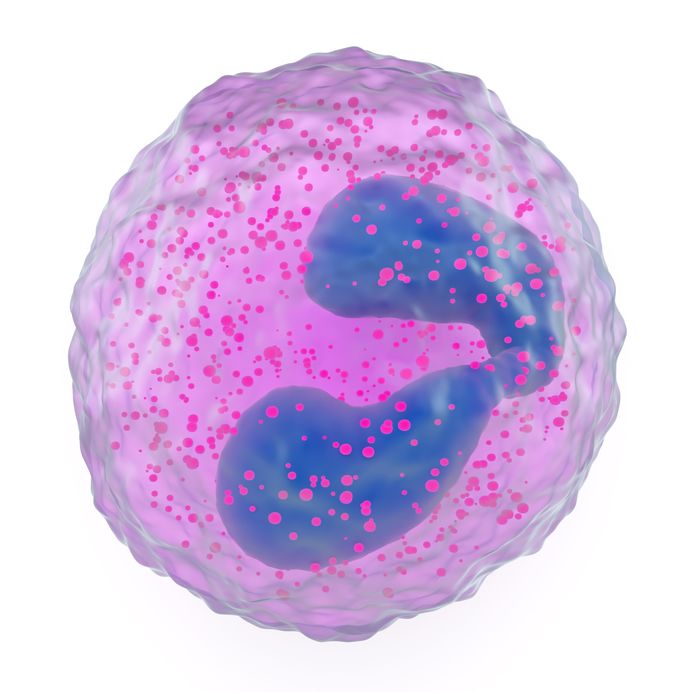
Eosinophilic granulomatosis with polyangiitis (EGPA) is the rarest of the ANCA-associated vasculitides. Compared to GPA and MPA, EGPA carries a mechanistically unique pathophysiology involving eosinophil-mediated inflammation. This distinct mechanism has driven the investigation and subsequent approval of two interleukin-5 (IL-5) targeted agents, mepolizumab and benralizumb, for the treatment of EGPA.
While effective, both therapies were studied in a non-severe, relapsing or refractory population limiting our understanding of their role as an up-front, initial induction agent and their efficacy in more severe, organ or life-threatening disease. The E-MERGE trial, presented as abstract 0926, aims to answer these questions.1
E-MERGE is a multicenter, double-blind, double-dummy, RCT conducted by the French vasculitis study group. A total of 100 patients with new or relapsing, active EGPA were randomized to receive mepolizumab (MEP) 300mg every 4 weeks or conventional therapy alongside a standardized glucocorticoid (GC) taper. Conventional therapy was determined by the patient’s disease severity: patients with a five-factor score (FFS) of 0 received placebo (in addition to the GC taper) while patients with a FFS of 1 or greater received IV cyclophosphamide followed by azathioprine. The primary endpoint was a composite remission at day 168: BVAS of 0, daily prednisone 4mg or less, and no vasculitis relapse. An expanded endpoint additionally considered asthma and ENT exacerbations as flares. Secondary endpoints included a day 364 timepoint as well as additional safety, PRO, and GC metrics.
Of the 100 patients randomized, 75% had new disease, 74% had a FFS of 0, and 47% were ANCA-positive. Remission at 168 days was achieved by 60.8% vs. 51% of patients in the MEP vs. conventional arms respectively (p=0.32) and did not change significantly using the expanded definition. When assessed at both 168 and 364 days, significantly more patients achieved remission in the MEP vs. conventional group (51% vs. 18.4%, p<0.001). Additionally, more patients in the MEP group were able to be in remission without prednisone at day 364 (54.9% vs. 22.5%, p<0.001). Any EGPA-related event occurred in 29.4% of MEP patients vs. 63.3% of conventional therapy patients, driven primarily by fewer asthma and ENT exacerbations; vasculitis relapses were numerically less but not significantly so. Treatment discontinuation occurred in fewer MEP patients and no new safety signals were identified.
These early results from the E-MERGE trial contribute significantly to the way we think about EGPA treatment. While mepolizumab vs. conventional therapy appeared comparable by the primary endpoint, differences in remission and glucocorticoid use by the secondary outcomes is striking and supportive of an up-front, IL-5 induction strategy in EGPA patients, especially given the majority of patients with new disease included in this study. The study corroborated that IL-5 therapy appears to be very safe and potentially better tolerated than conventional therapy.
Perhaps the most important and outstanding question for E-MERGE is specifically how the ~25% of patients with severe disease by FFS stratification faired. Comparing IL-5 versus cyclophosphamide induction is a bold but crucial question in our understanding of the treatment of EGPA patients and while it becomes increasingly apparent that IL-5 therapy is indicated in the vast majority of EGPA patients with non-severe, asthmatic, and ENT disease, its efficacy in organ-threatening disease remains unclear. Ad-hoc analyses of IL-5 RCTs and real world data have both posited a potential benefit of IL-5 therapies in EGPA patients with end-organ and/or vasculitic phenotypes, but this has yet to be corroborated in dedicated prospective, RCT studies.2,3
Abstract 0214 by Fussner et al. aims to shed further light on this query: their study examined efficacy of IL-5 targeted therapy in EGPA patients with and without vasculitis manifestations from an international longitudinal cohort.4 In general, patients with a history of vasculitic manifestations were more likely to develop recurrence of vasculitic features compared to those without a history. Of those with active vasculitis when starting IL-5 therapy, recurrence was comparable (62.5% vs. 60%) whether IL-5 was used alone versus with another non-glucocorticoid immunosuppressant. Rates of vasculitis recurrence were also numerically comparable in patients with only a history of vasculitic manifestations whether they were on IL-5 therapy alone vs. IL-5 and another non-GC immunosuppressant (18.8% vs. 14.8%). One potential divergence was a numerically higher rate of new-onset vasculitic features in patients without a history of vasculitic disease when treated solely with IL-5 therapy versus IL-5 + non-GC immunosuppressant (12.5% vs. 4%). Given the nature of the study design, caution should be given to definitive interpretation, however this adds meaningfully to the growing body of knowledge on this topic.
When the full data from the E-MERGE trial is released, or perhaps at the oral abstract session at ACR convergence on Sunday, November 8th, we will hopefully understand more about the subset of patients with severe EGPA and whether treatment with mepolizumab versus cyclophosphamide/azathioprine was significantly different.
References
- Terrier B, Pugnet G, Lozac'h P, et al. Mepolizumab versus Conventional Therapy for Remission Induction in Eosinophilic Granulomatosis with Polyangiitis: Results from the Double-Blind, Double-Dummy, Randomized Controlled E-MERGE Trial [abstract]. Arthritis Rheumatol. 2026; 78 (suppl 9). https://acrabstracts.org/abstract/mepolizumab-versus-conventional-thera…. Accessed November 2, 2026.
- Nolasco, S., Portacci, A., Campisi, R., et al. (2023). Effectiveness and safety of anti-IL-5/Rα biologics in eosinophilic granulomatosis with polyangiitis: a two-year multicenter observational study. Frontiers in immunology, 14, 1204444. https://doi.org/10.3389/fimmu.2023.1204444
- Merkel, Peter A et al. “Two-year efficacy and safety of anti-interleukin-5/receptor therapy for eosinophilic granulomatosis with polyangiitis.” Annals of the rheumatic diseases vol. 84,11 (2025): 1888-1899. doi:10.1016/j.ard.2025.06.2131
- Fussner L, Sridhar S, Falde S, et al. Utilization and outcomes of anti-interleukin-5 (IL5) and IL5 receptor therapies in systemic vasculitic manifestations of eosinophilic granulomatosis with polyangiitis [abstract]. Arthritis Rheumatol. 2026; 78 (suppl 9). https://acrabstracts.org/abstract/utilization-and-outcomes-of-anti-inte…. Accessed November 2, 2026.
Related Content
Eosinophilic granulomatosis with polyangiitis (EGPA) has long been managed by extrapolating results from microscopic polyangiitis and granulomatosis with polyangiitis clinical trials. But new insights into EGPA's has lead to advances in therapy and new treatment paradigms.
A current review of eosinophilic granulomatosis with polyangiitis (EGPA) provides current recommendations on diagnosis and management.
A current review of eosinophilic granulomatosis with polyangiitis (EGPA) provides current recommendations on diagnosis and management.




If you are a health practitioner, you may Login/Register to comment.
Due to the nature of these comment forums, only health practitioners are allowed to comment at this time.