



“Age old” biomarkers in ILD and pulmonary fibrosis Save


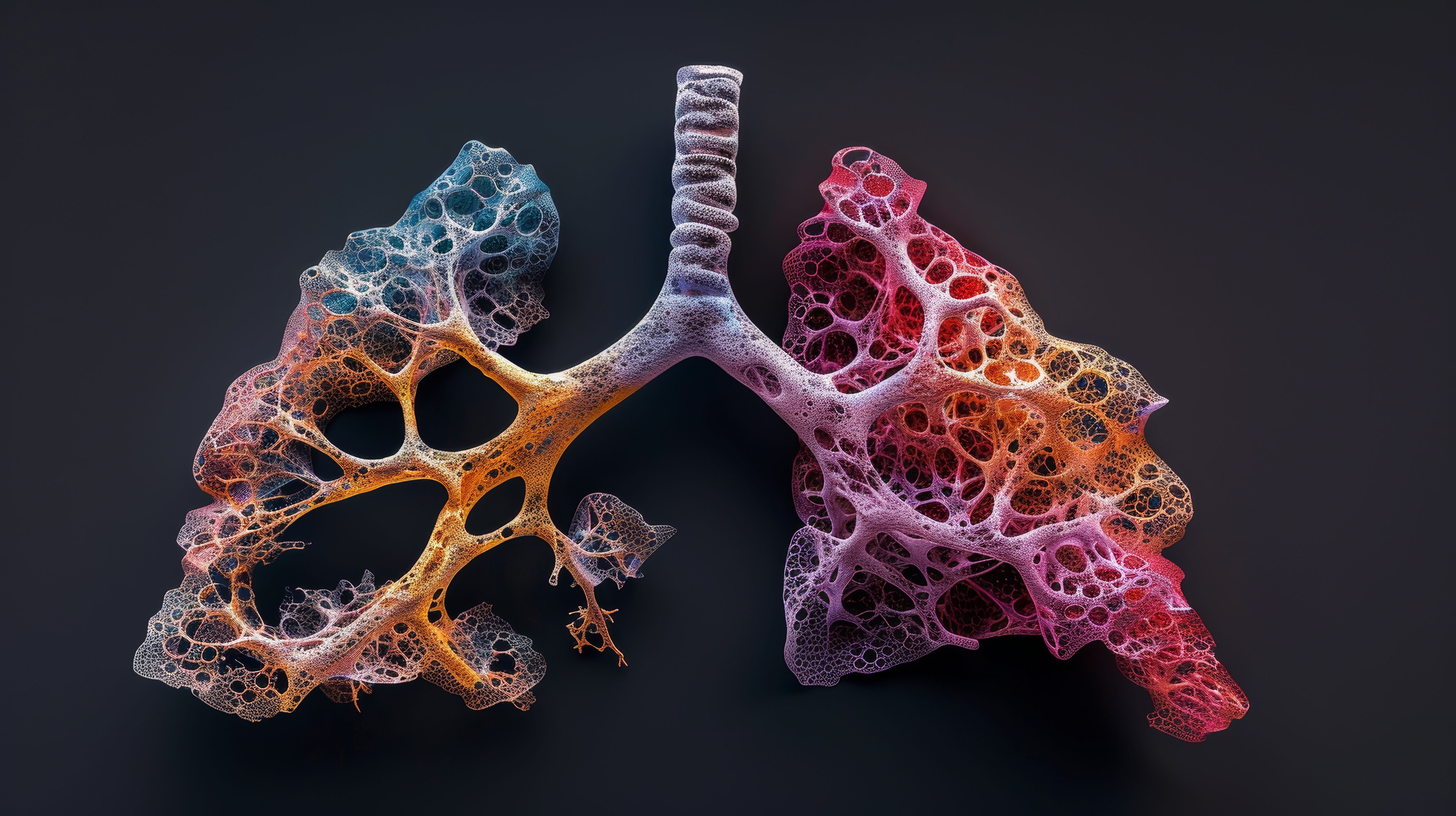
At #ACR26, there was a poster on senescence being increased in SARD-ILD (systemic autoimmune rheumatic disease – interstitial lung disease) including fibrotic (progressive pulmonary fibrosis), showing epithelial remodeling from DNA damage (abstract #0025).
This led me to look at the biomarkers of NISP (nonspecific interstitial pneumonia) that will transition to fibrosis as the latter is considered irreversible and the former is potentially reversible. Also in IPF (idiopathic pulmonary fibrosis) where studies show that short telomeres are associated.
Biomarkers of NSIP Transitioning to Fibrosis
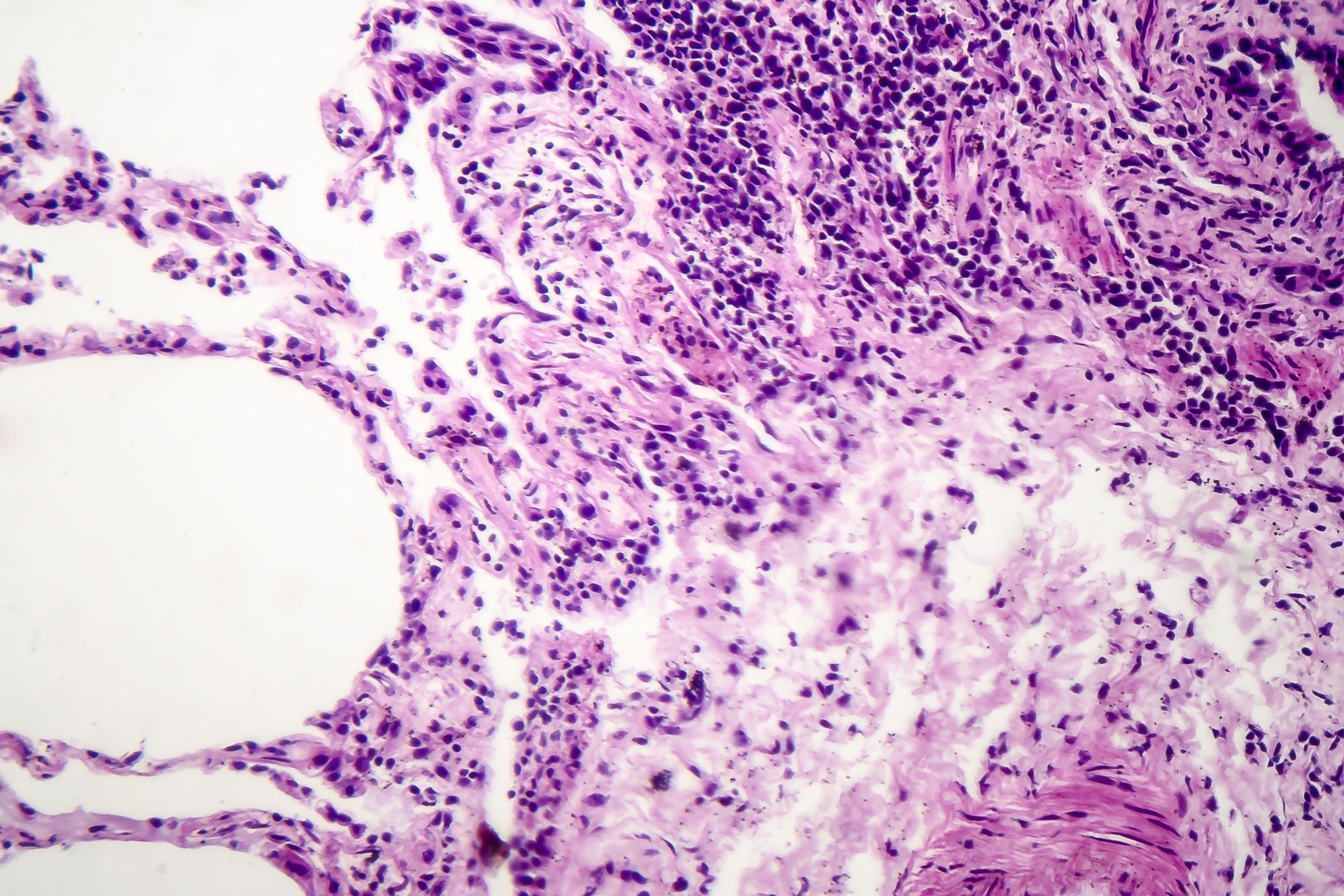
Molecularly, this transition has a loss of Alveolar Type 1 (AT1) cells and a surge in uncoupled, abnormal epithelial population known as Aberrant Basaloid (AB) cells with up-regulation of CDKN1A (senescence), TGFB1 signaling, and COL1A1 (collagen gene production).
Increases in KL-6, SP-D, and CCL18 track remodeling in lung parenchyma.
ChatGPT helped with the below table for overall biomarkers in SARDs and specific SARDs for transition to fibrotic ILD. But the risk of each biomarker is mostly modest.
Biomarker | Biological Source / Mechanism | Indication of Poor Outcomes / PPF | References |
KL-6 | Glycoprotein on proliferating/injured Type II alveolar epithelial cells. | Correlates with HRCT fibrotic extent, functional decline (FVC/DLCO), short-term progression/mortality | |
SP-D (Surfactant Protein D) | Hydrophilic protein secreted by alveolar type II cells. | Elevated levels predict a rapid, absolute decline in FVC%pred (>10%) and death | The Rheumatologist 2026 |
CCL18 | Chemokine secreted by M2 alveolar macrophages. | Alternative activation pathway recruiting fibroblasts with progressive fibrosis | MDPI Healthcare 2025, Annals of the Rheumatic Diseases |
MMP-7 / MMP-2 | Matrix metalloproteinases | Upregulated with breakdown of extracellular matrix and lung tissue remodeling with a fibrotic phenotype | |
Short Telomeres / Telomere Mutations | Genetic susceptibility markers. | Premature cell senescence in alveolar epithelial cells limits lung repair, predisposing cellular NSIP to cross over into a progressive fibrosis |
SARD Subtype | Specific Biomarker | Role in PPF & Progression of NSIP to Fibrosis | References |
Rheumatoid Arthritis (RA-ILD) | MUC5B Promoter Polymorphism (rs35705950) | Genetic risk factor for developing a Usual Interstitial Pneumonia (UIP) pattern rather than NSIP, with a high risk for PPF | Thorax 2026 |
High-Titer anti-CCP & RF | Associated with worse IA and more airway and parenchymal damage, with a higher probability of ILD progression | ||
CXCL11 & MMP-13 | Elevated in progressors; driving lung remodeling and fibrosis | MDPI / PMC12190877 | |
Systemic Sclerosis (SSc-ILD) | Anti-Scl-70 (Anti-Topoisomerase I) | + in dcSSc>lcSSc with faster, steeper decline in FVC | AJRCCM / Oxford Academic, MDPI / PMC12190877 |
Elevated Interleukin-6 (IL-6) | Related to early functional lung decline (DLCO deterioration) and mortality, even if FVC%pred>70% | ||
CXCL4 | From plasmacytoid dendritic cells; early marker of progressive skin and lung fibrosis | MDPI / PMC12190877 | |
Idiopathic Inflammatory Myopathies (IIM) / Dermatomyositis | Anti-MDA5 Antibody | Hyperferritinemia is linked with Rapidly Progressive ILD (RP-ILD), with respiratory failure | |
High Serum Ferritin (FER) | Correlates with acute disease severity, macrophage activation, and poor survival esp if + anti-MDA5 | PLOS ONE 2024 | |
Anti-Synthetase Antibodies (e.g., Jo-1, PL-7, PL-12) | Associated with cellular, inflammatory NSIP with risk of chronic, insidious changes to fibrosis | Thorax 2026 | |
Other (Sjögren’s, MCTD, Overlaps) | Anti-Ro52, Anti-Ku, & Anti-PM/Scl | Some Abs related to severe lung involvement, progressive fibrosing clinical phenotypes, and poor long-term outcomes. |
More ACR Coverage:
Related Content
Dr. Janet Pope reports on poster abstracts 0019, 0037 and 0025 presented at ACR Convergence 26.
RA-ILD represents the most severe extra-articular manifestation of rheumatoid arthritis, affecting an estimated 1% of the adult population in the US and Northern Europe. Prevalence estimates vary widely (up to 58%), reflecting different diagnostic criteria, imaging modalities, and study…
Rheumatologists typically manage systemic autoimmune rheumatic diseases and associated interstitial lung disease with immunosuppressants. However, evidence increasingly supports also the use of antifibrotic agents in this setting.
ADD THE FIRST COMMENT
Disclosures
Disclosures
The author used AI to research and organize this content, and maintains responsibility for its accuracy




If you are a health practitioner, you may Login/Register to comment.
Due to the nature of these comment forums, only health practitioners are allowed to comment at this time.