Arthritis & Rheumatology reports that biologic (bDMARD) use in rheumatoid arthritis may decrease cardiovascular disease risk by retarding coronary plaque formation and progression (especially non‐calcified and low‐attenuation plaque).

All News
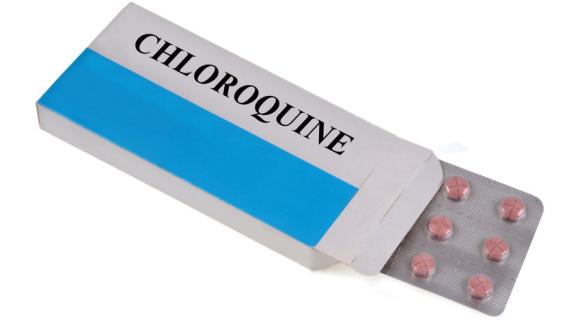
JAMA Open Network reports an interim analysis of the Brazilian CloroCovid-19 trial showing thta higher doses of chloroquine (CQ) in the treatment of severe COVID-19 was associated with QTc interval prolongation and increased mortality.
Dr Jack Cush reviews the news, journal reports, twitter feed and COVID developments from the past week on RheumNow.com
A pre-proof letter to the editor in the Journal of Allergy and Clinical Immunology presents a series of patients with immunoglobulin deficiency disorders and how they differentially responded when infected with the coronavirus.
They identified seven Primary Antibody Deficiencies patients with COVID-19 infection; five affected with Common Variable Immune Deficiencies and two affected with Agammaglobulinemia, one with X-linked Agammaglobulinemia and one with Autosomal Recessive Agammaglobulinemia.
The FDA issued a new consumer update on what you need to know about Cannabis or Cannabis-derived Compounds, Including CBD. This is part of the FDA effort to answer questions about the science, safety, and quality of products containing cannabis and cannabis-derived compounds, particularly CBD.
A National Institutes of Health (NIH) expert panel has developed consensus treatment guidelines for the management of coronavirus (COVID-19). To date no drug has been proven to be safe and effective for treating COVID-19. Moreover, they found no evidence to recommended the use of hydroxychloroquine for prophylaxis or treatment of COVID-19 outside of a current clinical trial.
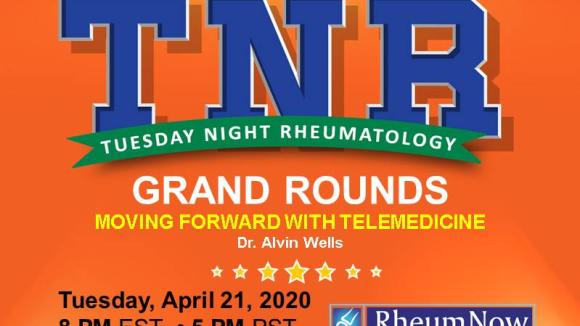
Dr. Alvin Wells gives a primer on Telerheumatology and Telemedicine in the era of COVID-19. This 1 hour Grand Rounds Presentation includes a 30 minute lecture, followed by stimulating 30 minutes of Q&A with a rheumatology attendee audience.
Patients with rheumatoid arthritis (RA) treated with abatacept (Orencia) had a lower risk of developing diabetes mellitus compared with those receiving certain tumor necrosis factor (TNF) inhibitors, a large cohort study suggested.
Dr. Jack Cush reviews the appproach to evaluating fever in adults suspected of having a rheumatic disease, Stills disease or autoinflammatory conditions.
Dr. Jack Cush reviews the news, journal articles and new ACR COVID-19 guidelines from the past week on RheumNow.com.
Treatment options for painful knee osteoarthritis (OA) are numerous, but comparative outcomes are seldom available. A NEJM report shows that physical therapy is superior to intraarticular glucocorticoids injections assessing the outcomes 12 months after the intervention.
The presentations of the COVID-19 infection have been clearly chronicled with the worrisome onset of sore throat, dry cough, loss of smell and taste with fevers, myalgias, fatigue and the worrisome progression of pulmonary involvement in a minority. Lab findings may include a leukocytosis,
The Journal of Rheumatology reports a retrospective, single center, analysis of 17 rheumatoid vasculitis patients who responded well to intravenous rituximab (RTX) therapy.
On April 11th, the ACR Board of Directors approved a COVID-19 guidance document written by an ACR task force charged with updating and clarifying recommendations for rheumatologists and rheumatic disease patient management during the current COVID-19 crisis.
The monoclonal antibody guselkumab (Tremfya), which binds the interleukin (IL)-23 p19 subunit, was effective for psoriatic arthritis in two large clinical trials, providing comprehensive benefits for this heterogeneous disorder, investigators reported in The Lancet.
The Annals of Rheumatic Disease reports that rheumatoid arthritis patients on biologic therapies do not have a greater risk of postoperative infection after hip fracture, abdominopelvic or cardiac surgery compared (compared with those on methotrexate alone) and that glucocorticoids were associated with a dose-dependent increase risk for postoperative infections.
Dr Jack Cush reviews the news and journal reports from the past week on RheumNow.com
The incubation period for coronavirus disease 2019 (COVID-19) has important implications for surveillance and control activities. The Annals of Internal Medicine reports a pooled analysis of confirmed COVID-19 cases January 4, 2020 and February 24, 2020.
A phase III study of the nerve growth factor and monoclonal antibody tanezumab showed positive results in a refractory patient population with knee or hip osteoarthritis (OA) -- good enough that this agent may finally be approved after a long and rocky development road.