Reuters has reported the results of a recent Institute for Clinical and Economic Review (ICER) analysis showing that biologics, especially Humira and Rituxan, are leading the way in the cost of drugs in the USA.
All told, Humira and Rituxan topped a list of seven treatments whose combined 2017 and 2018 price hikes accounted for a $5.1 billion increase in U.S. drug spending. ICER said their analysis points to price hikes that were more than twice the rate of medical inflation and were not warranted by any new clinical evidence.

All News
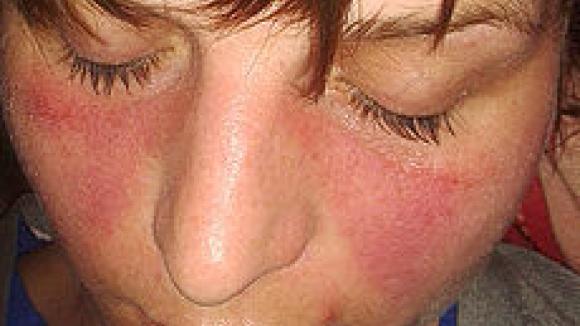
Elevated serum levels of interferon-α among patients whose systemic lupus erythematosus (SLE) was in remission helped predict future disease flares, European researchers found.
The FUTURE 5 trial studied the effect of secukinumab (SEC) on radiographic progression through 52 weeks in patients with active psoriatic arthritis (PsA) and found that SEC was clinically and radiographically superior to placebo (PBO).
Patients received s.c. secukinumab 300 mg load (300 mg), 150 mg load (150 mg), 150 mg no load regimens or placebo at baseline, at weeks 1, 2 and 3 and every 4 weeks starting at week 4. The majority (87%) of patients enrolled at baseline remained in the study for 52 weeks.
Dr. Jack Cush reviews the News and Journal Reports from this week on RheumNow.com.
The American Society for Bone and Mineral Research has developed multistakeholder consensus clinical recommendations for the prevention of secondary fractures for those aged 65 years and older after an initial hip or vertebral fracture.
The Annals of Rheumatic Disease reports a psoriatic arthritis study where in ixekizumab was non-inferior to adalimumab for achievement of ACR50 responses but was superior to adalimumab for achievement of PASI100 by week 24.
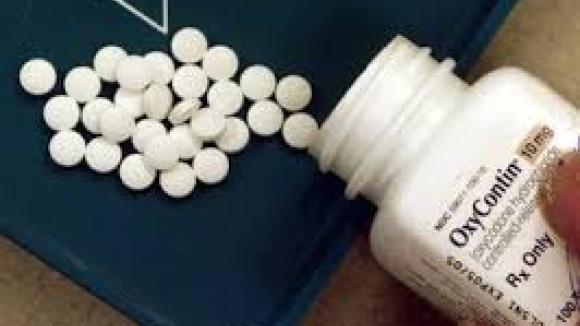
Opioids are generally not indicated for pain in systemic lupus erythematosus (SLE) and other rheumatic diseases because of limited efficacy and risks for preference and adverse health effects.
A double-blind, placebo-controlled clinical trial of low-dose IL-2 in patients with systemic lupus erythematosus (SLE) has shown that low-dose IL-2 induced was clinically effective while expandng regulatory T cells and NK cells, which may benefit immune homeostasis in SLE patients.
As the leading organization for people with arthritis, the Arthritis Foundation has just released the first CBD guidance for adults with arthritis. CBD, or cannabidiol, a plant-based compound, has become popular among people with arthritis seeking to ease chronic joint pain.
Rheumatology leaders commend CMS for proposing E/M code changes and urge agency to make additional changes to final rule.d
Braaten and colleagues from Johns Hopkins School of Medicine have reported their experience with chronic inflammatory arthritis induced by immune checkpoint inhibitor therapies, showing that in some, inflammatory arthritis persists after the immunotherapy has been discontinued.
A systematic review in PLOS suggests that parenteral MTX therapy is more successful than oral MTX in achieving optimal disease activity control.
Obinutuzumab (Gazyva) has been granted Breakthrough Therapy Designation (BTD) by the U.S. Food and Drug Administration (FDA) for use in adults with lupus nephritis (LN). The drug made by Genentech, is going forward based on the Phase II NOBILITY study in adult patients with proliferative lupus nephritis (LN). Currently, there are no FDA-approved medicines for lupus nephritis.
Americans living with rheumatic disease face significant healthcare challenges, according to a national patient survey released this week by the American College of Rheumatology. More than 1,500 U.S. adults living with rheumatic disease responded to the survey, which asked a range of questions related to healthcare access, affordability and lifestyle. Key findings include that even though 90 percent of respondents reported having health insurance coverage, nearly 60 percent said they had difficulty affording their medications or treatments in the past year.
JAMA has published an overview of cannabis and its medical uses. Although nearly 10% of cannabis users in the United States report using it for medicinal purposes, there is insufficient evidence to support the use of medical cannabis for most conditions for which its use is advocated or advised. Nevertheless, there is increase in favoring the public availability of cannabis, largely for the management of more than 50 medical conditions.
Physicians who believe their patients' health is negatively affected by insurers' demands for prior authorization, and the delays that often result, will find that opinion vindicated by a new study of rheumatology care: when permission had to be sought from insurers to provide intravenous drugs,
Bimekizumab is a dual inhibitor of IL-17A and IL-17F that has been shown to be effective in psoriasis and psoriatic arthritis. A proof-of-concept study shows that giving bimekizumab to rheumatoid arthritis patients not adequately controlled by certolizumab pegol resulted in a rapid decrease in disease activity achieved after 12 weeks of treatment. These findings are novel as anti-IL-17 monoclonal antibody therapy has previously been shown to be ineffective in RA.
CreakyJoints has completed a 258 patient survey showing that nearly three-fourths of people with rheumatoid arthritis (RA) have expressed dissatisfaction with their treatments, including conventional (csDMARDs) and biologic Disease Modifying Antirheumatic Drugs (bDMARDs).
Patients with noninfectious uveitis (intermediate, posterior uveitis, or panuveitis) often require high dose corticosteroids and therefore may need steroid-sparing DMARD therapy. The FAST study investigated the corticosteroid-sparing effect of methotrexate or mycophenolate mofetil in adults with noninfectious uveitis.
Lancet reports a head-to-head trial of antibodies against interleukin (IL)-23 and IL-17A in patients with moderate-to-severe psoriasis favored guselkumab with superior PASI 90 responses at week 48 (compared to secukinumab).