The role of thromboprophylaxis following total hip (THA) or total knee arthroplasty (TKA) is uncertain and consensus is lacking. A recent study suggests that thromboprophylaxis strategies should be tailored to individual risk of thrombosis and bleeding.
All News
Dr. Jack Cush reviews this past week's news and journal reports from RheumNow.com. Good news is that nearly 99% of adult rheumatology positions matched! But the challenge is that 45% of pediatric fellowship programs and 39% of pediatric rheum slots were unfilled in the 2024 NRMP match.
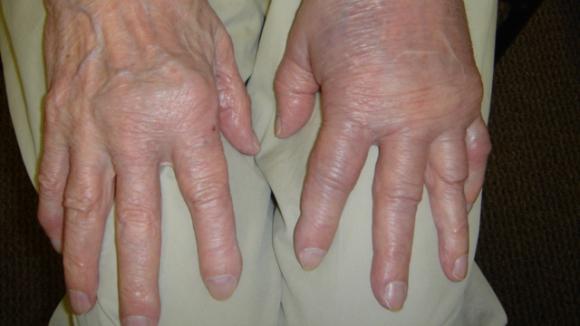
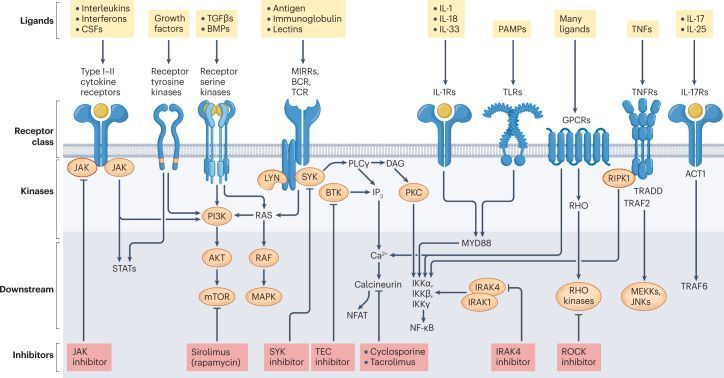
It has been just over a decade since the approval of tofacitinib (JAK1/JAK3-inhibitor) by the US FDA for the treatment of rheumatoid arthritis. Since then, baricitinib (JAK1/JAK2-i), filgotinib and upadacitinib (both selectively targeting JAK1) also have been licensed for the treatment of rheumatoid arthritis. As there are many more JAK-inhibitors evaluated in clinical trials currently, how do you stand out?
You know this; you've taught this; but here's a good study documenting a higher risk of methotrexate toxicity when used in the setting of older patients with chronic kidney disease.
Yesterday's JAMA published a higher 90-day risk of serious adverse events in older adults with CKD taking low-dose methotrexate, compared to hydroxychloroquine.
Here's what I learned at ACR23 that will change the way I practice in rheumatoid arthritis.
The possibility of withdrawing DMARDs after patients achieve remission has been in our minds for a while. Yet when our patients ask whether it is a good idea to taper or stop their DMARD when they are doing well, most of us don’t have a black or white answer for them.
We have become accustomed to the 60/40/20% rule for the outcome of ACR 20/50/70 respectively for biologics and targeted synthetic DMARDs.
In this week's podcast, Dr. Jack Cush reviews the ACR Convergence 2023 meeting and proposes how to best learn at your next large medical meeting.
There is not a single one of us in rheumatology who hasn’t prescribed steroids, but we really need to reconsider how much and how often we use them.
TNF inhibitors revolutionised the treatment of rheumatoid arthritis. While highly effective for the joint manifestations of the disease, a note of caution was sounded regarding the potential for worsening of ILD with these agents. Within this framework, a study by England et al presented at ACR23 was highly relevant.
IgG4-related disease describes a group of fibroinflammatory diseases whose features may include autoimmune pancreatitis, swelling of or within an organ system, salivary gland disease, swollen lymph nodes, skin manifestations, and symptoms consistent with allergies or asthma. While remission induction treatment with glucocorticoids has proven effective, the high relapse tendency is an ongoing challenge for clinicians.